

E-commerce Localization for Southeast Asia: Beyond Language
E-commerce Localization for Southeast Asia: Beyond Language
Language is the most visible layer of e-commerce localization. It is also the layer that most brands address first and, having addressed it, believe they have solved the localization problem. They have not. They have solved the smallest part of it.
A Southeast Asian consumer who arrives at a website in her own language, adds a product to her cart, and then discovers that the only payment method available is an international credit card she does not have, that delivery to her city will take three weeks, and that returning the product if it does not fit requires shipping it back to a warehouse in another country at her own expense, has encountered a localization failure on every dimension that actually determines whether she completes the purchase. The language was correct. Everything beneath it was not.
Southeast Asia’s e-commerce market reached USD 263 billion in GMV in 2024, growing 15% year-on-year, according to Filuet’s cross-border e-commerce analysis. The brands capturing that growth are those that have localized deeply, not just linguistically. This article covers what deep localization actually involves: payment, shipping, returns, social proof, and multi-country inventory, and the specific ways each dimension differs across the region’s main markets.
What Does Localization Beyond Language Actually Mean?

E-commerce localization is the process of adapting an online store’s entire purchase experience for the specific needs, preferences, and cultural context of a target market. According to Sawatech’s multilingual e-commerce guide, translation simply changes content’s language, while localization adapts the full experience for each market, covering pricing formats, payment methods, address fields, and checkout expectations. The distinction is the difference between a store that reads correctly in Vietnamese and a store that an actual Vietnamese consumer can use, trust, and complete a purchase on.
The commercial case for deep localization is documented. According to Baozun’s Southeast Asia e-commerce localization research, online retailers offering local payment options generate 22% more in regional revenue than those without. The same research found that only 1.8% of international merchants believe that customers actually want local payment methods, despite the data consistently showing that their absence directly reduces conversion. The localization gap between what brands implement and what consumers need is commercially significant, and most of it sits below the language layer.
The six localization dimensions that collectively determine whether a Southeast Asian consumer completes a purchase are: language and content, payment, shipping and delivery, returns, social proof and reviews, and inventory architecture. Each requires market-specific configuration. Each affects a different stage of the purchase journey. Missing any one of them creates friction at that stage that the others cannot compensate for.
Why Payment Localization Is the Single Highest-Impact Change?

Payment localization has the most direct and measurable impact on conversion of any localization dimension. A consumer who reaches checkout and does not find her preferred payment method will abandon the cart at a rate significantly higher than a consumer whose preferred method is available. The consumer does not search for an alternative. She leaves.
Southeast Asia’s digital payment market exceeded USD 247 billion in transaction value in 2023 and is projected to reach USD 417 billion by 2028, according to Source of Asia’s SEA e-commerce analysis. That transaction value runs primarily through local digital wallets, real-time payment systems, and cash-on-delivery mechanisms, not through international credit cards. According to Baozun’s research, 49% of urban consumers in Southeast Asia were already using e-wallets in their daily lives by the time the research was conducted, with that figure expected to reach 84% by 2025.
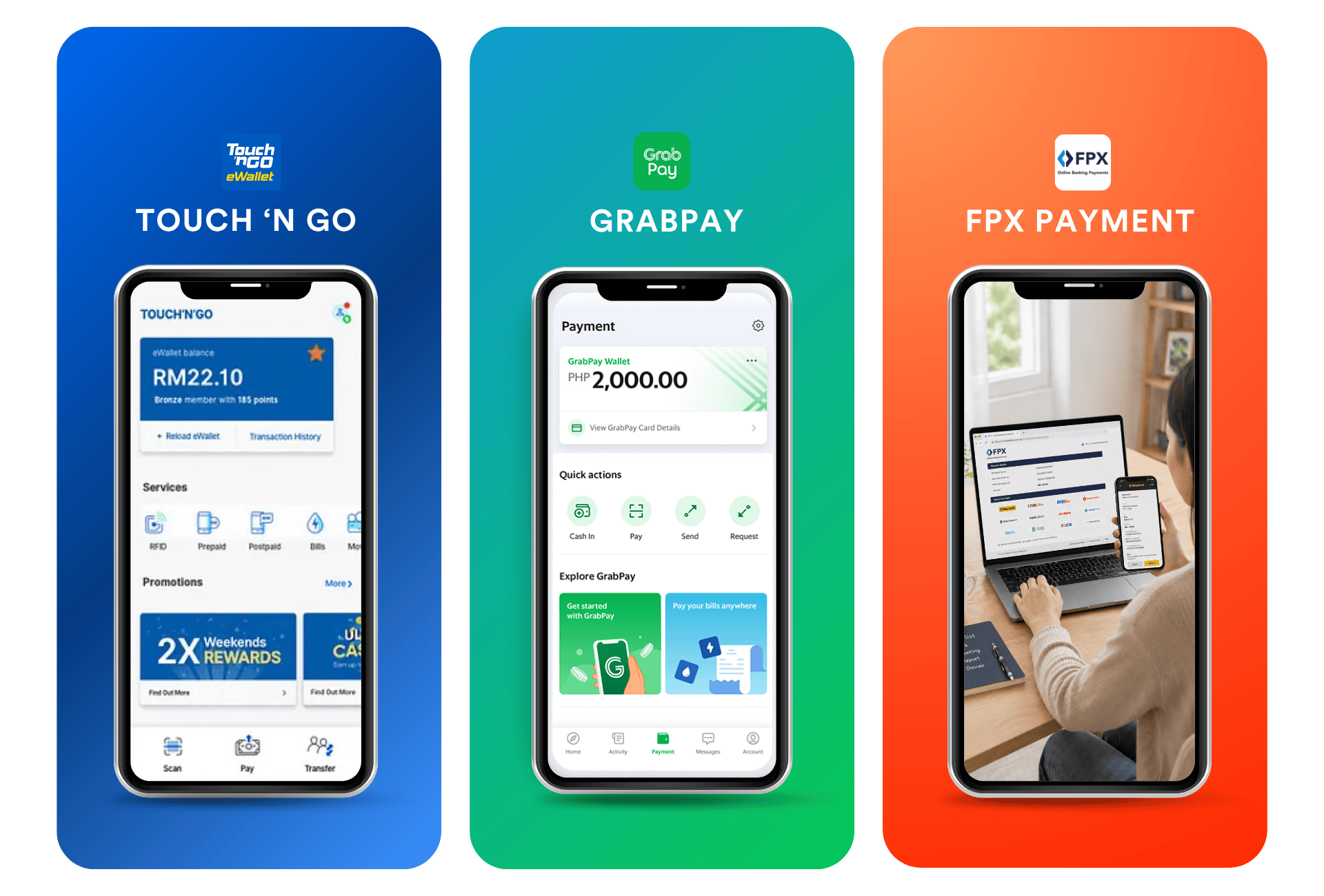
The payment method mix that must be available per market is not uniform. In Indonesia, GoPay, OVO, Dana, and QRIS are the dominant non-card payment methods. In Vietnam, MoMo and VNPay are essential alongside bank transfer. In Thailand, PromptPay is the primary real-time payment system. In the Philippines, GCash and Maya collectively cover the majority of digital wallet users. In Singapore, PayNow is the real-time payment infrastructure that 73% of working professionals use for daily transactions according to DataReportal. In Malaysia, DuitNow and Touch ‘n Go eWallet are the primary digital payment methods alongside FPX bank transfer.
Cash-on-delivery remains commercially significant in three markets that brands consistently underestimate. In the Philippines, approximately 47% of digital purchases are still paid cash on delivery. In Vietnam, approximately 40% of online orders are paid COD. In Indonesia, COD accounts for 20% to 30% of orders, particularly for first-time buyers from unfamiliar brands. A brand that enters these markets without COD capability is structurally unable to acquire the first-purchase segment that requires product-in-hand assurance before payment.
Buy-now-pay-later is the fourth payment layer that is growing across the region and has meaningful conversion impact for higher-average-order-value products. MoMo in Vietnam has embedded BNPL micro-credit for imported products. Atome operates BNPL across Singapore, Malaysia, Indonesia, and the Philippines. For D2C brands selling products at SGD 80 and above, BNPL integration measurably reduces the perceived transaction commitment at checkout and improves conversion on products that might otherwise be deferred to a later purchase occasion.
How Does Shipping Localization Go Beyond Delivery Timelines?

Shipping localization is not primarily about speed, though speed matters. It is about matching the entire logistics experience to what each market’s consumer expects, from the moment of checkout through to the moment the parcel arrives.
The delivery timeline expectation differs materially by market. Singapore’s consumer, shaped by the country’s world-class logistics infrastructure, expects two to three day delivery for standard orders and same-day or next-day for premium. According to ADA’s cross-border e-commerce analysis, 10% of Southeast Asian consumers are more inclined to click through checkout if they are informed of their package arrival time. The transparency of the delivery estimate is a conversion factor at the checkout stage, not just a post-purchase service element.
Indonesia’s geography creates the most complex shipping localization challenge in the region. Delivery to Jakarta from a Singapore-based warehouse is a straightforward two to four business day operation through established logistics partners. Delivery to Makassar, Pontianak, or Ambon requires regional logistics infrastructure that most standard courier networks do not cover at the same speed or cost. A brand that advertises three to five day delivery for Indonesia without distinguishing between Java and the outer islands is creating a delivery promise it cannot keep for a significant portion of its Indonesian customers, and the experience gap between promise and reality is one of the most reliable predictors of negative reviews and lost repurchase.

Local carrier partner – Ninjavan
Local carrier partnerships are the operational solution to shipping localization. Kerry Express in Thailand, J&T Express and Ninja Van across Southeast Asia, SiCepat and AnterAja in Indonesia, and LBC Express in the Philippines each have coverage patterns and pricing structures that differ from international couriers. A D2C brand operating cross-border through DHL or FedEx to all Southeast Asian markets will find that its cost per shipment and its delivery reliability in secondary cities consistently underperform what local carrier partnerships achieve, at a cost premium that is not reflected in any premium consumer experience.
The shipping cost display at checkout is itself a localization decision. According to Filuet’s analysis, offering Delivered Duty Paid (DDP) shipping whenever margins allow prepays taxes and lifts conversion while almost eliminating return-to-sender surprises at the border. Showing a consumer in Vietnam a product price at VND 500,000 and then revealing at checkout that import duty and shipping add VND 200,000 to the cost is the checkout surprise that kills the highest proportion of cross-border transactions in Southeast Asia. Duty-inclusive pricing, displayed at product level rather than revealed at checkout, removes the most common conversion-killing friction in cross-border purchases.
How Do Returns Need to Be Localized?

Returns are the localization dimension that most e-commerce brands treat as an afterthought until the cost of not having addressed it becomes visible in their chargeback rates, negative review volume, and repeat purchase metrics. By that point, the consumer who had a poor returns experience has already left the brand for a competitor and shared that experience with her network.
According to ADA’s cross-border e-commerce research, citing PWC data, 20% of Asia-Pacific customers are likely to forsake a purchase at checkout if free returns are not available. That is one in five potential transactions lost at the point of highest purchase intent because the returns policy creates a risk the consumer is not willing to accept. For a D2C brand without established consumer trust in a new Southeast Asian market, the returns policy is not just a post-purchase service mechanism. It is a pre-purchase trust signal that affects conversion before the first transaction is completed.
The returns localization challenge for a D2C brand operating across multiple Southeast Asian markets is that the consumer’s expectation of what a fair returns process looks like differs by market. In Singapore, where consumer protection standards are high and e-commerce is mature, a clear online returns initiation process with prepaid label and processing within five to seven business days is the expected standard. In Indonesia, where many consumers have limited access to reliable return shipping infrastructure, a returns policy that asks them to ship a product back to Singapore from a secondary city creates a friction that makes the return effectively impossible rather than merely inconvenient.
The practical solution to returns localization at scale is a regional returns hub: a fulfillment partner or third-party logistics provider in each major market who receives returns locally, inspects them, and either restocks them to local inventory or forwards them to the brand’s primary warehouse based on product condition. This structure gives each market’s consumer a local returns address and a practical returns process while allowing the brand to maintain product integrity standards across its returned inventory. According to McKinsey’s Southeast Asia e-commerce logistics analysis, Vietnamese platforms managing last-mile deliveries and returns through a B2B2C model allow foreign merchants to enjoy cost savings by shifting the returns management burden to local infrastructure with existing capabilities.
Returns policy language is itself a localization task that most brands handle inadequately. A returns policy written in English for global applicability that is translated into Vietnamese or Indonesian without adaptation for local legal terminology, consumer protection frameworks, and practical logistics realities produces a policy that is technically present but functionally unusable for the consumer it is intended to inform.
How Do Reviews and Social Proof Work Differently Across SEA Markets?

Reviews and social proof are the localization dimension that requires the least infrastructure investment and the most cultural intelligence to get right. The mechanics of generating, displaying, and leveraging consumer reviews differ enough across Southeast Asian markets that a uniform approach consistently underperforms what market-specific social proof strategies produce.
The platform where reviews have the most purchase influence differs by market. In Singapore, Google Reviews and Shopee reviews carry significant weight, with Xiaohongshu review posts carrying disproportionate authority for the Chinese-speaking consumer community. In Indonesia, Shopee and Tokopedia seller ratings are the primary review reference point, with TikTok creator reviews increasingly influential for categories where product demonstration matters. In the Philippines, Facebook reviews and comments carry significant social proof weight given Facebook’s dominant role in Filipino digital life. In Vietnam, Zalo community discussions and Shopee product ratings both function as trust signals, with social media posts from creators carrying higher conversion weight than platform reviews alone.
The content of reviews that matters to each market’s consumer also differs. According to Baozun’s localization research, integrating unique cultural nuances into the consumer journey establishes authentic connection with each audience. A review that specifically mentions how a product performs in Singapore’s heat and humidity carries more relevance to a Singapore consumer than a review from an American climate. A review in Bahasa Indonesia from a consumer who describes the product delivery experience in Jakarta is more credible to an Indonesian consumer than a translated review from an international buyer.
Generating market-specific reviews requires a deliberate post-purchase review solicitation strategy that is adapted per market. Email review requests sent to Singapore customers at 10AM Singapore time, in English, asking for a Google and Shopee review, are structurally different from requests sent to Indonesian customers in Bahasa Indonesia at the appropriate time for their platform usage pattern. The review solicitation workflow is a localization task, not just a post-purchase automation.
Live commerce reviews deserve specific attention because they are the fastest-growing social proof mechanism in Southeast Asia. According to Nimdzi’s retail and e-commerce vertical analysis, live e-commerce merges real-time video with online retail, allowing hosts to showcase products, interact with viewers, and drive purchases during a broadcast, with real-time localization of chat moderation, product descriptions, and host scripts being critical for engagement. A live commerce session that generates real-time consumer questions and responses in the local language is producing authentic social proof in the most trusted format available in these markets.
How Do You Handle Multi-Country Inventory for a D2C Brand?

Multi-country inventory management is the operational localization challenge that is invisible to the consumer but determines whether the entire purchase experience the brand has built can actually be delivered. A brand that has correctly localized payment, shipping, returns, and social proof for six Southeast Asian markets will still fail commercially if its inventory architecture cannot supply those markets reliably at a cost structure that makes the economics viable.
The three inventory architectures that D2C brands use for Southeast Asian multi-market operations each involve specific trade-offs between capital efficiency, delivery speed, and operational complexity.
Centralized hub inventory. The brand holds all inventory at a single regional hub, typically in Singapore or Malaysia, and ships cross-border to each market from there. This minimizes inventory capital requirement and simplifies stock management. The trade-off is delivery timeline: cross-border shipments from Singapore to Vietnam or the Philippines typically take five to ten business days, which underperforms against the delivery expectations of consumers in markets where local sellers deliver within two to three days. For categories where delivery speed is a purchase decision factor, centralized hub inventory loses the conversion battle against local alternatives regardless of how well the rest of the experience is localized.
Distributed local inventory. The brand holds inventory in each target market through a local 3PL partner, enabling two to three day delivery in every market. This dramatically improves the delivery experience but requires significant working capital to fund inventory across six markets simultaneously, as well as the operational capability to manage stock levels, replenishment, and returns across six different logistics partnerships. For most D2C brands entering Southeast Asia for the first time, distributed local inventory in all markets simultaneously is operationally and financially impractical before the brand has validated its demand level in each market.
Phased distributed inventory. The brand begins with centralized hub inventory in Singapore, validates demand by market, and progressively adds local inventory positions in markets where demand volume justifies the working capital and operational investment. This is the approach that most successfully-scaling D2C brands in Southeast Asia follow: Singapore hub for proof of concept, local inventory added in Indonesia and Vietnam when monthly order volumes reach thresholds that justify the investment, with Malaysia and Thailand added as the operational capability to manage multiple 3PL relationships matures.
The specific inventory management challenge in Southeast Asia that brands consistently underestimate is demand forecasting across markets with different seasonal patterns. Indonesia’s Ramadan and Eid al-Fitr season generates demand spikes that do not align with Singapore’s or Vietnam’s commercial calendars. Thailand’s Songkran festival period creates a demand pattern that has no equivalent in Malaysia. Building regional inventory plans that account for market-specific seasonal demand, rather than applying a single regional seasonal forecast, prevents the stockouts in peak periods and the excess inventory positions in off-peak periods that erode margin across the entire operation.
According to McKinsey’s logistics analysis, cross-border third-party logistics players could expand their warehouse presence to meet higher demand for storage and processing locally as well as scale up last-mile delivery services. The 3PL market in Southeast Asia is maturing rapidly, with providers like Ninja Van, J&T Express, and emerging fulfillment aggregators building the regional infrastructure that allows D2C brands to hold local inventory without the capital requirement of building their own regional warehouse network.
What Is the Cultural Calendar Dimension of E-commerce Localization?

Every Southeast Asian market has a commercial calendar that differs from the brand’s home market calendar, and localizing around that calendar is a revenue opportunity that most cross-border D2C brands systematically miss.
The region’s major e-commerce sale events, 11.11, 12.12, and Shopee’s monthly super sales, are consistent across platforms and drive significant volume that a brand without prepared inventory and promotional mechanics cannot capture. According to Maersk’s e-commerce logistics analysis, Southeast Asia has developed its own major online shopping events similar to China’s Singles’ Day, and these events shape consumer behavior and drive significant sales volumes.
The cultural calendar beyond these sale events is market-specific and commercially important. Ramadan and Eid al-Fitr in Indonesia and Malaysia generate the largest commercial period of the year in those markets, requiring campaign planning that begins eight to twelve weeks before the first day of Ramadan. Chinese New Year drives significant gifting and lifestyle purchasing across Singapore, Malaysia, and Vietnam’s Chinese-origin communities. Songkran in Thailand, Tet in Vietnam, and Christmas in the Philippines each create purchase occasions that a brand’s promotional calendar should be built around if it wants to compete with local brands that plan their commercial year around those events as a matter of course.
Building a localized promotional calendar is the practical mechanism. A single global promotions plan applied uniformly across Southeast Asian markets will consistently miss the commercial moments that each market’s consumer is most primed to spend in, while flooding the market with promotions during periods when local consumer intent is at a seasonal low.
What Is the Right Way to Think About Localization Investment?

The commercial return on deep localization, beyond language, is measurable and consistent. According to Sawatech’s e-commerce analysis, citing CSA Research, 76% of consumers prefer buying with product information in their native language, and 40% will not buy from sites in other languages. DaFlores saw a 27% order uplift plus a further 44% conversion lift after adding full localization including credibility cues. Lazada’s multilingual and full-localization investment produced 20% sales increases in Indonesia, 15% in Malaysia, and 10% in the Philippines in the first quarter after implementation, according to Baozun’s localization research.
The framing that produces the most useful business case for localization investment is not the cost of adding local payment methods or a regional 3PL. It is the cost of conversion lost by not having them. A brand that drives 10,000 visitors per month to its Vietnam storefront and converts at 1.2% because of payment and returns friction, when the same consumer in the same category converts at 2.8% when payment and returns are locally appropriate, is losing 160 transactions per month on the conversion gap alone. At an average order value of VND 500,000, that gap represents VND 80 million per month in recoverable revenue that the localization investment can unlock.
The practical approach is to audit each localization dimension by market against a benchmark of what a well-localized local competitor offers, score the gaps, and prioritize the investments that close the gaps with the highest conversion impact first. Payment localization typically closes the largest gap for the smallest investment. Returns localization typically requires more operational infrastructure but produces the most durable loyalty improvement. Inventory architecture requires the most capital but determines whether the experience the brand has built can actually scale.

Creative For More builds go-to-market strategies for brands entering Southeast Asia, covering the market-specific localization depth that determines whether a brand generates meaningful commercial results or simply generates international traffic without international revenue. Our Southeast Asia go-to-market services address localization across the full purchase journey rather than treating language as the only adaptation required. Our understanding of how to adapt business strategies across cultural differences in each market and our analysis of the market nuances that shape brand success in Southeast Asia provide the country-level intelligence that makes localization investment decisions grounded in how each market actually works.
If your brand is building its Southeast Asian e-commerce presence and wants a strategic partner who understands the full depth of what localization requires in this market, the Creative For More team can help. Book a discovery call to explore how we can support your brand’s growth across the region.
Read More
- From Japan to SEA: Packaging and Product Adjustments That Drive Success
- How Japanese F&B Brands Successfully Expand to Singapore
- E-commerce Localization for Southeast Asia: Beyond Language
- How to Build a Cross-Border Marketing Team
- Cross-Border Payment Infrastructure for Japanese Brands Entering SEA
- Why Asian Brands Need a Different Marketing Approach Than Western Ones When Entering SEA
- D2C Localization Playbook for Asia
- How To Break Into Asia-Pacific Markets (Thailand, Vietnam, Philippines, Singapore, China)
- How to Market Your Business in Singapore: A Practical Guide for 2026
- Japan to SEA Expansion: How Japanese Brands Successfully Enter Southeast Asia
- Why Singapore is the Smartest First Stop for Japanese Brands Entering SEA

Geraldine Pang
Creative For More
Geraldine Pang is the founder of Creative For More, a cross-border digital marketing agency with offices in Singapore, Tokyo, and New York. She specializes in brand strategy, market entry, and cross-border marketing across Southeast Asia, Japan, and the United States.