

Hotel Email Marketing: How Hotels Drive Direct Bookings and Repeat Stays
Hotel Email Marketing: How Hotels Drive Direct Bookings and Repeat Stays
Email is the one marketing channel a hotel fully owns. Social platforms change their algorithms, OTAs keep the guest relationship, and ad costs climb, but an email list belongs to the hotel and reaches guests directly, at almost no marginal cost.
Hotel email marketing on the other hand is the practice of using email to drive direct bookings, repeat stays, and guest loyalty. It’s one of the highest-return channels in hospitality when done properly.
This piece covers what hotel email marketing involves, why it delivers such strong returns, and how hotels build the list and campaigns that fill rooms.
What Is Hotel Email Marketing?

Hotel email marketing uses email to reach past and prospective guests with offers, updates, and reasons to book direct. It covers everything from pre-stay confirmations to post-stay follow-ups and loyalty campaigns.
The channel’s strength is ownership. Unlike an OTA booking, where the platform controls the guest relationship, an email subscriber is a direct line the hotel owns and can market to repeatedly.
This makes email central to a direct-booking strategy. It works alongside the broader email marketing approach we apply across industries, adapted to the rhythms of hospitality.
Why Does Email Deliver Such Strong Returns for Hotels?
Email delivers strong returns because it reaches guests who already know the hotel, at almost no cost per message. Marketing to an existing relationship converts far better than cold acquisition.
The economics are compelling. Email marketing consistently ranks among the highest-ROI channels across industries, because the audience has already opted in and the cost per send is minimal.
The published data backs this up. According to Litmus (2020), email marketing returns about $36 for every $1 spent, ahead of most other digital channels.
The commission it avoids sharpens the case. According to hotel benchmarks reported by STR and compiled across 2026 industry data, OTA commissions run 15% to 25% per booking, so every email-driven direct booking keeps revenue that would otherwise go to a platform.
Deliverability in the sector is unusually strong too. Hotel email enjoys very high delivery rates because guests expect and open pre-stay and post-stay messages, which means well-timed campaigns almost always reach the guest.
For hotels specifically, the value is the direct booking. An email that converts a past guest into a repeat direct booking avoids the OTA commission entirely, which is why we treat retention as core to hotel marketing.
How Do Hotels Build an Email List Worth Marketing To?

Hotels build a quality email list by capturing guest emails at every touchpoint and giving people a genuine reason to subscribe. A large list of uninterested addresses is worthless; a smaller engaged one is gold. Direct booking is the best capture point. Guests who book direct hand over their email as part of the process, one more reason shifting bookings away from OTAs compounds in value.
An incentive helps at other touchpoints. A member rate, a welcome perk, or exclusive offers give website visitors a reason to join before they’ve even booked. The key is that the value exchange is real, not just a popup.
Consent rules also shape how hotels do this. Under frameworks like Singapore’s Personal Data Protection Act, hotels need clear consent to market to guests by email, which makes a genuine opt-in incentive both good practice and good compliance.
How Should Hotels Segment Their Email List?
Hotels should segment guests by behaviour and value, then send each group messages that fit where they are in the guest journey. A first-time booker, a returning regular, and a lapsed guest each need different emails.
Segmentation pays off measurably. According to the HubSpot State of Marketing Report (2023), segmented email campaigns drive 30% more opens and 50% more clickthroughs than unsegmented sends.
What Email Campaigns Should a Hotel Run?
A hotel should run a mix of transactional, promotional, and lifecycle emails that guide guests from booking to return. Each type does a different job.
| Campaign Type | Purpose |
|---|---|
| Pre-stay | Confirmations, upsells, and upgrade offers |
| Post-stay | Review requests and thank-you follow-ups |
| Promotional | Seasonal offers and member rates |
| Win-back | Re-engaging guests who haven’t returned |
Personalization lifts all of these. An email tailored to a guest’s past stay or preferences converts far better than a generic blast, which is a principle we cover in our guide to maximising open rates.
What Should a Pre-Stay Email Flow Include?
A pre-stay flow should confirm the booking, set expectations, and offer well-timed upgrades before arrival. This is when a guest is most engaged and most open to spending more.
A typical sequence runs from the booking confirmation to a pre-arrival email a few days out, offering room upgrades, early check-in, or dining reservations. These sit alongside the operational messages every guest expects, which we cover in our guide to must-have transactional emails.
What Should a Post-Stay Email Flow Include?
A post-stay flow should thank the guest, ask for a review, and open the door to the next booking. The days right after checkout are when the experience is freshest and goodwill is highest.
A simple sequence sends a thank-you within a day or two, a review request shortly after, and a warm offer to rebook later. Reviews earned here also feed the ratings that shape future bookings.
How Do Hotels Use Email to Drive Repeat Stays and Loyalty?
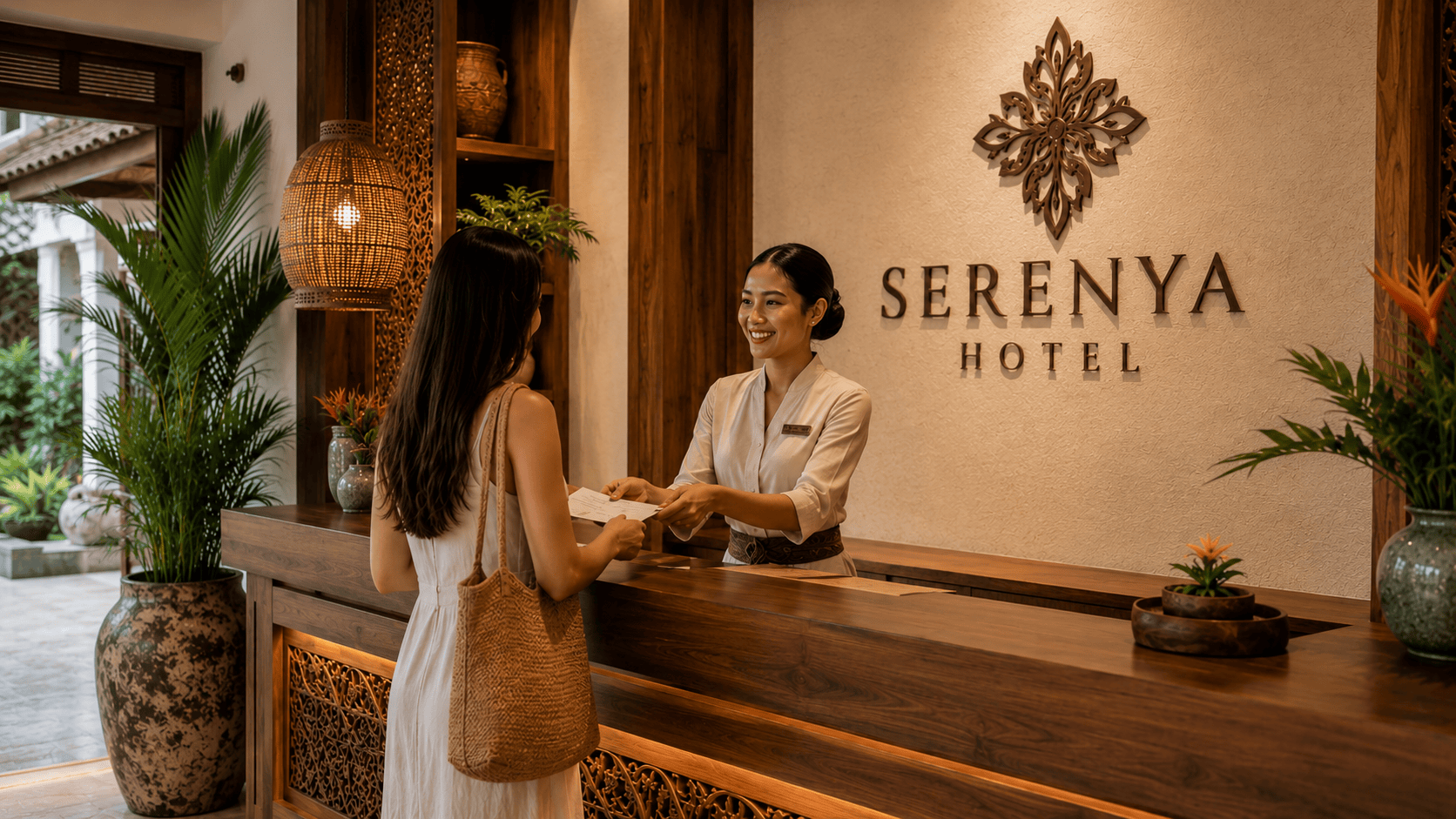
Hotels drive repeat stays by rewarding direct bookers with member rates, perks, and recognition that OTAs cannot match. Email is where that loyalty programme lives and stays active between visits.
A member rate visible only to subscribers gives guests a reason to book direct next time, while birthday offers and early access to seasonal deals keep the relationship warm. This retention focus is central to how we handle hospitality marketing, because a returning guest costs far less to reach than a new one.
How Do Hotels Keep Their Emails Out of the Spam Folder?
Hotels keep emails landing in the inbox by authenticating their domain, cleaning their list, and sending only to people who opted in. Deliverability is the quiet foundation every campaign depends on.
The practical steps are setting up SPF, DKIM, and DMARC records, removing hard bounces and inactive addresses, and keeping complaint rates low. A clean, engaged list signals to inbox providers that the hotel is worth trusting.
Which Email Metrics Should Hotels Track?

Hotels should track the metrics that tie email to revenue, not vanity numbers. The core set is open rate, click-through rate, conversion to booking, revenue per send, and list growth against unsubscribe rate. Read together, they show whether the guest base is getting healthier or wearing down.
What Does a Simple Hotel Email Program Look Like in Practice?
A workable starter program needs only a few automated flows and one monthly campaign, which even a small boutique hotel can run without a big team. The setup is a booking confirmation and pre-arrival upsell, a post-stay thank-you and review request, a win-back offer at 90 days, and a monthly newsletter with a member-only rate. Each flow is built once and then runs on its own. Layered over direct bookings captured at checkout, it turns one-time guests into repeat direct bookers over time.
If you’re running a hotel and want an email program that drives direct bookings instead of leaning on OTAs, the Creative For More team can help. Book a discovery call to explore how we can support your brand’s growth.

Geraldine Pang
Creative For More
Geraldine Pang is the founder of Creative For More, a cross-border digital marketing agency with offices in Singapore, Tokyo, and New York. She specializes in brand strategy, market entry, and cross-border marketing across Southeast Asia, Japan, and the United States.