

The Local Nuances of Cross-Border Marketing in Asia
The Local Nuances of Cross-Border Marketing in Asia
Asia is not a market. It is a collection of markets that share a geographic region and almost nothing else in terms of consumer behavior, platform preference, payment infrastructure, or cultural communication norms.
Brands that treat it as a single market consistently encounter the same pattern: a campaign that performed well in one country produces indifference, offense, or simply no commercial response in the next. A payment integration that covered the customer base in Singapore leaves two-thirds of Indonesian buyers unable to complete a transaction. A creative approach that built brand authority in Japan reads as aggressive and untrustworthy in the same language across the water in Korea.
These are not edge cases. They are the standard experience of cross-border marketing in Asia for brands that did not build market-specific knowledge before they launched. This article covers the cultural, platform, payment, and creative nuances that most commonly trip up cross-border launches, country by country, at the level of specificity that actually changes how campaigns are built.
Why Does Asia Have the Highest Localization Failure Rate of Any Region?
Asia’s diversity is more compressed than any other major commercial region. Western Europe has cultural differences, but the regulatory frameworks, payment systems, and dominant platforms are broadly shared. North America is the most homogeneous major commercial region in the world for marketing purposes. Asia presents a brand with the need to manage fundamentally different regulatory environments, mutually exclusive dominant platforms, opposed payment cultures, and communication styles that operate on entirely different assumptions about what a brand should say and how it should say it, all within a region that looks compact on a map.

The consequences of getting this wrong are significant. According to ADA’s cross-border e-commerce analysis, failure to address language and cultural barriers results in lost sales and reputational damage, not merely underperformance. The Coca-Cola and Pepsi Chinese translation failures, where Coca-Cola’s early Chinese transliteration read as “Bite the Wax Tadpole” and Pepsi launched the slogan “Pepsi Brings You Back from the Grave,” remain some of the most cited examples of brand damage from cultural misreading. Both required costly corrections in markets that had just received the brand for the first time.
The deeper issue is not translation. Translation errors are detectable and correctable. The subtler failures, producing content with the right words but the wrong cultural register, selecting platforms that reach the wrong audience segment, or designing a checkout that accepts the wrong payment methods, are harder to diagnose because the metrics show impressions and engagement without explaining why those do not convert into sales.
The Cross-Market Nuance Reference: At a Glance
The table below summarizes the primary nuances across seven Asian markets. Each is covered in depth in the country sections that follow. The table serves as a reference point for teams assessing which adaptations their next market entry requires.
| Market | Cultural Register | Primary Platforms | Dominant Payment Methods | Creative Failure Mode |
|---|---|---|---|---|
| Singapore | Multicultural, English-first, discerning, ingredient-literate | Instagram, TikTok, LinkedIn (B2B), Xiaohongshu | PayNow, credit cards, GrabPay | Generic regional content; missing Chinese-segment platforms |
| Japan | Collectivist, indirect, harmony-first, quality-obsessed, trust before transaction | LINE, Instagram, X (Twitter), YouTube, TikTok (emerging) | Credit cards, PayPay, bank transfer, convenience store payment | Direct sales language; aggressive CTAs; competitive comparisons |
| Indonesia | Muslim-majority, community-driven, price-sensitive, aspirational, regionally diverse | TikTok, Instagram, Shopee, WhatsApp, YouTube | GoPay, OVO, Dana, QRIS, cash-on-delivery | No halal certification; missing Ramadan campaigns; single-city strategy |
| Vietnam | Strong national identity, aspirational, K-drama influenced, relationship-trust driven | Facebook, TikTok, Zalo, Shopee | MoMo, VNPay, Napas, cash-on-delivery (~40%) | Credit-card-only checkout; failing to use Zalo; ignoring Hanoi vs HCM differences |
| Thailand | Fun-first (sanuk), face-saving, Buddhist values, aesthetics-conscious, emotional | Facebook, LINE, TikTok, Instagram | PromptPay, TrueMoney, mobile banking | Confrontational messaging; humor missing; failing to use LINE for CRM |
| Philippines | Community-driven (bayanihan), family-first, K-pop influenced, English-speaking | Facebook, TikTok, YouTube, Instagram | GCash, Maya, cash-on-delivery (~47%) | Missing GCash integration; underinvesting in Facebook; ignoring geographic distribution |
| Malaysia | Multicultural (Malay, Chinese, Indian), English widely spoken, halal-sensitive for Malay segment | Instagram, TikTok, Facebook, Shopee | Touch ‘n Go, GrabPay, FPX, credit cards | Single-culture messaging; missing halal compliance in applicable categories |
Singapore: The Market That Rewards Precision
Singapore’s cross-border marketing nuances are mostly about sophistication rather than cultural landmines. The market is English-language, legally transparent, and populated with consumers who have been exposed to international brands for decades. The failure modes are subtler than in other Asian markets but no less consequential.
Cultural Nuance

Singapore’s population is approximately 74% ethnic Chinese, 13% Malay, and 9% Indian, with a significant expatriate layer. Marketing that treats these as a single homogeneous audience misses the differentiated trust signals, platform preferences, and purchasing occasions that define each community. The Chinese-Singaporean consumer has cultural proximity to Mandarin-language platforms and community-led purchasing decisions that the Malay consumer navigates differently, particularly around halal considerations. The Indian-Singaporean consumer has her own distinct category interests and festival-driven purchasing calendar.
Singapore’s consumer base is also what Kadence’s Singapore consumer landscape guide describes as deeply influenced by Confucian values around social status and community standing, while simultaneously being one of the most globally traveled and information-literate populations in Asia. This produces a consumer who values premium international brands but holds them to a high standard of substantiation. Marketing claims that would work by assertion in less sophisticated markets require evidence in Singapore.
Platform Nuance

Singapore uses the full platform mix: Instagram for beauty and lifestyle conversion, TikTok for discovery and awareness, LinkedIn for B2B (with 4.80 million members representing 73% of working professionals, according to DataReportal), and Xiaohongshu for the Chinese-speaking segment. The Xiaohongshu gap is the most commonly missed. According to Hashmeta’s Singapore social media analysis, approximately 580,000 Singapore users are active on Xiaohongshu, growing at 67% year-on-year. A brand targeting Singapore’s Chinese community without a Xiaohongshu presence is missing the platform where that community forms beauty, food, and lifestyle opinions.
Payment Nuance

Singapore is a high-digital-payment-adoption market. PayNow, Singapore’s real-time payment system, is deeply embedded in daily transactions. Credit cards carry strong consumer trust. GrabPay is widely used. Cash-on-delivery is not a meaningful channel. A brand that arrives with a checkout flow requiring only international credit cards is not structurally locked out of the Singapore market the way it would be in Indonesia or Vietnam, but it is failing to optimize for the payment experience that Singapore’s consumer expects.
Creative Nuance

The most common creative failure in Singapore is generic regional content. Campaign imagery and messaging designed for “Southeast Asia” rather than Singapore specifically underperforms against locally produced content by a significant margin. According to Hashmeta, content specifically created for Singapore, incorporating local references, cultural touchpoints, or localized scenarios, achieves 68% higher engagement rates than generic regional content. Producing authentic Singapore-specific creative is not more expensive than adapting regional creative. It is more effective.
Japan: The Market That Requires Patience and Precision
Japan is the most counterintuitive major Asian market for brands accustomed to Western marketing norms. Every element of the marketing approach that produces results in North America or Europe, direct claims, competitive positioning, aggressive calls to action, individual benefit emphasis, underperforms in Japan. The inversion is not partial. It is structural.
Cultural Nuance

Japanese consumer culture is built on collectivism, harmony, and trust as prerequisites for commercial engagement. According to research cited by Charlesworth Group’s Japanese marketing analysis, approximately 70% of Japanese consumers prefer brands that authentically reflect local values and cultural sentiments. The concept of kuchikomi, word-of-mouth trust networks, means that recommendations from within established social circles carry far more weight than brand-initiated claims. A brand that enters Japan expecting its marketing to generate consumer trust without first building the relationship infrastructure that Japanese commercial culture requires will consistently find that awareness does not convert to purchase.
The concept of nemawashi, the process of building consensus informally before any formal decision is made, applies not just to B2B but to consumer brand adoption. Japanese consumers gather multiple sources of validation before committing to an unfamiliar brand. The path from brand awareness to purchase is longer in Japan than in most Western markets. Brands that design their marketing funnels for a short consideration phase will misattribute the results as poor marketing when the actual issue is insufficient patience in the nurture phase.
Platform Nuance

LINE is Japan’s dominant messaging and social platform, with over 96 million users and 78% of the population using it daily, according to the Japan marketing strategy guide from Epic-S Global. A brand marketing in Japan without a LINE Official Account is missing the platform where Japanese consumers receive brand communications, redeem coupons, and form the kind of repeated contact that builds familiarity. Instagram has strong traction with Japanese Gen Z and Millennial consumers for visual and lifestyle content. X (formerly Twitter) is heavily used for niche fandoms, tech commentary, and entertainment. TikTok is growing but has not yet achieved the primacy it holds in Southeast Asian markets.
One Japan-specific platform dimension that trips up international brands is Yahoo Japan. While Google commands 74.91% of Japan’s search market share, according to GA Agency’s Japan digital marketing analysis, Yahoo Japan holds 9.18% and requires separate optimization consideration for brands targeting older Japanese demographics, where Yahoo Japan’s news-led browsing behavior remains significant.
Payment Nuance

Japan’s payment ecosystem reflects a market that was slower to move away from cash than most of Asia but has been transforming rapidly since the government’s cashless push in 2019. PayPay dominates the QR code payment market with over 65 million registered users. Credit cards are widely accepted and trusted. Convenience store payment, where consumers pay for online purchases in cash at konbini locations, is a uniquely Japanese channel that international brands should not dismiss: it provides purchase access for consumers who prefer not to use digital payment methods online, a segment that remains meaningful in Japan’s older demographics.
Creative Nuance

Japanese advertising law under the Act Against Unjustifiable Premiums and Misleading Representations restricts superlative claims. “Number one,” “best in class,” and “most advanced” require factual substantiation to appear in marketing materials. Beyond the legal dimension, the cultural one is equally significant: the bold, competitive-comparison advertising style that works in Western markets reads as aggressive and disharmonious to Japanese consumers. According to AWISEE’s Japanese influencer marketing analysis, Japanese influencer content thrives on soft-sell approaches, product mentions woven into lifestyle context rather than direct endorsement, and visual refinement rather than personality-led persuasion. The phrase “hard sell” is a reliable predictor of poor performance in the Japanese market.
Indonesia: The Market That Requires Structural Adaptation
Indonesia is Southeast Asia’s largest economy by population and among its most complex for cross-border marketers. The nuances that determine success or failure here are not subtle. They are structural, and missing any of them creates market access failures rather than merely performance shortfalls.
Cultural Nuance

Indonesia is the world’s largest Muslim-majority country. For brands in food, beverage, personal care, cosmetics, and fashion, halal certification is not a marketing consideration. It is a market access prerequisite for the majority of the consumer base. A food or personal care brand that enters Indonesia without halal certification from BPJPH is structurally unable to compete for the mass market regardless of how strong the product quality or the marketing investment.
Indonesia’s regional diversity compounds the complexity. The consumer in Jakarta is meaningfully different from the consumer in Surabaya, and both are different from the consumer in Medan or Makassar. A brand that validates its positioning in Jakarta and scales nationally with the same strategy will find significant underperformance in markets where the cultural references, the economic context, and the purchasing habits are quite different. According to Market Research Southeast Asia’s ASEAN consumer analysis, Indonesia is a market where local brands like Wings Corp have outcompeted global giants including P&G and Unilever specifically by developing products and marketing tailored to regional rather than national consumer profiles.
Platform Nuance

TikTok is the dominant discovery platform for Indonesian consumers under 35, and TikTok Shop’s acquisition of a controlling stake in Tokopedia has merged social commerce with marketplace commerce in a way that is unique to Indonesia among the main Southeast Asian markets. According to Mordor Intelligence’s SEA cross-border e-commerce analysis, the merged TikTok-Tokopedia entity now has monthly active users exceeding 225 million. WhatsApp is the dominant messaging platform and plays a significant role in B2C customer service and community commerce, particularly outside the major cities. Instagram has strong traction for beauty and lifestyle categories.
Payment Nuance

Indonesia’s payment landscape is fragmented and market-specific in ways that directly affect conversion rates. GoPay, OVO, and Dana are the dominant digital wallets, with QRIS providing QR-standardized interoperability across platforms. Cash-on-delivery remains significant, particularly for first-time purchases from unfamiliar brands, because trust in the product must precede payment in a market where return processes can be unreliable. According to IDC’s Southeast Asia payment research, mobile wallets were the top payment choice in Indonesia in 2023, continuing as the second-most accepted method by merchants in 2024. A checkout that does not support GoPay and OVO is functionally excluding a major segment of Indonesia’s online buyer base.
Creative Nuance

Ramadan is Indonesia’s most significant commercial moment, and brands that do not plan Ramadan-specific campaigns, beginning several weeks before the fasting month and running through Eid al-Fitr, miss the largest single purchase occasion in the Indonesian calendar. This extends beyond food and personal care into electronics, fashion, home goods, and travel. Brands that launch their Indonesia marketing without a Ramadan strategy are not simply missing an opportunity. They are demonstrating to Indonesian consumers a fundamental lack of market understanding. Community and family values in campaign creative consistently outperform individual benefit messaging, reflecting Indonesia’s collectivist consumer culture.
Vietnam: The Market That Rewards Authentic Localization
Vietnam’s cross-border marketing nuances reflect a consumer who has strong national cultural pride, deep K-drama cultural influence, and significant price sensitivity calibrated against a rapidly rising middle class. The combination produces specific requirements that brands underestimate if they treat Vietnam as simply a faster-growing version of a similar market.
Cultural Nuance

Vietnamese consumers have a strong national identity and a preference for brands that demonstrate genuine investment in the market rather than treating it as an export destination for products designed elsewhere. The Korean Wave’s strong presence in Vietnam, particularly among consumers aged 18 to 35, means that Korean brand aesthetics, multi-step skincare routines, and K-drama lifestyle references create genuine purchase intent in specific categories. This has produced a dynamic where Vietnamese local brands have responded by incorporating Korean formulation philosophy into domestic products, competing directly with genuine Korean imports on cultural resonance while offering a lower price point.
Platform Nuance

Facebook retains dominant reach in Vietnam as a general discovery and community platform. TikTok has grown exceptionally fast and now accounts for significant share of younger consumer product discovery, with Shopee Live and TikTok Shop both generating strong commerce activity in beauty, fashion, and food categories. Zalo, Vietnam’s local messaging application, is a critical platform that most non-Vietnamese marketers underestimate. With approximately 74 million users in a country of 98 million, Zalo is the primary channel for brand-to-consumer notification, promotional messaging, and customer service in Vietnam’s domestic digital ecosystem. A brand that has not engaged with Zalo is bypassing the platform where Vietnamese consumers manage their daily digital communications.
Payment Nuance

Vietnam’s digital payment landscape is growing rapidly but cash-on-delivery remains significant for cross-border and first-purchase transactions, particularly among consumers outside Ho Chi Minh City and Hanoi. MoMo is the dominant digital wallet, with VNPay and Napas also widely used. According to the Mordor Intelligence SEA e-commerce analysis, MoMo is embedding buy-now-pay-later micro-credit for higher-value imports, which is expanding the addressable market for premium cross-border brands in Vietnam. A checkout that requires a credit card as the primary payment method will functionally exclude a significant share of Vietnamese online buyers who prefer digital wallet or cash payment options.
Creative Nuance

Vietnamese creative that works treats the brand’s story as aspirational rather than informational. The rapid middle-class expansion means that a meaningful consumer segment is purchasing lifestyle and beauty products as an expression of where they are going, not where they are. Campaigns that frame the product within an aspirational life context, a skincare routine that produces the glass skin associated with K-drama protagonists, a fashion brand that signals the international awareness the consumer identifies with, consistently outperform those that lead with functional benefits. The two major cities also require different tonal registers: Ho Chi Minh City’s consumer is fast-paced and trendy; Hanoi’s consumer is more traditional and quality-conscious. Campaigns designed for one city often underperform in the other.
Thailand: The Market That Rewards Entertainment and Emotion
Thailand’s consumer culture is shaped by the Buddhist concept of sanuk, the value of making any activity fun and enjoyable, and the related social principle of saving face, avoiding public embarrassment or direct confrontation. Both have direct creative implications that brands consistently miss when applying their standard APAC approach to the Thai market.
Cultural nuance

Image from Travel Trade Journal
Thai consumers respond strongly to emotional storytelling, humor, and campaigns that entertain before they sell. Thai advertising has a global reputation for producing highly emotional commercial content, reflecting a market culture where feeling precedes persuasion. Brands that enter Thailand with purely informational or benefit-led creative formats often find their content technically correct but commercially invisible. Confrontational messaging, competitor comparisons, and urgency-pressure tactics all conflict with the face-saving cultural norm and produce avoidance rather than engagement.
Platform Nuance

LINE is Thailand’s dominant messaging platform alongside Facebook’s general social reach. WhatsApp has minimal traction in Thailand specifically, a counterintuitive fact for brands that assume WhatsApp’s regional dominance applies everywhere. Facebook remains a high-reach awareness channel for Thai consumers of all ages. TikTok has strong traction among younger Thai consumers and the beauty and lifestyle categories that resonate with Thailand’s aesthetics-conscious Gen Z.
Payment Nuance

PromptPay is Thailand’s government-backed real-time payment system and has achieved significant adoption, particularly for domestic transfers. TrueMoney is the leading digital wallet. According to IDC’s Southeast Asia payment research, domestic payments dominated in Thailand in 2023, with mobile wallets becoming increasingly accepted. Credit cards are accepted across formal retail but are less used for smaller everyday transactions than digital payment alternatives.
Creative Nuance

Thailand’s creative landscape rewards brands that invest in localized Thai-language storytelling rather than translated international campaigns. Content that incorporates Thai cultural references, festival occasions including Songkran and Loy Krathong, and local humor patterns consistently outperforms adapted global creative. Celebrity endorsement carries significant commercial weight in Thailand, and the right Thai celebrity association can compress the trust-building timeline that international brands typically face as unknowns in the market.
Philippines: The Market Where Facebook Still Dominates
The Philippines is the market that most surprises Western marketers with its platform composition. In a region where TikTok and Instagram increasingly dominate younger consumer attention, Facebook maintains a structural grip on Filipino digital life that is without direct equivalent elsewhere in Southeast Asia.
Cultural Nuance

Filipino consumer culture is anchored by bayanihan, the collective spirit of community support, and by deep family-centred purchasing decisions. Product recommendations travel through family networks and community groups with a velocity that makes peer-to-peer trust signals disproportionately powerful compared to brand-initiated marketing. K-pop’s penetration in the Philippines is among the highest in Southeast Asia, and that cultural affinity translates into above-average receptivity to Korean-origin brands in beauty, fashion, and food categories.
Platform Nuance

The Philippines has one of the highest Facebook usage rates per capita in the world, and Facebook Marketplace is a significant commerce channel alongside formal e-commerce platforms. According to Stripe’s cross-border e-commerce analysis for SEA, social media usage in Southeast Asia is highest in Singapore at 85% and Malaysia at 83.1%, with the Philippines generating comparable engagement figures, heavily anchored on Facebook. YouTube is the primary long-form video platform. TikTok is growing rapidly among consumers under 30. Instagram is strong for beauty and lifestyle but reaches a narrower demographic than Facebook’s broad population coverage.
Payment Nuance

GCash is the Philippines’ dominant digital payment platform, having converted more than half of its active users into international shoppers, according to Mordor Intelligence’s analysis. Maya (formerly PayMaya) is the second major digital wallet. Cash-on-delivery accounted for approximately 47% of digital purchase payment methods in the Philippines in recent years, reflecting the country’s significant unbanked population and the consumer trust dynamics of purchasing from unfamiliar brands. A brand that does not support GCash and cash-on-delivery in the Philippines is functionally excluding a large portion of the addressable market.
Creative Nuance

Image from Jollibee Philippines
Filipino consumer culture rewards entertainment-first creative. Comedy, heartwarming family narratives, and aspirational content about overseas Filipinos returning home or supporting their families all carry disproportionate emotional resonance. The OFW (Overseas Filipino Worker) theme, where family sacrifice and reunification is central, is one of the most reliably effective emotional triggers in Filipino marketing. Brands that recognize and work within this cultural context, rather than importing generic global consumer narratives, build trust faster and with less spend than those that rely on international campaign formats.
Malaysia: The Multicultural Segmentation Challenge
Malaysia’s cross-border marketing complexity mirrors Singapore’s multicultural composition at a larger scale, with the additional complexity of greater income inequality between communities and a higher share of Malay Muslim consumers whose purchasing criteria differ more sharply from the Chinese-Malaysian and Indian-Malaysian segments than Singapore’s equivalent demographic split.
Cultural nuance

Malaysia’s Malay Muslim majority applies halal requirements across food, personal care, and cosmetics categories with the same structural weight as Indonesia, and for similar demographic reasons: halal is not a preference but a purchasing prerequisite for the majority consumer segment. The Chinese-Malaysian segment has strong affinity for K-beauty and Japanese consumer brands and shares many platform preferences with Singapore’s Chinese community. The Indian-Malaysian segment has its own distinct festival calendar, community trust networks, and category priorities.
Platform Nuance

Instagram, TikTok, Facebook, and Shopee all have strong Malaysian penetration across the main demographic segments. WhatsApp is the dominant messaging platform and functions as a customer service, group commerce, and community communication channel. LINE is not the messaging dominant here as it is in Japan and Thailand. Shopee’s Malaysian market share is significant, with beauty and personal care among the top-selling categories. TikTok Shop Malaysia saw 150% year-on-year growth in H1 2025, one of the highest rates in the region, according to previous research in this session.
Payment Nuance
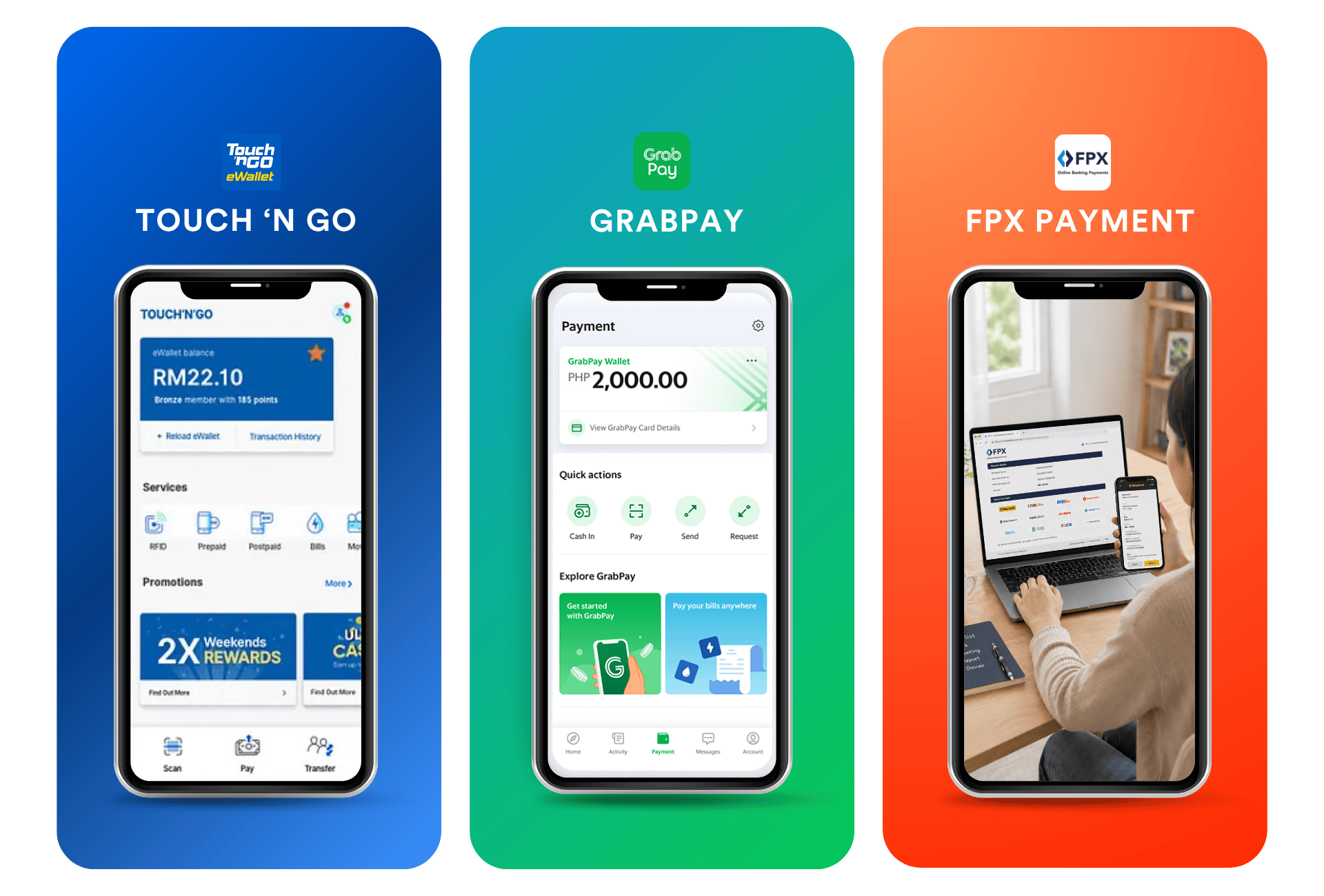
Touch ‘n Go eWallet is Malaysia’s leading digital payment platform, with GrabPay and bank transfer via FPX also widely used. Credit card acceptance is strong in urban centers. Cash-on-delivery exists but is less dominant than in Vietnam, Indonesia, or the Philippines, reflecting Malaysia’s higher digital payment maturity. A brand entering Malaysia with a complete digital payment stack covering Touch ‘n Go, GrabPay, and FPX will cover the overwhelming majority of the addressable buyer base.
Creative Nuance

Malaysian creative that works typically reflects the country’s multicultural composition rather than defaulting to one community’s cultural references. Campaigns that treat Malaysia as a Malay-only or Chinese-only market alienate the other communities and signal a lack of genuine market understanding. The brands that build the most durable trust in Malaysia are those that produce community-specific campaigns, acknowledging Hari Raya for the Malay Muslim segment, Chinese New Year for the Chinese-Malaysian segment, and Deepavali for the Indian-Malaysian segment, rather than attempting a single creative that addresses none of them specifically.
What the Country Nuances Have in Common
Across every market covered here, four patterns repeat in the cross-border marketing failures that experienced practitioners consistently observe.

The first is payment as an afterthought.
Every market in Asia has a dominant local payment method that is not international credit card, and every market has a segment of consumers who cannot or will not complete a transaction without that method. Payment localization is not a technical nice-to-have. It is a prerequisite for commercial access to each market.
The second is platform assumption.
The platforms that work in one Asian market do not automatically work in another. LINE is essential in Japan and Thailand but minimal in Indonesia. Zalo is critical in Vietnam and irrelevant everywhere else. Xiaohongshu reaches Singapore’s Chinese segment in ways no other platform currently matches. The platform strategy for Asia cannot be built from a global platform playbook.
The third is creative tone transfer.
The communication style, level of directness, emotional register, and humor type that produces results in one Asian market will not produce results when applied to an adjacent market. Japanese consumers find direct sales messaging aggressive. Filipino consumers find purely information-led content unengaging. Thai consumers respond to humor in ways that do not translate to the same effectiveness in Indonesian creative contexts.
The fourth is cultural prerequisite overlooked.
In several Asian markets, halal certification, Ramadan campaign planning, and community-first messaging are not cultural preferences that the brand can choose to address or not. They are market access prerequisites. A brand that enters Indonesia or Malaysia without halal certification in applicable categories, or that launches in Indonesia without a Ramadan activation plan, has not merely missed an opportunity. It has signaled to the market that it does not intend to be genuinely present.

Building genuine cross-border marketing competence across Asia requires either local teams in each market or a partner with operational presence across the markets being targeted. Understanding how to adapt business strategies to cultural differences at the country level is the foundational skill, and it sits beneath every other tactical decision about platforms, payments, and creative. Our analysis of the market nuances that shape brand success in each country and Creative For More’s Southeast Asia go-to-market services provide the market-specific execution that makes cross-border strategy commercially viable rather than theoretically sound.
If your company is building a cross-border marketing program across Asia and wants a strategic partner with genuine operating experience across these markets, the Creative For More team can help. Book a discovery call to explore how we can support your brand’s growth across the region.

Geraldine Pang
Creative For More
Geraldine Pang is the founder of Creative For More, a cross-border digital marketing agency with offices in Singapore, Tokyo, and New York. She specializes in brand strategy, market entry, and cross-border marketing across Southeast Asia, Japan, and the United States.