

The Skill of Seeing Opportunities Everywhere: How Entrepreneurs Train Their Minds to Spot What Others Miss
The Skill of Seeing Opportunities Everywhere: How Entrepreneurs Train Their Minds to Spot What Others Miss
Most people notice problems. Entrepreneurs notice possibilities. This single shift in thinking sits at the core of entrepreneurship, and it’s one of the earliest skills we build in our workshops. If you’ve ever wondered why some people seem to “get ideas all the time,” it’s not luck. It’s a trained habit. And once you learn it, you start to see opportunities in daily routines, simple annoyances, casual conversations, and even your own mistakes.
This article breaks down how opportunity spotting works, why the science behind it matters, and how beginners — students, young professionals, corporate managers, and early-stage founders — can start building this skill right away.
Why Opportunity Spotting Separates Entrepreneurs From Everyone Else

Entrepreneurship grows from one belief: problems can be turned into something useful, valuable, or impactful.
The difference between someone who moves forward with an idea and someone who walks past the same situation often comes down to mental training. A global study on early-stage entrepreneurs by Babson found that 42% of new founders said their first idea came from noticing a problem in their own routine. Another study by CB Insights showed that 35% of startups fail because they build something with no market need — which means the idea was never tested against real pain points.
Opportunity spotting solves this issue. It gives you a method to see what people struggle with and how you can create value.
A quick example
- Most people see a long queue at a food stall and think, “This is annoying.”
- An entrepreneur wonders, “Can queue tracking, pre-ordering, or batch notifications cut waiting time?”
Same situation. Different response.
The Mindset Shift That Unlocks Better Ideas
In our entrepreneurship programmes, the first exercise is simple:
For one day, write down every small inconvenience you experience.
This trains your awareness. You stop walking on autopilot and start noticing patterns.
Science backs this up. Behavioural psychology calls it “attentional filtering.” Your brain filters what it considers relevant. When you begin training your mind to search for opportunities, that filter opens up. You start seeing problems not as friction, but as signals.
Research from the University of Toronto found that people with stronger “opportunity recognition ability” tend to generate more than double the number of viable business ideas over time compared to those who don’t practice the skill.
Opportunity spotting is not talent. It’s a muscle.
Why Youth Are Actually Better at Spotting Opportunities

Young adults often underestimate themselves, but the data says otherwise. According to the Global Entrepreneurship Monitor (GEM), individuals between 18–34 are the fastest-growing group starting businesses worldwide.
Why?
Because they haven’t spent decades accepting the way things “should” be. They question norms. They experiment more. They’re closer to emerging culture shifts in social media, gaming, sustainability, and consumer behaviour.
Many of the best ideas come from someone who looked at a “this is how it has always been” process and asked, “But why?”
Three Types of Opportunities Most People Overlook
Opportunity spotting isn’t about waiting for a grand, genius idea. In reality, most businesses begin with one of three simple categories:
1. Daily irritations
These are small, frequent annoyances that people complain about but rarely solve:
- Losing items at home
- Poor queue experiences
- Cluttered digital tools
- Long onboarding processes at work
Businesses built from this pattern succeed because the demand is clear as people are already frustrated.
2. Outdated processes
Industries often move slower than culture.
Any task with layers of manual repetition is ripe for improvement:
- HR paperwork
- School administrative tasks
- Home-based care organisation
- Retail inventory checks
Spot a slow process → find a faster method → you have a business.
3. New behaviour shifts
This is where timing becomes your advantage:
- Remote work
- AI adoption
- Rising pet ownership
- Freelance economies
- Interest in wellness, mental health, and sustainability
Ideas born from shifting behaviour often scale globally because the trend is wider than one country.
A Simple Method Anyone Can Use: The O.P.E.N. Framework

This is a model we teach in our workshops. It helps beginners break a broad situation into clear insights.
O — Observe
Slow down and pay attention to what people do, not just what they say. Most genuine pain points show up in routine habits.
P — Pinpoint
Ask:
“What exactly is the main friction here?”
Good opportunity spotters focus on the specific stuck point.
E — Explore
Here you brainstorm possible solutions. Nothing needs to be perfect yet. You’re simply exploring directions.
N — Narrow
Pick the idea that:
- Solves a pain point that happens often
- Has a clear group of people who feel it
- Is realistic enough to test quickly
Good entrepreneurship doesn’t start with a huge plan — it starts with a small, testable step.
Why Most People Don’t See Opportunities (Even When They Walk Past Them Daily)
People often assume opportunities are hidden. In reality, they’re right in front of us — but three common habits block them:
1. Rushing through routines
When life feels packed, your brain switches to autopilot. Opportunities fade into the background.
2. Normalising frustration
People tend to think:
“That’s just the way things are.”
But every “that’s just the way things are” in the world was once redesigned by someone brave enough to rethink it.
3. Fear of being wrong
Many avoid new ideas because they fear judgement. Entrepreneurs get comfortable with testing even when they feel unsure.
Real Exercises You Can Start This Week
Here are the same drills we use in class to strengthen the opportunity spotting muscle:

Exercise 1: The Problem Log
For three days, list every irritation you notice. No filtering. No judging. Most participants record between 20–40 notes.
Exercise 2: Watch how people behave
Spend 20 minutes in a café, library, supermarket, or train station.
Look for repeat behaviour:
- Where do people pause?
- What causes confusion?
- What takes longer than expected?
These patterns reveal demand.
Exercise 3: Ask five people: “What is something that bothers you daily?”
You will hear the same answers repeated. That’s your market signal.
Exercise 4: Redesign one part of your own life
Pick something you do often and ask how it can be:
- Faster
- Simpler
- cheaper
- more convenient
Your first business idea might come from your own routines.
Why This Skill Matters More in Today’s Global Economy
Across the world, entrepreneurship has changed. You no longer need huge capital or complex infrastructure. You need insight, the ability to identify what people struggle with and how you can help.
In a world filled with problems, the person who sees opportunity first moves ahead.
This is why we teach this skill at the very beginning of every entrepreneurship workshop. It sets the foundation for stronger ideas, better decision-making, smarter validation, and more confident founders.
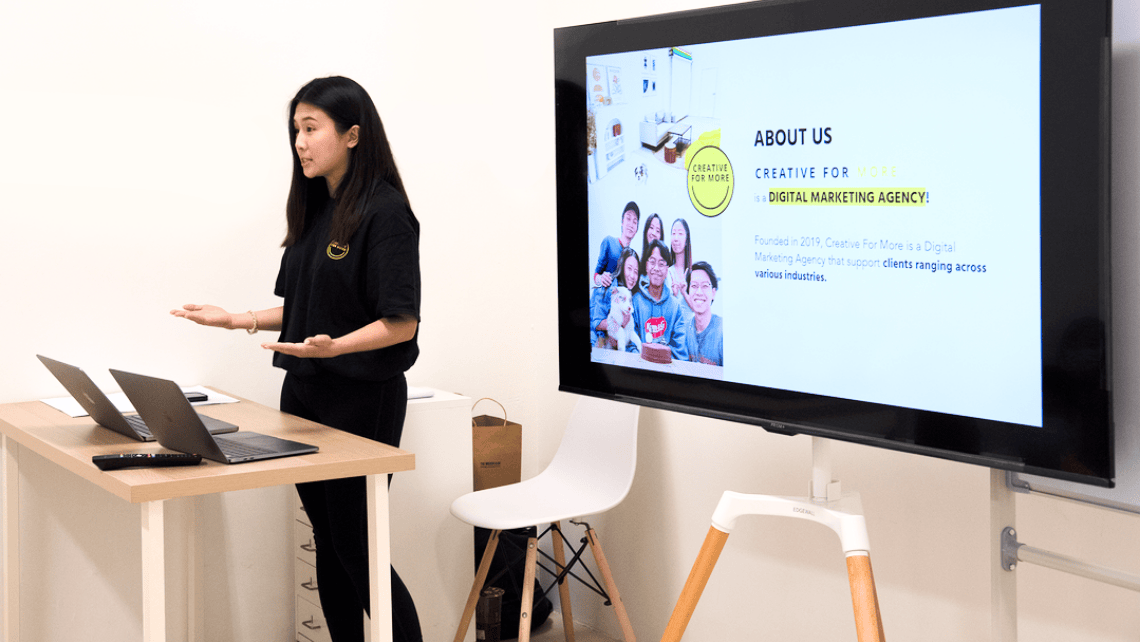
How We Teach Opportunity Spotting at Creative For More

Our sessions guide participants through:
- Live observation tasks
- Problem breakdown techniques
- Concept testing
- Feedback loops with peers
- Idea refinement practice
By the end of the programme, participants learn to:
- Identify clear gaps in daily life or work
- Translate them into concept directions
- Evaluate which ideas have market potential
- Pitch with clarity
It’s not just theory. It’s hands-on practice.
Details for Those Interested in Taking This Skill Further
Location
Available globally through virtual sessions.
In-person workshops run in Singapore, Tokyo, and New York.
How to book:
Visit creativeformore.com/workshops or contact our team to reserve a slot for individuals or corporate groups.
Final Thought
Opportunity spotting doesn’t require special talent. It requires curiosity, patience, and a willingness to see what others ignore. Once this habit forms, everything around you starts to look different. You begin spotting gaps, solving problems, and creating value, one observation at a time.
If you’d like to build this skill through guided practice, you can explore our entrepreneurship workshops designed for students, professionals, and early-stage founders. We’d love to help you train this ability and start your journey with confidence.

Geraldine Pang
Creative For More
Geraldine Pang is the founder of Creative For More, a cross-border digital marketing agency with offices in Singapore, Tokyo, and New York. She specializes in brand strategy, market entry, and cross-border marketing across Southeast Asia, Japan, and the United States.