

Travel Marketing Agency: How Travel Brands Win Bookings in Asia
Travel Marketing Agency: How Travel Brands Win Bookings in Asia
Travel is one of the most researched purchases a person makes, and one of the most emotional. That combination means travel marketing lives or dies on being present at the exact moment someone shifts from dreaming to booking.
A travel marketing agency builds the brand, content, and campaigns that turn that intent into bookings. The strongest ones understand both the emotional pull of a destination and the hard mechanics of direct bookings.
This piece covers what a travel marketing agency does, why Asia is a distinct market, and how travel brands drive bookings without handing all their margin to third-party platforms.
What Does a Travel Marketing Agency Do?

A travel marketing agency handles marketing for hotels, resorts, tour operators, destinations, and travel services. The work covers brand, content, paid campaigns, social media, and direct booking strategy. The goal is usually to drive direct bookings and reduce reliance on third-party platforms. Every booking that comes through an online travel agency carries a commission, so shifting demand to direct channels protects margin.
This connects closely to hospitality marketing, where the same tension between visibility and margin plays out across hotels and resorts.
Why Is Asia a Different Market for Travel Brands?

Asia is a different market because travel behavior, booking platforms, and source markets vary sharply across the region. A campaign built for Western travelers often misses how people in Asia actually research and book.
The region is also in strong recovery. According to the PATA Asia Pacific Visitor Forecasts 2026 to 2028, international visitor arrivals across the region are expected to range between 600 million and 918 million by 2028, with Northeast Asia holding the largest share.
Japan shows how powerful this recovery is. According to Future Market Insights, Japan reached a 131.6% pandemic recovery rate with 14.4 million visitors in the first half of 2025, helped by a favorable exchange rate. That kind of inbound surge rewards brands ready to capture it.
Intra-regional travel is the other shift. More travelers within Asia are visiting neighboring countries, which changes both the source markets a brand targets and the languages and platforms it needs to show up on.
How Is Travel Discovery Changing?
Travel discovery is shifting from search engines toward social platforms and AI tools. Travelers increasingly find destinations through video, creators, and AI recommendations before they ever open a booking site. The scale of the market makes this shift consequential. International tourism is expected to grow 3% to 4% in 2026, according to UN Tourism, with Asia and the Pacific among the strongest contributors to that growth.
For travel brands, this means visual and AI-ready content now drives discovery. A destination that isn’t visible where travelers research simply won’t make the shortlist, which connects to our work on generative engine optimisation.
How Do Travel Brands Drive Direct Bookings?
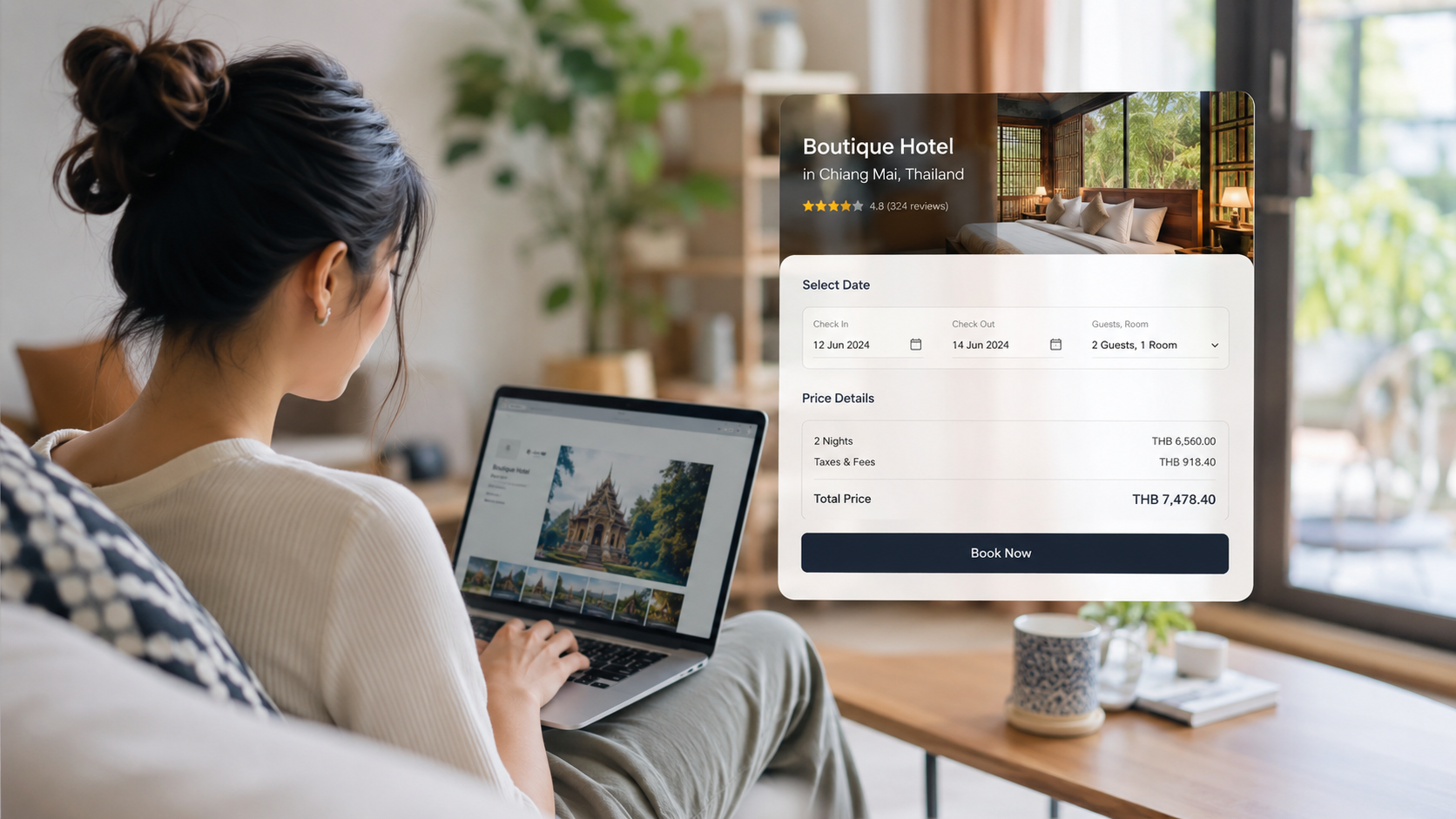
Travel brands drive direct bookings by owning the research and inspiration stages, not just the final transaction. The brand that shapes the dream usually captures the booking. Content and social do the early work. Visual, destination-led content on the platforms where travelers browse builds the desire that later converts, which is why social media marketing is so central to travel.
The booking mechanics matter just as much. A strong direct-booking strategy needs a fast site, clear pricing, and a reason to book direct rather than through a platform. We break down what actually drives direct bookings in our guide to hotel marketing in Asia.
| Booking Channel | Advantage | Trade-Off |
|---|---|---|
| Online travel agencies | Reach and visibility to new travelers | Commission erodes margin on every booking |
| Direct website | Full margin and owned customer data | Requires marketing to drive the demand |
| Social and content | Builds desire and brand at low cost | Slower to convert to bookings |
What Does the Travel Booking Funnel Look Like in Asia?
The travel booking funnel runs from dreaming to planning to booking, and Asian travelers cross more touchpoints than a single ad can cover. Inspiration usually starts on social or video, comparison happens across several sites, and the booking lands wherever the experience feels fastest and safest.
Which Channels Drive Travel Bookings in Asia?
No single channel drives travel bookings in Asia. A working mix blends metasearch, online travel agencies, paid social, influencer content, and visibility inside AI answers, each doing a different job in the funnel.
| Channel | Role in the Funnel | What It Needs to Work |
|---|---|---|
| Metasearch | Captures travelers comparing prices | Rate parity and a clear direct-booking hook |
| Online travel agencies | Reach to new source markets | Strong listings, then a reason to book direct next time |
| Paid social | Builds desire earlier in the funnel | Native, destination-led video |
| Influencer content | Adds trust and local context | Creators who match the source market |
| GEO and AI search | Places the brand in AI recommendations | Structured, citable content |
Creators do much of the early work, which is why strong influencer marketing often shapes which destination makes a traveler’s shortlist.
How Do Mobile and Payments Shape Bookings in Asia?
Mobile and payments shape bookings in Asia more than most global playbooks assume, because much of the region researches and books on a phone. A checkout that only takes international cards loses travelers who pay with local wallets, so supporting the methods a source market actually uses removes friction when intent peaks.
How Do Travel Brands Retarget and Measure What Works?
Travel brands retarget by staying present through the long gap between inspiration and booking, which can run for weeks. Someone who watched a destination video but didn’t book is worth reaching again with a reason to return.
Measurement is what keeps that spend honest. The number that matters is direct bookings and the cost to win them, not vanity reach, so a good agency ties every channel back to revenue.
When Should a Travel Brand Hire a Marketing Agency?
A travel brand should hire an agency when it depends too heavily on third-party platforms, or when it’s entering new source markets. Both cap growth and squeeze margin.
The clearest trigger is over-reliance on online travel agencies. A brand paying heavy commissions on most of its bookings needs a direct-booking strategy, which is exactly where an agency’s work pays back fastest.
The second trigger is reaching new travelers. Targeting a new source market means new languages, platforms, and cultural cues, which is the kind of cross-border work we handle. It connects to our approach to positioning resorts for Asian markets.
What Should You Look for in a Travel Marketing Agency?

Look for an agency that understands both destination storytelling and direct-booking mechanics. Many can do one or the other, but travel needs both working together.
Content and creative capability is the first test. Travel is a visual, emotional category, so an agency needs to produce content that makes people want to go, not just ads that describe a property.
Regional knowledge is the second. An agency that understands your specific source markets, their languages, platforms, and booking habits, will outperform one applying a single global playbook. That regional fluency is what separates a genuine partner from a generalist in a market as varied as Asia.
If you’re running a travel or hospitality brand and want a team that understands both the emotion of travel and the mechanics of direct bookings, the Creative For More team can help. Book a discovery call to explore how we can support your brand’s growth.
Additional Hotel Marketing Reads
- Marketing a Resort to New Feeder Markets: A Guide
- The Soft Brand Conversion Playbook
- Pre-Opening Digital Marketing for a Resort: A Guide
- Direct vs OTA Mix for Independent Resorts in Asia
- AI Search Is Changing How Travellers Find Hotels. Most Properties Aren’t Ready.
- Who Actually Owns Your Marketing After You Join a Hotel Collection?
- Vignette, Autograph, Curio, MGallery: How Do Soft Brand Collections Compare?

Geraldine Pang
Creative For More
Geraldine Pang is the founder of Creative For More, a cross-border digital marketing agency with offices in Singapore, Tokyo, and New York. She specializes in brand strategy, market entry, and cross-border marketing across Southeast Asia, Japan, and the United States.