

Ecommerce CRO: 12 Conversion Rate Optimisation Tactics That Work in 2026
Ecommerce CRO: 12 Conversion Rate Optimisation Tactics That Work in 2026
The average ecommerce conversion rate sits between 2% and 3% globally, according to Statista global ecommerce benchmarks cited in Qualimero’s 2026 ecommerce CRO guide. That means most stores leave 97% of their visitors unconverted. The visitors arrived, spent time on the site, and left without buying, despite the marketing investment that acquired them.
Conversion rate optimisation is the discipline that fixes this without increasing ad spend. According to Qualimero’s analysis, CRO is the highest-ROI investment an ecommerce brand can make because it improves revenue from traffic already acquired rather than paying for more. Every percentage point of conversion rate improvement compounds: a store converting 2% of 50,000 monthly visitors produces 1,000 sales. The same traffic converting at 3% produces 1,500 sales. The improvement required no additional media spend.
The twelve tactics below cover the CRO levers with the most measurable commercial impact in 2026, ordered by the stage of the purchase journey where they operate. Each tactic includes the specific mechanism by which it improves conversion and, where available, the benchmark that quantifies the expected improvement.
What Is the 2026 CRO Benchmark You Should Be Measuring Against?
Before optimising, a brand needs to know where it stands. The 2-3% global average ecommerce conversion rate hides meaningful variation by device, traffic source, and industry. Mobile conversion rates run 30% to 40% lower than desktop on average, according to the ecommerce statistics compiled by NEWMEDIA. Email marketing traffic converts at 4.9% on average, significantly above the average, while social media traffic converts at only 0.91% according to Optimonk’s CRO statistics guide. Organic search converts at 1.55%.
These traffic-source conversion rates tell a brand which acquisition channels are producing the most purchase-ready visitors and which are producing casual browsers. A brand spending heavily on social media acquisition to drive traffic that converts at 0.91% is producing a fundamentally worse unit economics outcome than the same investment in email list building and organic content, which converts at three to five times the social rate. CRO and acquisition strategy are not separate decisions.
The most useful conversion benchmark is the brand’s own current rate by device and traffic source, tracked consistently over time. Any upward movement, measured correctly with enough traffic to be statistically meaningful, confirms that a CRO tactic is working. Any downward movement after a site change identifies a problem before it compounds.
Tactic 1: Simplify Checkout to the Absolute Minimum
Checkout complexity is the single largest controllable driver of cart abandonment. Checkout abandonment affects approximately 69% of ecommerce carts according to industry data, and the primary driver is friction: unnecessary form fields, forced account creation, multi-step processes that extend the time between purchase intent and transaction completion, and unexpected information requirements that interrupt the commitment the consumer has already made.

The checkout simplification that produces the most measurable improvement combines three changes simultaneously. First, offer guest checkout as the default option. Forcing account creation before purchase is the most commonly cited reason for checkout abandonment and eliminates a meaningful proportion of first-time purchasers who are not yet willing to commit to a brand relationship before they have experienced the product. Second, reduce the number of form fields to the functional minimum required to complete the transaction. Every field that is not strictly necessary to process the order and deliver the product is a friction point that reduces completion probability. Third, implement a single-page or accelerated checkout format where possible, reducing the visual complexity of the purchase process and eliminating the page load delays that occur at each step of a multi-page checkout.
The commercial case is direct. According to Blend Commerce’s Shopify CRO benchmarks, adding a PayPal Express checkout button to a smart cart produced a 37% conversion rate increase in an A/B test. The mechanic is payment method pre-fill: Express checkout options pull billing and shipping details from the consumer’s existing payment account, eliminating the data entry that creates friction for mobile shoppers in particular.
Tactic 2: Show Total Cost Before Checkout Begins
The most reliable conversion killer at the checkout stage is the surprise: a consumer who adds a product priced at SGD 45 to their cart, proceeds to checkout expecting to pay SGD 45, and discovers at the payment page that shipping adds SGD 15 and a small platform fee adds another SGD 3, has been given a reason to abandon that did not exist when she added the product. The shipping cost surprise is the most common source of late-stage cart abandonment across ecommerce categories.
Transparency about total cost earlier in the purchase journey, specifically on the product page or in the cart view before checkout begins, removes the surprise and allows the consumer to make the full purchase decision with complete information rather than discovering the total cost only after she has invested time in the checkout process. According to Kickflip’s ecommerce conversion optimisation guide, transparency about shipping costs, return policies, and product details eliminates last-minute surprises that cause cart abandonment and should be made easily accessible before customers reach checkout.
The implementation is a shipping cost calculator on the product page or a dynamic cart total that updates with estimated shipping as soon as the consumer enters their delivery postcode, rather than revealing the cost only at checkout. For brands offering free shipping above a threshold, a cart progress indicator showing how much more the consumer needs to add to qualify for free shipping is both a transparency mechanism and an average order value optimisation tool simultaneously.
Tactic 3: Optimise Mobile Checkout Specifically
Mobile drives more than 60% of ecommerce traffic according to Qualimero’s 2026 CRO data, and mobile conversion rates sit at approximately half the desktop rate on average. That gap represents the largest single addressable conversion opportunity for most ecommerce brands, because the traffic volume is there and the conversion infrastructure is not.
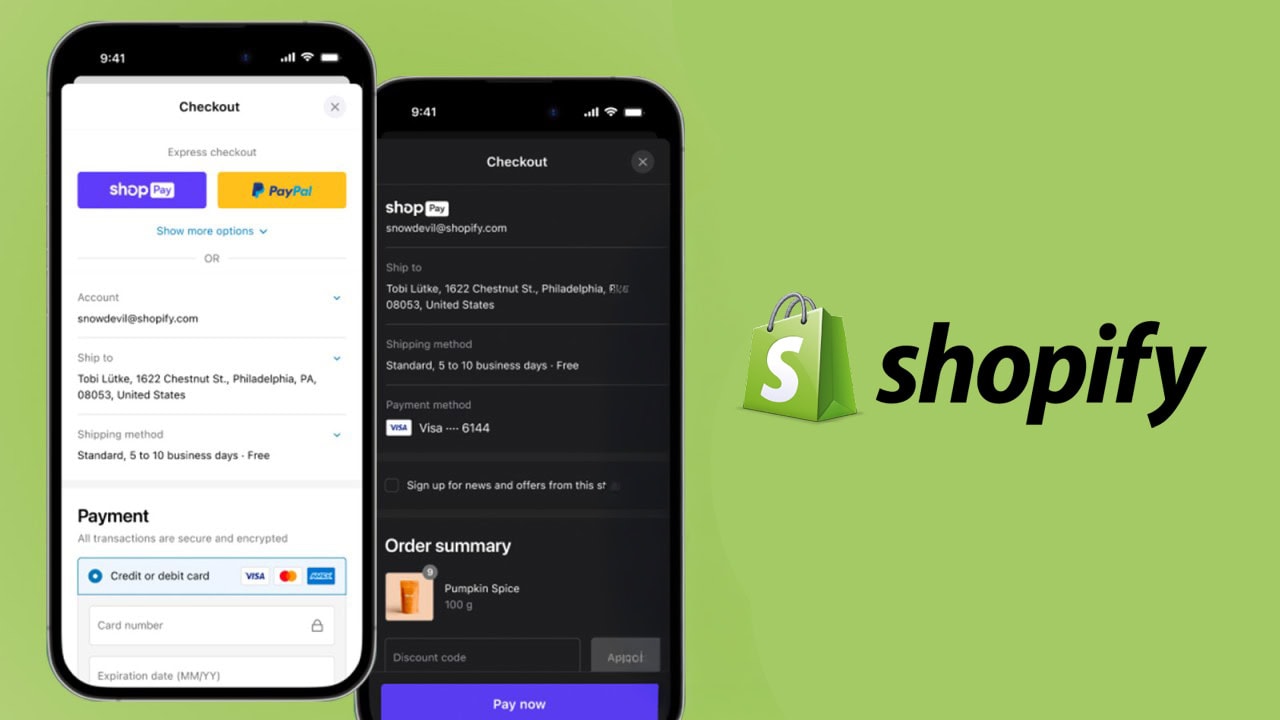
Mobile checkout optimisation is a distinct task from general mobile optimisation. A site that renders correctly on mobile screens can still have a checkout process that is functionally unusable on a phone: form fields that are too small to tap accurately, dropdown menus that require multiple attempts to interact with, credit card input fields that do not trigger the numeric keyboard automatically, and address entry forms that do not support autofill from the device’s address book. Each of these is a friction point that costs conversions specifically on mobile without affecting desktop performance at all.
The mobile-specific checkout fixes that produce the most measurable impact are: one-tap payment integration through Apple Pay and Google Pay, which eliminates form entry entirely for consumers who have these configured; postcode-based address lookup that pre-fills the address form from a postcode entry rather than requiring manual field completion; and thumb-zone optimisation that places all primary purchase actions within the lower third of the screen where mobile users’ thumbs naturally operate, rather than at the top of the page where reaching requires either a two-handed interaction or a grip adjustment.
Tactic 4: Add Local Payment Methods for Each Market
For ecommerce brands selling into multiple markets, payment method localisation is the conversion tactic with the highest geographic specificity and the clearest commercial case. A consumer in Indonesia who reaches checkout and finds only Visa, Mastercard, and PayPal available has not been offered the payment method she uses for daily digital commerce, which is GoPay, OVO, Dana, or QRIS. She will not complete the purchase by finding a credit card she does not have. She will leave.
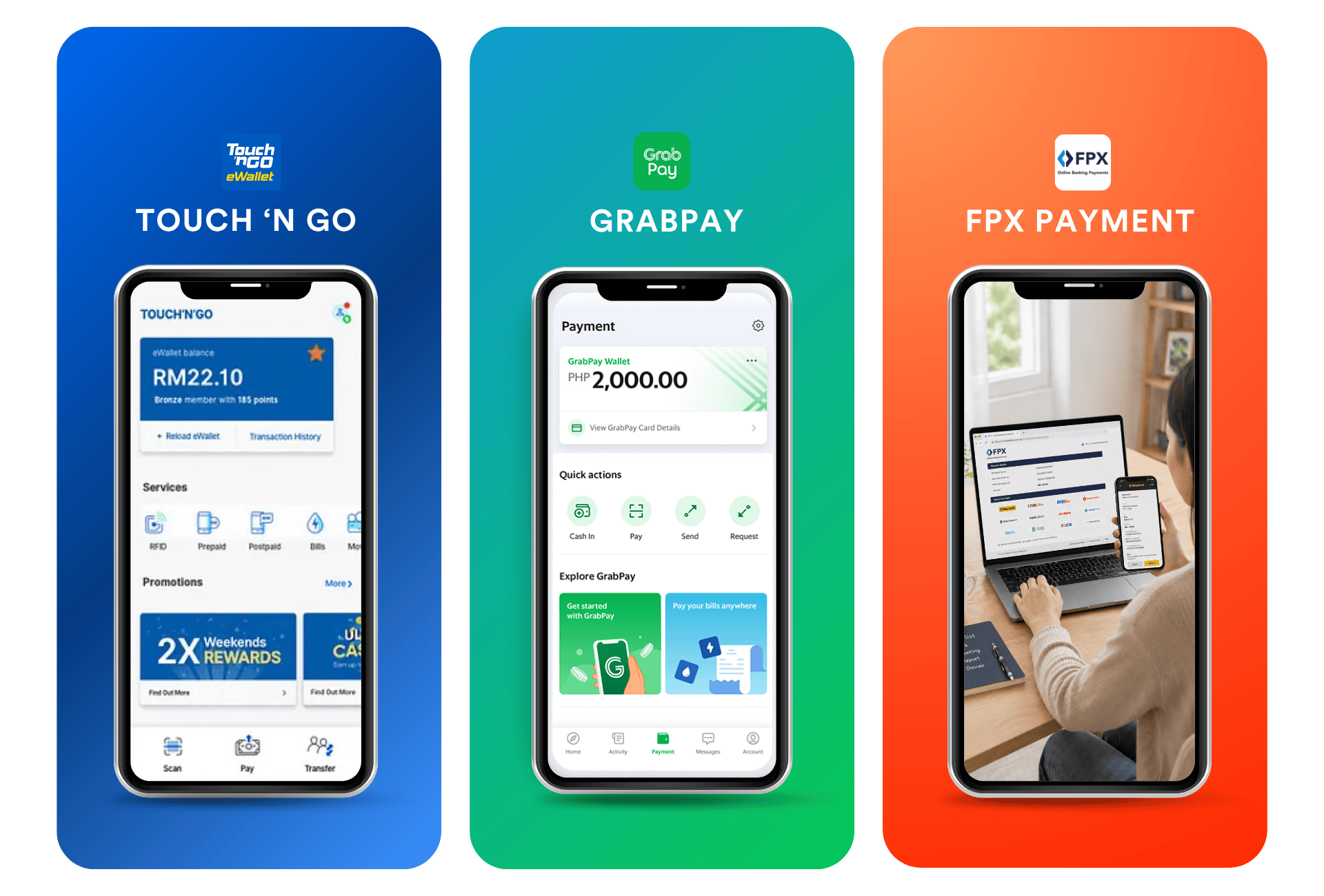
The payment methods that are non-negotiable for each Southeast Asian market are well documented in our go-to-market guide for Southeast Asia: PayNow and GrabPay for Singapore, DuitNow and Touch ‘n Go for Malaysia, GoPay and QRIS for Indonesia, MoMo and VNPay for Vietnam, PromptPay for Thailand, and GCash and Maya for the Philippines. Each of these has a material consumer base that will not convert without them. Adding all market-relevant payment methods to checkout is not a feature enhancement. It is a prerequisite for commercial viability in each market.
Buy-now-pay-later integration adds a conversion lever for higher-average-order-value products by reducing the perceived transaction commitment at checkout. Atome covers Singapore, Malaysia, Indonesia, and the Philippines. Afterpay and Zip are present in Singapore and Australia. For a D2C brand selling products above SGD 80, BNPL consistently improves checkout completion rates among consumers who are committed to the purchase but prefer to spread the payment, according to merchant data reported by Atome across its partner network.
Tactic 5: Put Social Proof Where Purchase Decisions Are Made
Social proof is not a homepage feature. Its commercial value is highest at the specific moments where the consumer’s purchase confidence is being formed or tested: on the product page where she is evaluating whether to add to cart, and in the checkout where she is deciding whether to complete the payment. According to Qualimero’s CRO guide, adding trust elements and badges to checkout pages typically lifts conversion rates by 5% to 15%.

The social proof that produces the most conversion impact is specific rather than generic. According to Lucky Orange’s CRO guide, the most effective social proof is specific and credible: a specific outcome number, a named customer with a job title, a verified purchase review that describes the product’s performance in the context of the reviewer’s specific situation. A review that says “I have oily skin in Singapore’s humidity and this serum stopped mid-day shine without feeling heavy” is more persuasive than five stars with no text, because it addresses the exact concern the potential buyer is carrying.
The placement of social proof should follow the consumer’s attention at each page stage. Star rating summary near the product price where price resistance forms. Selected reviews near the primary product claim the brand is making. Recently purchased or currently viewing indicators near the add-to-cart button where the decision to commit is made. Trust badges and payment security indicators at the checkout payment page where financial security concerns peak. Social proof in the wrong location has significantly less impact than social proof placed at the precise moment of the specific doubt it resolves.
Tactic 6: Elevate Product Page Media Quality
In ecommerce, the product image and video are the product. A consumer who cannot physically hold, examine, or try a product is making a purchase decision entirely from the media the brand provides. The quality gap between a product page with one front-facing product image on a white background and a product page with multiple angles, a lifestyle context image, a zoom capability, and a short product demonstration video represents a conversion gap that is proportional to the consumer’s category and product uncertainty.

Image by Digital Photo Editing
According to Shopify’s CRO guide, high-resolution product photography that showcases each item’s most popular features is a baseline CRO requirement, with 360-degree views, demonstration videos, or 3D models providing additional conversion uplift for products where the consumer’s purchase confidence depends on physical assessment that static images cannot provide. For beauty and skincare brands, before-and-after application images and texture close-ups are the media formats that address the specific purchase concerns of the category’s consumer. For fashion, multiple model angles and size reference images address fit uncertainty. For food and F&B, preparation imagery and ingredient close-ups address quality and freshness concerns.

Crate & Barrel’s online store
Video consistently outperforms static images across ecommerce categories for conversion impact. A 15 to 30 second product demonstration video on the product page that shows the product in use, communicates its texture, size, or application, and delivers the primary benefit claim in a format the consumer’s attention responds to, produces measurably higher add-to-cart rates than an equivalent static image gallery. According to NEWMEDIA’s ecommerce statistics, short-form video campaigns generate approximately 1.7 times higher click-through rates than static social ads, a signal that applies to product page video with comparable force.
Tactic 7: Implement Exit-Intent Recovery
Exit-intent technology detects when a consumer’s cursor movement or device behaviour signals that they are about to leave a site without completing a desired action, and triggers a targeted intervention at that moment. In ecommerce, the most valuable exit-intent recovery is on the product page, where the consumer has expressed enough interest to arrive but has not added to cart, and at the checkout, where the consumer has committed sufficiently to begin but has not completed.

The exit-intent intervention that converts the most product-page abandoners is an offer that removes the specific barrier most likely to be causing hesitation: a first-purchase discount for a consumer who has been on the product page for more than 60 seconds without adding to cart, a free shipping threshold reminder for a consumer whose cart is close to the free shipping minimum, or a social proof reinforcement showing the number of recent purchases or current viewers for a consumer who has been scrolling reviews without committing.
At the checkout stage, the exit-intent intervention should be a cart save mechanism rather than a discount. A consumer who has reached checkout and begun entering their details has already decided to buy. Offering a discount at this stage trains the consumer to abandon checkout in order to receive a discount on future visits. The cart save, which preserves the cart contents and sends a recovery email or WhatsApp message with a direct link back to the cart, recovers the purchase without incentivising the abandonment behaviour that discounting at checkout produces.
Tactic 8: Prioritise Page Speed Across Every Device
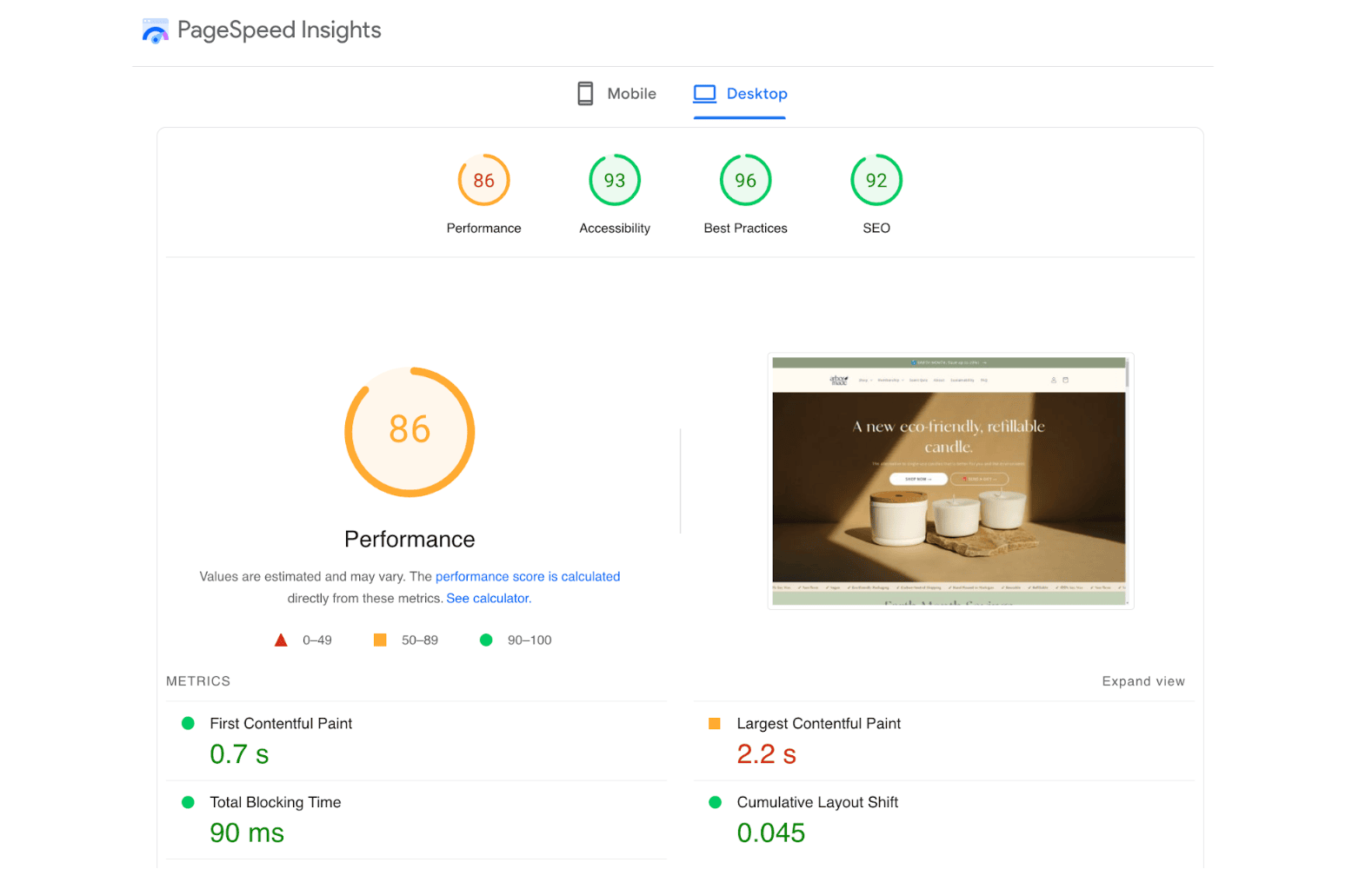
Page speed is both a conversion factor and a ranking factor, which makes it the CRO investment with the most compounding commercial return. According to Blend Commerce’s 2026 CRO benchmarks, any speed optimisation including image compression, faster hosting, and avoiding layout shifts usually yields measurable conversion rate gains in 2026. The user expectation in markets with high average mobile connection speeds, which includes Singapore, South Korea, Japan, and increasingly the urban areas of most Southeast Asian economies, is load times under two to three seconds. Beyond that threshold, bounce rates increase proportionally with each additional second of load time.
The speed optimisations with the highest return per hour of implementation effort are: image compression and next-generation image formats (WebP instead of JPEG), which reduce the largest payload most ecommerce sites carry without visible quality degradation; lazy loading for images below the fold, which defers the loading of images the consumer has not scrolled to yet; and the elimination of render-blocking scripts that delay the display of the above-the-fold content the consumer sees first. Core Web Vitals, Google’s speed and experience metrics, measure these factors specifically and their optimisation improves both search ranking and conversion simultaneously.
Mobile page speed deserves separate measurement from desktop page speed, because mobile network conditions and device processing power produce different load time experiences even when the server response time is identical. Google’s PageSpeed Insights tool provides device-separated speed scores and prioritised recommendations, making it the most practical starting point for a brand assessing where its page speed investment will produce the highest conversion return.
Tactic 9: Use Personalised Product Recommendations
Personalised product recommendations are the CRO tactic that improves two funnel metrics simultaneously: conversion rate, by presenting the consumer with products more likely to match their purchase intent than a generic bestseller list, and average order value, by surfacing complementary or adjacent products that the consumer may not have considered but is likely to respond to given their browsing behaviour.
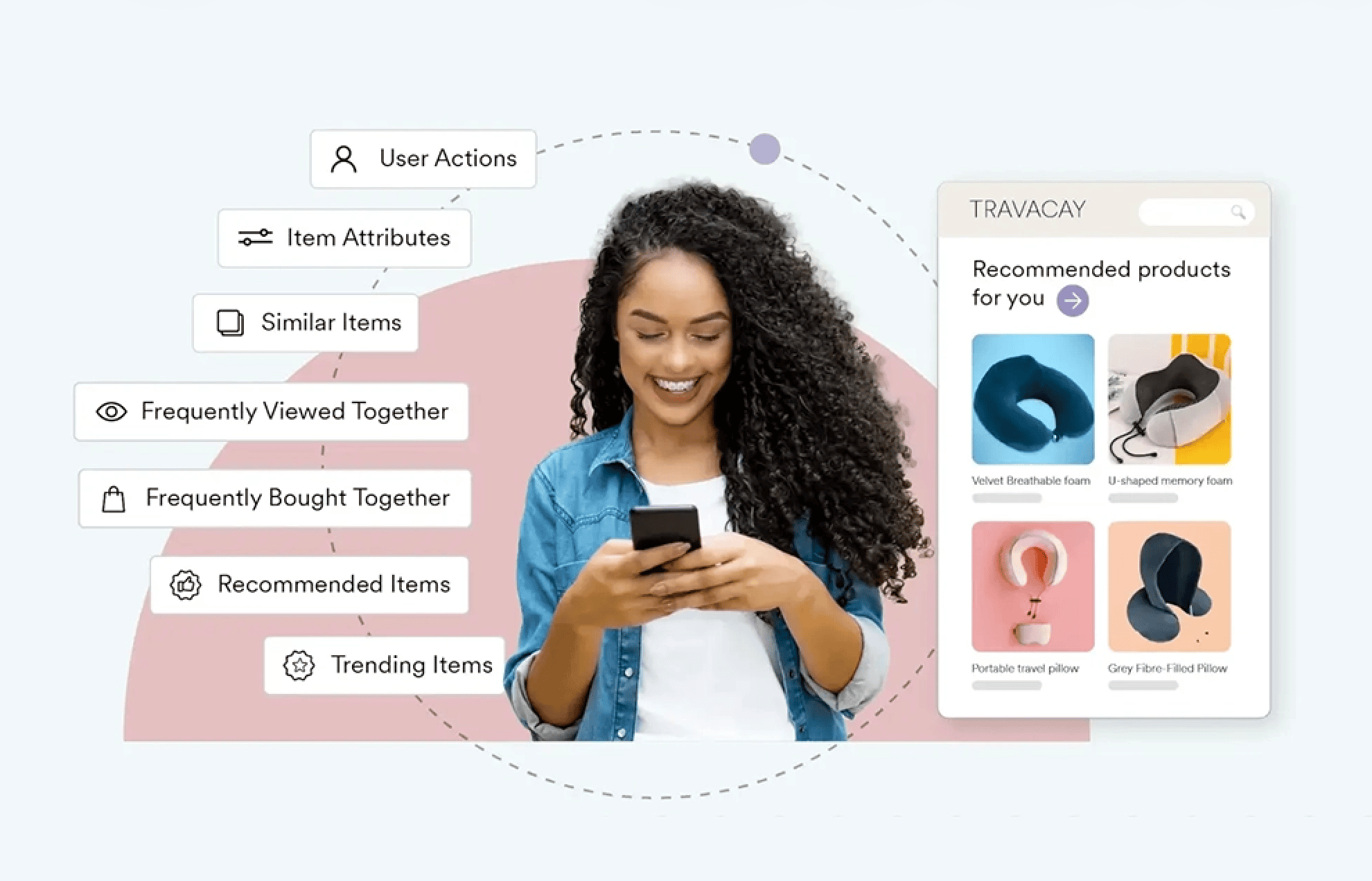
According to Maropost’s 2026 ecommerce CRO strategies guide, AI-powered product recommendations are among the most effective 2026 CRO investments, delivering what Qualimero’s data describes as three to seven times higher conversion rates for complex products where the consumer’s specific situation should determine which product variant is recommended. For a skincare brand, recommending a lightweight serum to a consumer who has browsed oily-skin products and a rich cream to a consumer who has browsed dry-skin products is a personalisation that generic bestseller recommendations cannot replicate.
The recommendation placements that produce the most commercial impact are: “Frequently bought together” on the product page, which increases average order value through relevant bundle presentation; “Recently viewed” in the cart or checkout, which recovers consideration of products the consumer showed interest in earlier in the session; and post-purchase recommendations in the order confirmation email or post-purchase page, which create the first repeat purchase opportunity at the moment of highest brand receptiveness immediately after the first transaction is completed.
Tactic 10: Strengthen Trust Signals at Every Friction Point
Trust is the purchase prerequisite that no other CRO tactic can substitute. A consumer who does not trust that a brand will deliver what it promises, that a payment will be processed securely, that a return will be honored, and that the product will match its representation, will not complete a purchase regardless of how well the checkout is optimised. Trust building in ecommerce is not a single intervention. It is a continuous investment at every stage where trust uncertainty slows or stops the purchase journey.

The trust signals that have the highest impact at each stage are specific. On the homepage and product pages, the trust signals that matter are social proof volume and quality, any third-party certifications or media recognition the brand holds, and clear and findable contact information that proves a real business is behind the site. At the checkout, security badges from recognised payment processors, SSL certificate indicators, and a clearly visible and accessible return policy remove the financial risk perception that causes consumers to hesitate before entering payment details. Post-purchase, a clear and easy-to-find customer service contact path and a proactive order status communication give the consumer confidence that the brand will resolve any issues that arise.
For cross-border ecommerce brands entering new Asian markets, the trust signals that matter most are those that bridge the geographic gap between the brand’s origin and the consumer’s location. A Singapore-specific customer service contact, a Bahasa Indonesia-language FAQ page, or a Vietnamese-language post-purchase communication all signal market commitment that generic English-language trust signals do not. The consumer whose language and market are acknowledged is significantly more likely to complete the purchase and return for a second one than the consumer who receives the same message as a customer in the brand’s home market.
Tactic 11: Build a Multi-Channel Cart Abandonment Recovery Program
Cart abandonment recovery is the CRO tactic with the most immediate and measurable return because it targets consumers who have already demonstrated purchase intent. A consumer who added a product to cart and began checkout before leaving is closer to conversion than any consumer who arrived cold, and the cost of recovering them is a fraction of the cost of acquiring a comparable consumer from scratch.
The most effective cart abandonment recovery programs in 2026 are multi-channel rather than email-only. According to Maropost’s CRO strategies guide, omnichannel cart abandonment campaigns are among the most effective 2026 CRO investments because they reach the consumer on the channel she is using at the moment of re-engagement, rather than assuming she will return to the email that arrives in an inbox she may not check for several hours. The recovery sequence that produces the highest combined recovery rate combines: a push notification or SMS within 15 to 30 minutes of abandonment for consumers who have opted into these channels; an email within one to two hours with a direct link to the cart; and a retargeting ad on the consumer’s most-used social platform within 24 hours showing the abandoned product.
In Southeast Asian markets, the recovery channel mix reflects the region’s platform preferences rather than a Western email-first assumption. WhatsApp message recovery in Malaysia and Singapore, LINE Official Account message recovery in Thailand and Japan, Zalo message recovery in Vietnam, and SMS in markets where app-based messaging is not dominant, all outperform email recovery alone because they reach the consumer on the channel she is most actively monitoring at the moment the recovery message arrives.
Tactic 12: Run Prioritised A/B Tests on the Highest-Traffic Pages
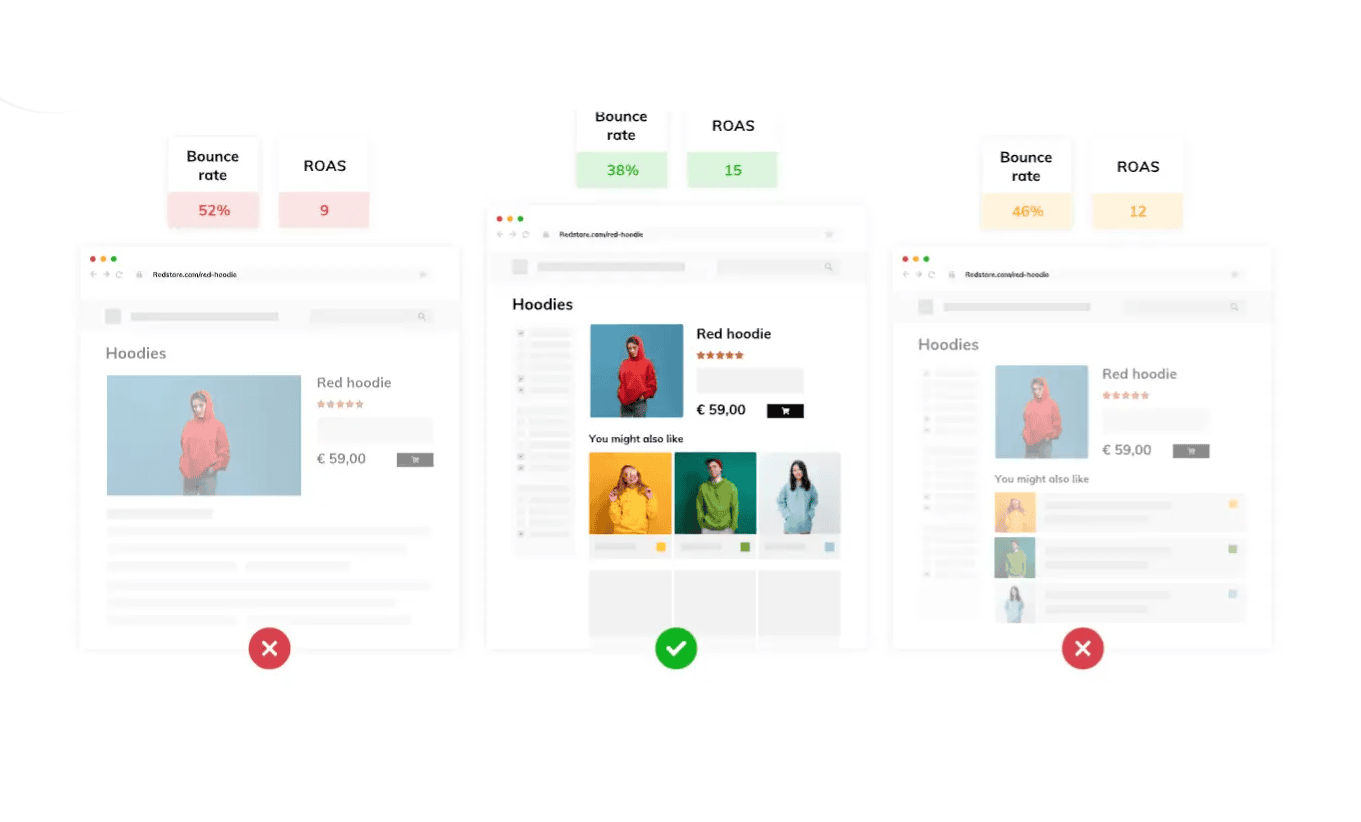
A/B testing is the mechanism that converts CRO hypotheses into verified performance improvements rather than assumed ones. Without testing, a brand cannot distinguish between the CRO changes that genuinely improved conversion and the changes that coincided with an improvement attributable to seasonal demand, campaign traffic quality, or other variables that the test isolates against. The brands that build compounding CRO improvement over time are those that test relentlessly, according to Blend Commerce’s 2026 benchmarks.
The prioritisation framework that makes A/B testing programmes commercially efficient rather than randomly experimental is the ICE score: Impact, Confidence, and Ease. Each proposed CRO test is scored on how significantly it is expected to impact conversion if it works, how confident the team is that the hypothesis is correct based on existing data, and how easily the test can be implemented without significant engineering resource. Tests with the highest combined ICE score run first. This prevents the common A/B testing failure mode of spending disproportionate time testing low-impact changes, such as button color, while high-impact tests, such as checkout field reduction, wait in the queue.
The pages where A/B testing delivers the most commercial return per test are the highest-traffic pages in the conversion funnel: the homepage for new visitor first impressions, the primary product page for the brand’s best-selling product, the cart page, and the checkout. A test that produces a 1% conversion improvement on a page receiving 10,000 sessions per month produces 100 additional conversions per month at no additional acquisition cost. The same 1% improvement on a page receiving 500 sessions produces five. Testing effort should scale with traffic volume at each stage of the funnel.
The tactics above cover the highest-impact CRO levers across the full ecommerce purchase journey. Implementing them in order of the commercial priority the ICE framework identifies, starting with checkout simplification and payment localisation for most brands, and sustaining the improvement through ongoing A/B testing, is the programme structure that produces compounding conversion rate growth rather than one-time incremental improvements.

Creative For More’s digital marketing services cover the full ecommerce funnel, from the social media marketing that drives discovery-stage traffic through to the conversion optimisation and retention programs that make that traffic commercially productive. Our understanding of how ecommerce conversion works specifically in Singapore and across Southeast Asia, where payment localisation and market-specific trust signals determine conversion rates as much as site experience does, informs the CRO recommendations we make for brands building cross-border ecommerce operations in the region.
If your brand wants a strategic marketing partner to audit your ecommerce funnel and identify the highest-impact CRO investments for your specific market and category, the Creative For More team can help. Book a discovery call to explore how we can support your brand’s conversion rate and revenue growth.
More About Ecommerce
- How to Sell Cross-Border in Southeast Asia: A Brand’s Complete Ecommerce Guide (2026)
- The Ecommerce Marketing Funnel Explained: From First Click to Repeat Purchase
- Ecommerce CRO: 12 Conversion Rate Optimisation Tactics That Work in 2026
- Shopify vs Headless Commerce: Which Is Right for Your Cross-Border Brand?
- Ecommerce SEO for Asia: How to Rank on Google Singapore, Japan and Beyond
- Amazon to DTC: How to Build an Owned Ecommerce Channel That Doesn’t Start From Zero

Geraldine Pang
Creative For More
Geraldine Pang is the founder of Creative For More, a cross-border digital marketing agency with offices in Singapore, Tokyo, and New York. She specializes in brand strategy, market entry, and cross-border marketing across Southeast Asia, Japan, and the United States.