

Ikigai for Career Clarity: How to Find Work That Aligns With Who You Are
Ikigai for Career Clarity: How to Find Work That Aligns With Who You Are

If you have ever asked yourself, “What should I do with my life?” or “Why does my career look fine on paper but feel misaligned?” you are not alone. Many professionals struggle with choosing between passion, stability, salary, and relevance. The Japanese concept of Ikigai offers a practical framework for resolving this tension. Rather than chasing titles or trends, Ikigai helps you identify the intersection between what you love, what you are good at, what the world needs, and what you can be paid for. When these four elements overlap, career decisions become clearer and more sustainable.
What Is Ikigai?
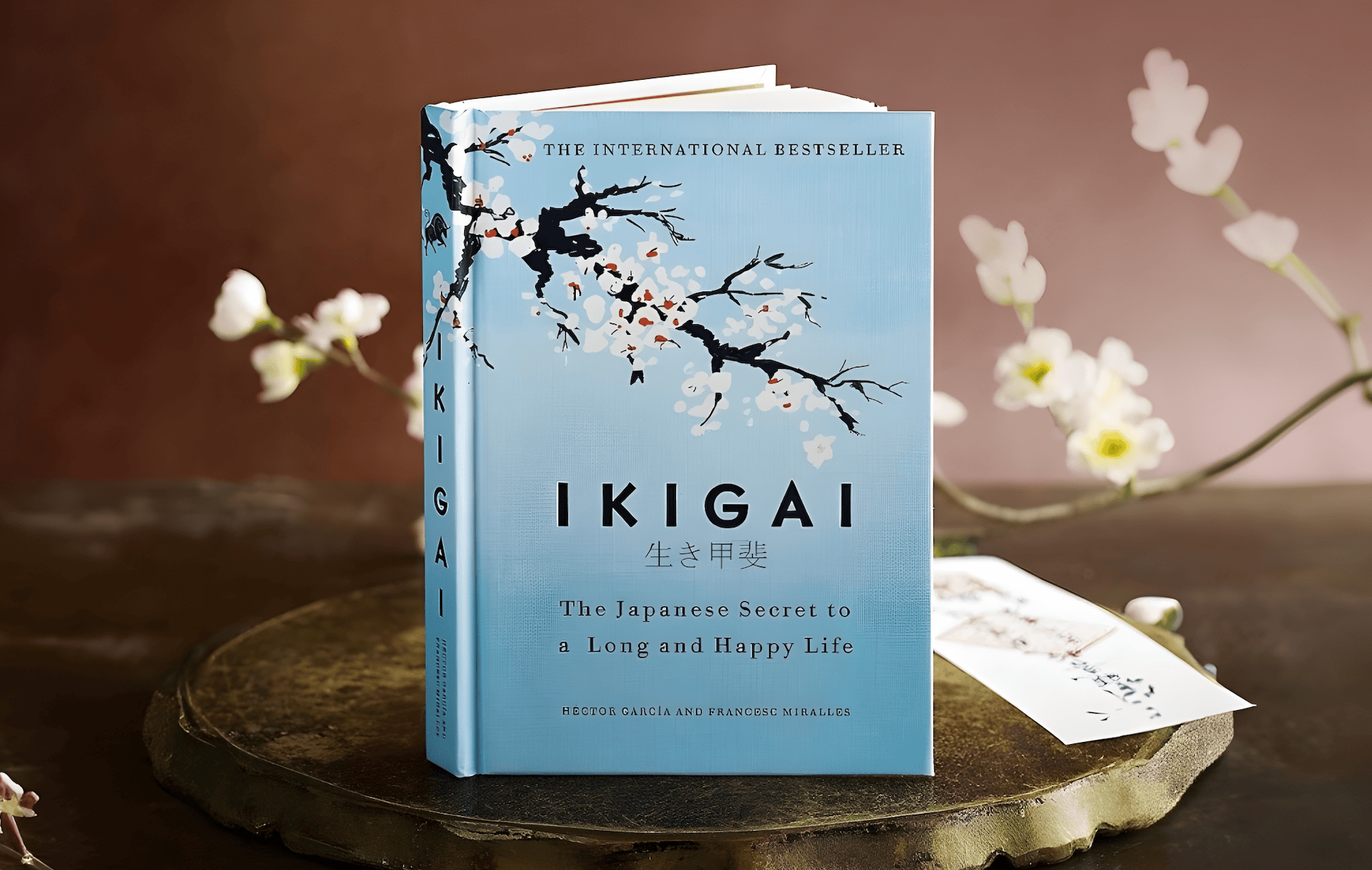
Ikigai: The Japanese Secret to a Long and Happy Life
Ikigai is a Japanese concept that translates loosely to “reason for being.” In career development, it is commonly represented as four overlapping circles:
- What you love
- What you are good at
- What the world needs
- What you can be paid for
At the center of these four elements lies meaningful and sustainable work.
Unlike abstract advice about “following your passion,” Ikigai provides structure. It forces you to evaluate both internal motivation and external demand.
Why Ikigai Matters in Today’s Job Market
Modern careers are no longer linear. Industries evolve quickly. Roles shift. Skills age faster than before. This creates uncertainty, but it also creates opportunity.
Without clarity, professionals often:
- Follow trends without direction
- Choose salary over fulfillment
- Stay in comfortable roles that no longer stretch them
- Pursue interests that lack market demand
Ikigai reduces noise. It brings you back to alignment.
From Stuck to Unstoppable: How to Regain Momentum in Your Career
The 4 Circles of Ikigai Explained
1. What You Love: Energy and Motivation
This circle represents what energizes you.
Ask yourself:
- What types of problems do I enjoy solving?
- What conversations naturally hold my attention?
- When do I feel most engaged at work?
Energy is information. If your work consistently drains you, misalignment is likely.
2. What You Are Good At: Strength Patterns
Instead of vague traits, look for repeatable strengths.
Consider:
- What do colleagues rely on me for?
- What feedback do I consistently receive?
- What results have I improved in past roles?
Strength includes analytical thinking, communication, structure, creativity, decision-making, leadership, and execution.
Your most valuable abilities often feel ordinary to you because they come naturally.
3. What the World Needs: Relevance and Demand
Interest alone is not enough. Demand matters.
Research:
- Job descriptions in your desired field
- Industry challenges
- Emerging skill gaps
- Hiring trends
When your strengths solve real and growing problems, your value increases. Relevance transforms personal interest into career opportunity.
4. What You Can Be Paid For: Sustainability
Compensation is a reflection of value exchange. When someone is willing to pay for your work, it signals that your skills address a real and tangible need. Without this element, even work that feels meaningful can become difficult to maintain long term. Ikigai brings together purpose and practicality, helping you build a career that is both fulfilling and financially sustainable.
10 Rules of Ikigai
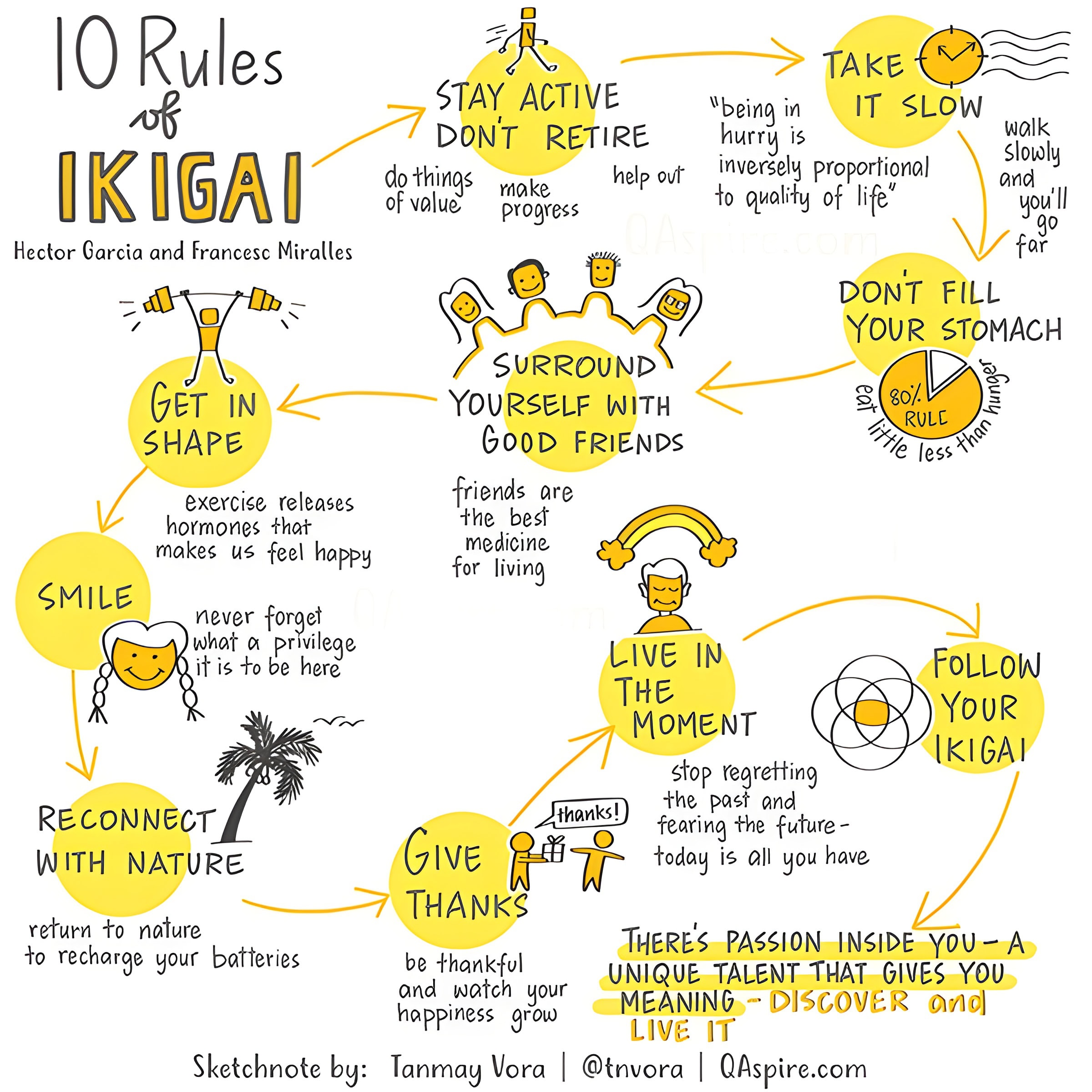
Once you have reflected on the four circles and begun identifying your own areas of alignment, it helps to zoom out and look at Ikigai not just as a career framework, but as a way of living. The “10 Rules of Ikigai,” popularised by Hector Garcia and Francesc Miralles, shift the focus from strategy to daily practice. They remind us that purpose is not discovered only through big career decisions, but through small, consistent habits—staying active, nurturing friendships, living in the present, expressing gratitude, and taking life at a steady pace. In other words, Ikigai is not only about what you do for work. It is also about how you structure your days, your relationships, and your energy so that meaning becomes something you experience regularly, not something you postpone.
Common Career Mistakes Ikigai Helps Prevent
Choosing Salary Without Energy
One of the most common career mistakes is choosing salary without considering energy. A high income can provide stability and status, but if the work consistently drains you, disengagement builds quietly over time. Burnout rarely happens overnight. It develops when effort is sustained without genuine interest or alignment. Financial reward alone is rarely enough to maintain long-term motivation.
Choosing Passion Without Demand
Another frequent mistake is choosing passion without demand. You may deeply enjoy a subject or activity, but if there is little market need for it, financial pressure can quickly follow. Meaningful work still needs to solve a real problem for someone. Without relevance, even strong enthusiasm can become difficult to sustain.
Staying in Comfort Zones
Staying in comfort zones is another subtle trap. You might be highly skilled at something simply because you have done it for years. Familiarity creates competence. Yet being good at a task does not automatically mean you are fulfilled by it. Over time, comfort without growth can lead to stagnation and reduced curiosity.
Following Trends Without Self-Reflection
Following trends without self-reflection is equally risky. It is tempting to pivot toward whatever industry appears to be growing fastest. But what works for others may not suit your strengths, interests, or temperament. Without understanding your own alignment, trend-chasing can lead to constant reinvention without real progress.
How to Find Your Ikigai: A Practical Process
Step 1: Audit Your Energy
Write down five professional moments when you felt engaged and proud.
Look for patterns:
- Type of problem
- Type of responsibility
- Type of environment
Step 2: Identify Your Strength Patterns
Review previous roles and projects.
Ask:
- What did I improve?
- What did I simplify?
- What was I trusted to handle?
Step 3: Study Market Demand
Search job boards and industry reports.
Highlight:
- Frequently requested skills
- Repeated pain points
- Growth sectors
Compare these with your strength patterns.
Step 4: Test Before You Pivot
Avoid dramatic shifts without experimentation.
Instead:
- Take on related projects
- Build a small portfolio
- Volunteer for stretch work
- Freelance in that area
Ikigai becomes clearer through action.
Ikigai for Career Switchers
If you are considering a career change, Ikigai can help you reposition strategically without starting from zero. Instead of asking, “What completely new field should I enter?” shift the question to, “How can my existing strengths solve problems in a different industry?” Many successful career pivots are not about abandoning past experience, but about reframing it. When you understand your core skills and how they create value, you can transfer them across industries with clarity and confidence.
Ikigai for Mid-Career Professionals
Feeling stuck despite stability is often a signal of drift.
Signs include:
- Low energy
- Lack of growth
- Reduced curiosity
- Feeling easily replaceable
Revisit the four circles:
Have your interests evolved?
Has your role stopped stretching your strengths?
Has the market shifted?
Alignment requires recalibration over time.
Is Ikigai Permanent?
No.
Ikigai is not fixed. Your priorities at 25 will likely differ from those at 40. Skills evolve, industries shift, and personal circumstances change. What once felt aligned may need adjustment over time. Rather than treating Ikigai as a one-time discovery, view it as an ongoing exercise in alignment. Revisit the four circles regularly and use them as a form of strategic maintenance for your career.
Final Reflection
If you are searching for career clarity, focus on alignment rather than chasing titles or status. When what you love, what you do well, what the market genuinely values, and what can sustain you financially begin to intersect, your direction becomes easier to see. Ikigai does not eliminate uncertainty or guarantee a perfectly smooth path. What it does is cut through confusion. And when your choices are grounded in alignment, clarity builds steadily over time.
Similar Reads

Geraldine Pang
Creative For More
Geraldine Pang is the founder of Creative For More, a cross-border digital marketing agency with offices in Singapore, Tokyo, and New York. She specializes in brand strategy, market entry, and cross-border marketing across Southeast Asia, Japan, and the United States.