

How to Launch a Pet Brand in Japan: Market Entry Guide for 2026
How to Launch a Pet Brand in Japan: Market Entry Guide for 2026
Japan is one of the most rewarding pet markets in Asia, and one of the easiest to get wrong. The spending is high, the pet owners are loyal, and the standards are unforgiving. A product that sells well in Singapore or the US can stall in Tokyo simply because the label doesn’t carry the information a Japanese buyer expects to see.
We work with pet brands entering Japan from our Tokyo office, and the same pattern shows up again and again. Brands treat Japan as a translation exercise when it’s a trust exercise. Here’s what launching a pet brand in Japan actually takes in 2026.
Is the Japan Pet Market Worth Entering in 2026?
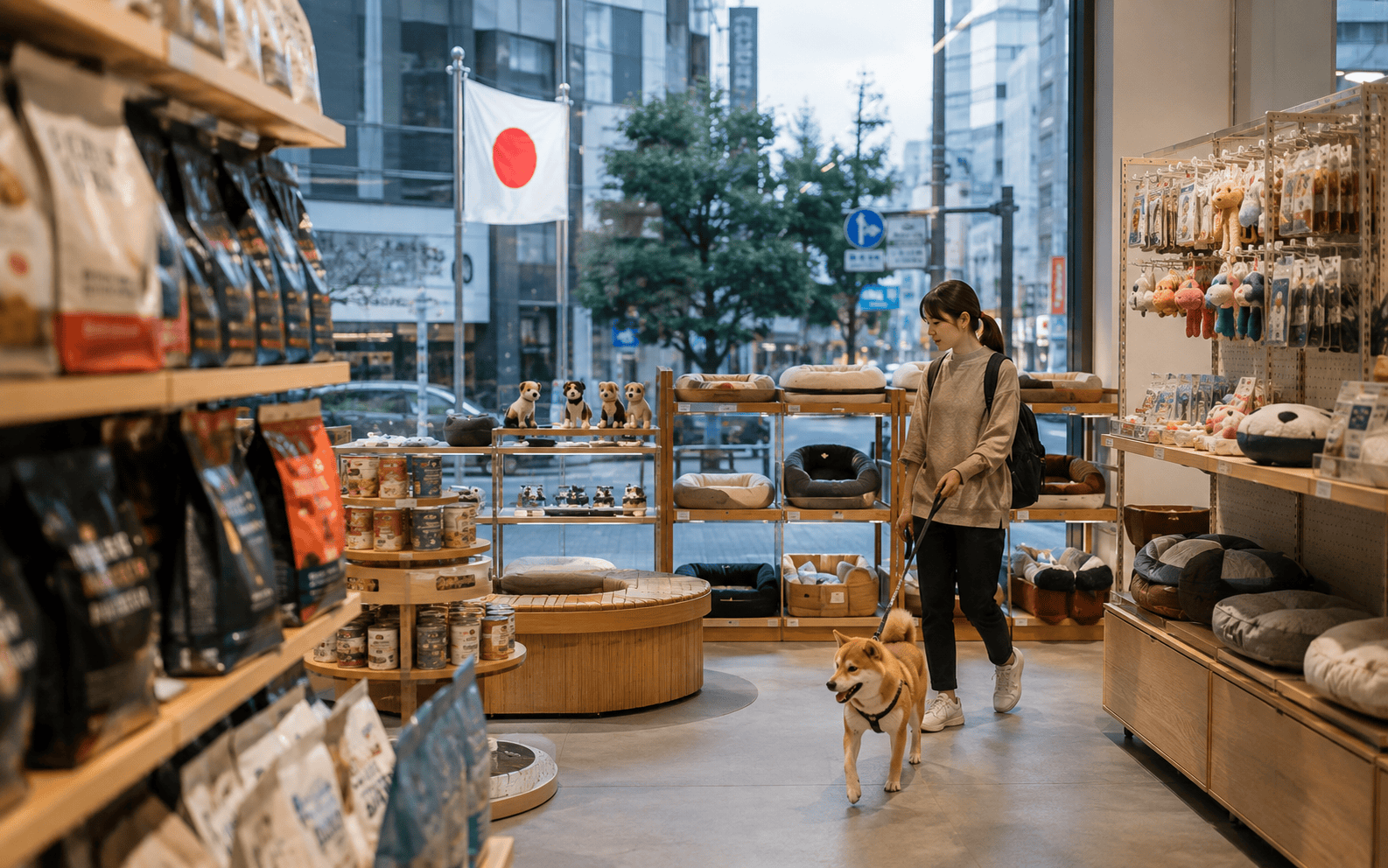
Yes. Japan is a mature, high-value pet market with consistent premium demand, which makes it attractive for brands with a differentiated product. According to Asia Pro Distribution (2026), Japan’s pet food market adds around USD 5.2 billion in value, sitting alongside Australia as one of the region’s most sophisticated pet economies.
What makes Japan different from the fast-growing Southeast Asian markets is its stability. According to Mordor Intelligence (2026), Japan exhibits a mature, high-value profile driven by professional veterinary influence and an aging pet population that sustains demand for therapeutic diets and functional products.
The catch is import dependence. Japan imports an estimated 40 to 60% of its pet food consumption by volume, which means foreign brands aren’t fighting for scraps. They’re competing for a real share of a market that already relies on outside supply.
What Do Japanese Pet Owners Expect From a Brand?
Japanese pet owners expect transparency, traceability, and proof before they trust a new brand. This is the single biggest adjustment most foreign pet brands underestimate.
According to Asia Pro Distribution, Japanese premium pet food consumers expect a full ingredient list with the source country for each protein component, a guaranteed analysis covering protein, fat, moisture, and fiber percentages, an AAFCO complete-and-balanced claim or equivalent, and production batch traceability.
Here’s the thing. None of that is marketing. It’s the entry ticket. A brand that can’t show where its chicken or salmon comes from starts the conversation at a disadvantage, no matter how strong the product is.
The trust signals that matter most
| Signal | Why It Matters in Japan |
|---|---|
| Source country per protein | Buyers check origin. “Chicken” isn’t enough; “New Zealand lamb” is. |
| Guaranteed analysis | Expected on-pack. Its absence reads as amateur. |
| Batch traceability | Signals safety and recall readiness, which Japanese buyers value. |
| Vet endorsement | Veterinary influence is strong; clinic-recommended carries weight. |
What Are the Regulatory Requirements to Import Pet Food Into Japan?
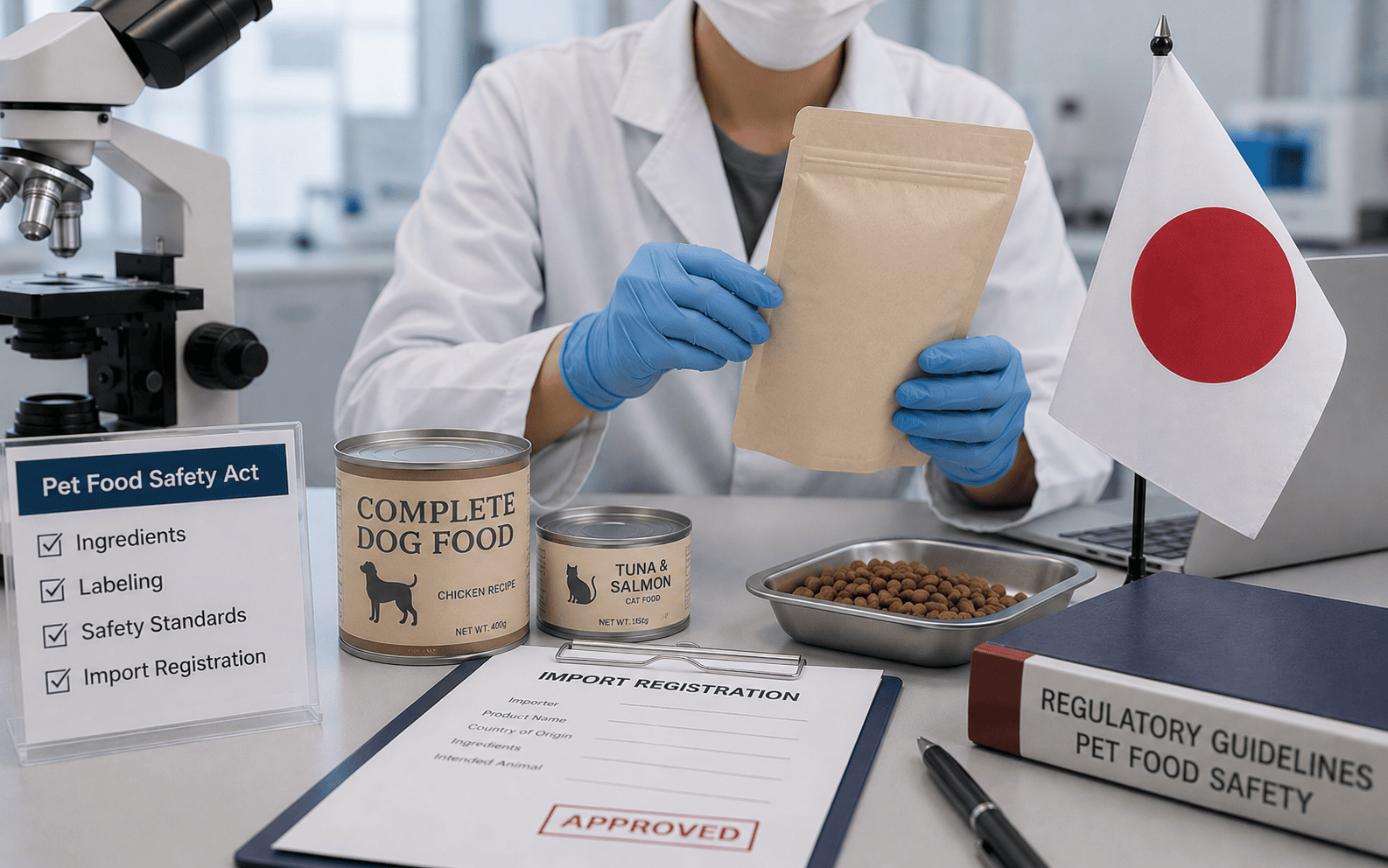
Pet food imported into Japan is regulated primarily under the Pet Food Safety Act, which sets standards for ingredients, labeling, and safety. Brands must register import details and meet labeling rules covering ingredients, origin, and the intended animal before products can be sold.
Regulatory friction is the top barrier to entry across Asia, not just Japan. According to IndexBox (2026), regulatory fragmentation across Asia-Pacific remains a significant barrier, with divergent labeling requirements, ingredient approval processes, and import registration timelines increasing go-to-market complexity.
The practical takeaway: build your regulatory and labeling work into the launch timeline from day one. Brands that treat compliance as a final step before shipping almost always lose months.
How Should a Foreign Pet Brand Position Itself in Japan?
Position on trust and proof, not price. Japanese pet owners rarely switch brands on discount alone, so a launch built around promotions tends to attract one-time buyers, not loyal ones
The stronger play is to lead with the product’s credibility: sourcing, safety, and the specific problem it solves. In the campaigns we’ve run for pet brands across Singapore and Japan, the content that converts is the content that shows the mechanics of the product, not lifestyle mood shots.
Localisation also has to go beyond translation. Japanese consumers expect bilingual service and native-quality Japanese assets. A brand with no Japanese-language content signals that it isn’t serious about the market. We’ve written before about the go-to-market partners that help foreign companies enter Japan, and localisation quality is consistently the dividing line between brands that scale and brands that stall.
What’s the Right Entry Structure for a Pet Brand?
Most pet brands should start with a distributor or business-matching partner before committing to a subsidiary. This keeps costs capped while you test demand and build local relationships.
A full subsidiary demonstrates commitment but carries real cost. We break down the trade-offs between distributors, representative offices, and subsidiaries in our guide to Japan market entry strategy, and for most pet brands the distributor-first route is the sensible starting point.
The vet channel is worth flagging as an opportunity. According to IndexBox (2026), veterinary recommendations carry significant weight with premium-aspiring pet owners, and building relationships with veterinary professionals can yield a durable competitive advantage.
How Long Does It Take to Launch a Pet Brand in Japan?

Plan for six to twelve months from decision to shelf, depending on your product category and regulatory complexity. Food and supplements sit at the longer end because of registration and labeling requirements. Accessories and non-ingestible products move faster.
The timeline compresses when regulatory prep, localisation, and distributor conversations run in parallel rather than in sequence. That’s where an on-the-ground partner earns its fee: not by doing one thing, but by running several workstreams at once so the launch doesn’t stall waiting on any single piece.
If you’re planning to expand into Japan and need a partner who understands both the market and the regulations, the Creative For More team can help. Book a discovery call to explore how we can support your brand’s growth.
Read More About Pet Marketing
- Pet Influencer Marketing in Singapore: A Beginner’s Guide
- Premium Pet Brands in Asia: How to Position and Price
- What Pet Owners Look for Before Buying a New Brand
- Gen Z Pet Owners in Southeast Asia: What They Actually Want
- What Does a Pet Marketing Agency Actually Do? (And When Your Brand Needs One)
- Pet Influencer Marketing: How Brands Run Campaigns That Convert
- How to Choose a Pet Marketing Agency: A Brand-Side Checklist

Geraldine Pang
Creative For More
Geraldine Pang is the founder of Creative For More, a cross-border digital marketing agency with offices in Singapore, Tokyo, and New York. She specializes in brand strategy, market entry, and cross-border marketing across Southeast Asia, Japan, and the United States.