

Medical and Aesthetics Marketing in Singapore: A Compliance-First Playbook
Medical and Aesthetics Marketing in Singapore: A Compliance-First Playbook
Most Singapore medical and aesthetics clinic marketing compliance failures are not deliberate. They are the product of a marketing team that understood “no before-and-afters” and “no guarantees” but did not understand the full extent of what the regulations actually govern. The regulatory framework for medical advertising in Singapore is more specific, more layered, and more actively enforced than most clinic owners and their marketing partners realize until enforcement arrives.
Singapore’s medical advertising regulations carry penalties of fines up to SGD 20,000, imprisonment of up to 12 months, and licence suspension, according to Yang’s Web’s analysis of MOH PHMC advertising guidelines. MOH enforcement is active rather than theoretical: the same source documents that each non-compliant advertisement may constitute a separate offence. A single non-compliant campaign with multiple ad variations across multiple platforms produces multiple separate offence exposures simultaneously. The clinic, not the marketing agency, bears legal responsibility for all advertising content.
This playbook covers the full regulatory framework that governs Singapore medical and aesthetics marketing, the specific prohibitions that each layer imposes, what can and cannot be said under each, and how to build a patient acquisition funnel that generates consistent new patient volume within the framework rather than around it.
What Is the Three-Layer Regulatory Framework for Medical Advertising in Singapore?
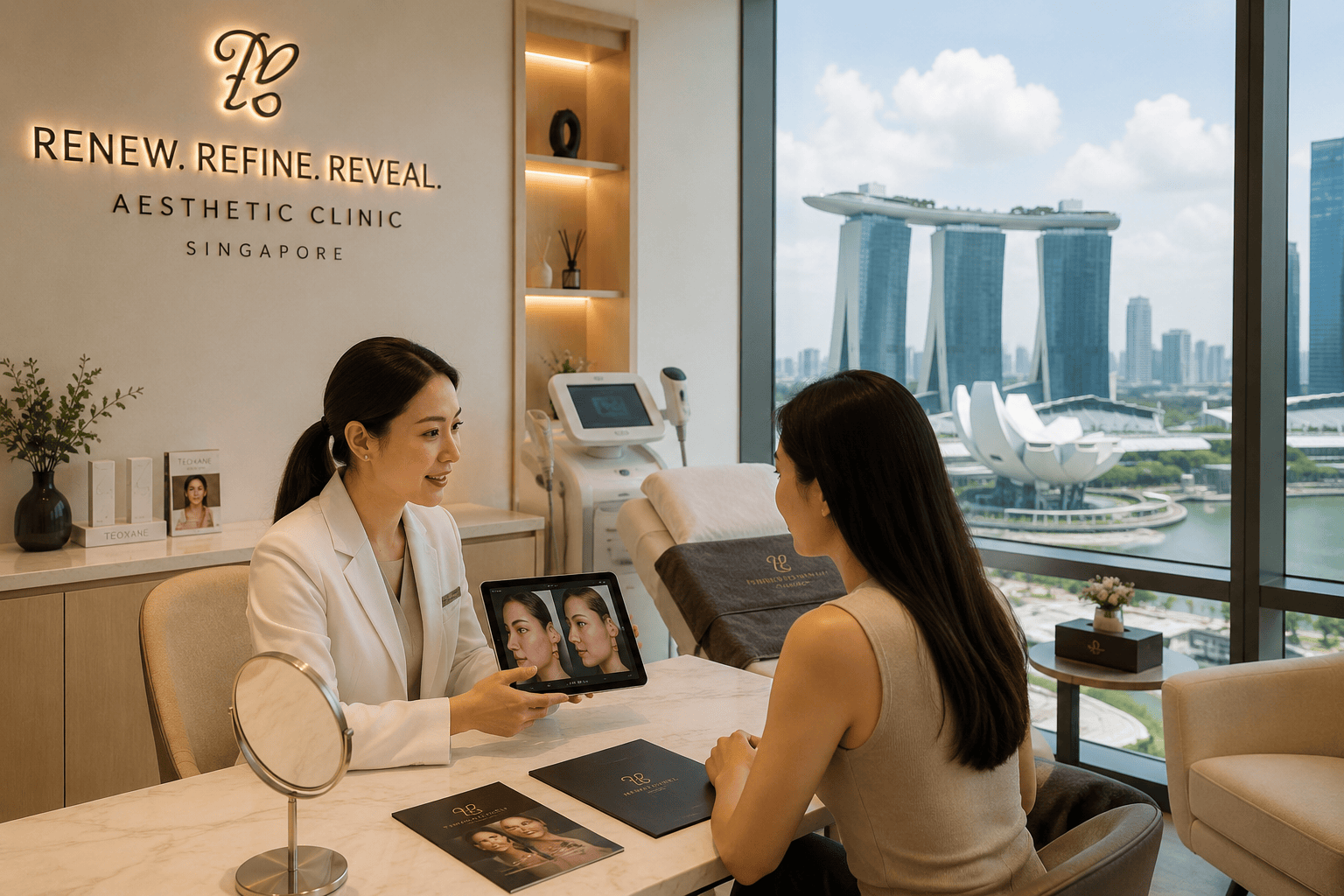
Singapore medical advertising is governed by three simultaneous regulatory layers, not one. The most common compliance gap arises when a clinic or its marketing partner understands one layer but not the other two, producing content that satisfies one set of requirements while violating another.
The three layers are:
- The Healthcare Services Act (HCSA) and its associated Healthcare Services (Advertisement) Regulations, which govern the clinic entity as a licensed healthcare institution
- The Singapore Medical Council (SMC) Ethical Code and Ethical Guidelines for Registered Medical Practitioners (ECEG), which govern the individual registered doctor;
- The Singapore Medical Association (SMA) Advisory on Medical Ethics and Professional Conduct, which provides additional professional conduct guidance.
According to Yang’s Web’s Singapore medical advertising guidelines analysis, all three apply simultaneously. A clinic can be fined under HCSA while the doctor simultaneously faces SMC disciplinary proceedings for the same advertisement. Both apply, and one does not cancel the other.
This three-layer structure means that compliance requires understanding both institutional and individual obligations. The HCSA governs what the clinic as an entity can publish. The SMC ECEG governs what the individual registered doctor whose practice is being marketed can allow to appear in that marketing. A clinic whose marketing content would violate the SMC ECEG places both the clinic and the individual doctor at risk, even if the doctor was not involved in producing the specific marketing content in question. Doctors who have engaged a marketing agency or employed a marketing team bear professional responsibility for the content that team produces under their practice’s name.
What Does HCSA Regulation 5 Actually Prohibit?
Regulation 5 of the Healthcare Services (Advertisement) Regulations is the heart of Singapore’s medical advertising restriction framework. It contains seven sub-sections, each covering a distinct category of prohibited advertising content. Understanding each category specifically prevents the partial compliance that produces enforcement exposure while believing the clinic is operating within the rules.
Prohibition 1: Unsubstantiated Claims
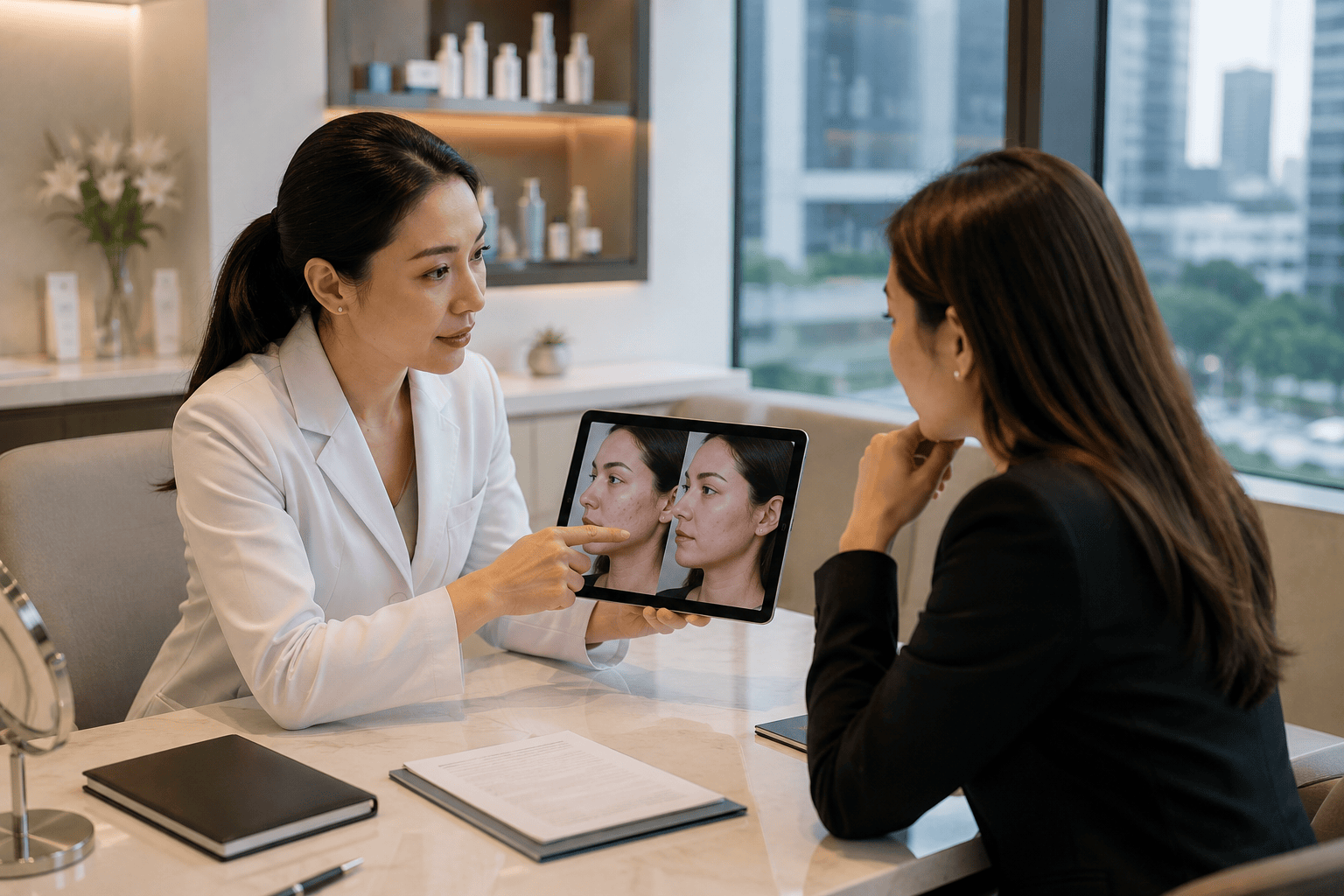
Every factual claim in medical advertising must be substantiated with credible evidence meeting a standard of peer-reviewed journals and published clinical data rather than manufacturer marketing materials or anecdotal experience. According to Yang’s Web’s analysis, a claim that “our laser treatment reduces pigmentation by 90%” requires a published study to support it. The claim is not prohibited because it makes a specific assertion. It is prohibited if the clinic cannot produce peer-reviewed evidence to substantiate that specific assertion on request. Compliant alternative language states the mechanism of action and the general evidence basis without asserting specific outcome percentages the clinic cannot document.
Prohibition 2: Before-and-after Photographs in Advertising
Before-and-after photographs are prohibited in advertising designed to attract new patients. This prohibition applies to website pages designed to attract new patients, social media content aimed at marketing the clinic’s services, and paid advertising across all digital channels. The compliant distinction is between advertising content and clinical information provided to a patient who is already engaged with the clinic for the purpose of informed consent, where treatment imagery serves an explanation rather than a promotional function.
Prohibition 3: Superlatives and Claims of Superiority
Statements asserting that a clinic or doctor is the best, safest, most effective, most experienced, leading, or top-rated in any dimension are prohibited. According to Marketing Agency Singapore’s healthcare marketing guide, statements like “best ENT specialist in Singapore” or “leading orthopaedic clinic” are not permitted. The compliant alternative is factual accreditation reference: “Accredited by the Singapore Medical Council (SMC) and recognized for excellence in patient care” is compliant because it references a third-party recognition rather than a self-asserted superlative, according to MediaOne’s PHMC guidelines analysis.
Prohibition 4: Testimonials and Patient Endorsements in Advertising

Patient testimonials that attribute specific outcomes to the clinic’s treatments in advertising content are prohibited. The distinction that affects practical marketing decisions is between patient testimonials in advertising, which are prohibited, and independently posted patient reviews on Google Business Profile or similar third-party review platforms, which are not advertising and are not prohibited. A clinic can ask patients to post honest reviews on Google. It cannot publish those reviews as advertising content, incorporate them into advertising copy, or incentivize reviews with discounts or prizes, which would additionally breach PDPA consent rules.
Prohibition 5: Urgency Tactics and Pressure-inducing Language
Language designed to create urgency or pressure that induces patients to seek treatment, including limited-time availability claims, scarcity messaging, and countdown promotions, is prohibited. This prohibition reflects the broader regulatory principle that medical advertising must not encourage unnecessary consumption of medical services.
Prohibition 6: Discounts and Promotional Lead Magnets
Free consultations and discounts used as promotional lead magnets are prohibited under Regulation 15 of the HCSA Advertising Regulations, according to Yang’s Web’s analysis. A clinic cannot advertise a free first consultation as an incentive to attract new patients, or promote a discounted package price as a marketing incentive. Transparent pricing for services is compliant. Promotional mechanics that use price incentives to induce patient acquisition are not.
Prohibition 7: Comparative Advertising That Cannot Be Substantiated
According to E3’s Singapore medical marketing regulations analysis, the SMC guidelines prohibit sensationalism, exaggeration, and comparisons that cannot be substantiated. A comparison of treatment outcomes, cost, or efficacy between one clinic’s services and a competitor’s is prohibited unless it can be substantiated with credible clinical evidence. In practice, comparative advertising is almost never employed by compliant Singapore medical marketing because the substantiation requirement is nearly impossible to satisfy for the kind of comparative claims that would be commercially useful.
What Can Singapore Medical Practices Actually Say in Marketing?
The scope of what is permitted in Singapore medical marketing is broader than most clinic owners assume after encountering the list of prohibitions. The prohibitions eliminate specific techniques rather than eliminating marketing effectiveness. The content that is fully compliant and commercially productive covers the patient’s complete research and decision journey.
| Content Type | Compliant? | Notes |
|---|---|---|
| Doctor qualifications, credentials, and training | Yes | Factual listing of degrees, fellowships, board certifications, and institutional affiliations is fully compliant and commercially valuable |
| MOH registration number and SMC accreditation | Yes | Displaying registration numbers and SMC accreditation is compliant and provides verified trust signals |
| General descriptions of services offered | Yes | Factual service descriptions without outcome claims are compliant. “We offer HIFU treatment for skin lifting” is compliant. “HIFU lifts your face in one session” is not. |
| Verifiable patient satisfaction data | Yes, with conditions | “90% satisfaction rate in post-treatment surveys” is compliant when derived from genuine documented surveys. Vague satisfaction claims without methodology are not. |
| Educational content about conditions and treatment options | Yes | Educational content explaining how conditions develop, what treatment categories exist, and how clinical evaluation determines appropriateness is fully compliant and drives organic discovery |
| Third-party accreditations and recognitions | Yes | ISO certifications, hospital accreditations, and professionally recognized affiliations are compliant trust signals |
| Appointment booking information | Yes | Online booking availability, consultation hours, and contact information are fully compliant |
| Treatment mechanism explanations with clinical basis | Yes | Explaining how a treatment works, what biological mechanism it engages, and what the clinical evidence base for that mechanism is, is fully compliant and builds clinical authority |
| Pricing information | Yes | Transparent pricing is compliant. Promotional pricing used as an incentive is not. |
| Google Business Profile | Yes | The internet is an explicitly approved advertising medium under Regulation 5(1), including GBP, according to First Page Digital’s Singapore medical marketing regulations analysis |
According to PaperCut Singapore’s 2026 compliance-first digital marketing guide, accreditations and memberships, appointment booking systems, online consultation availability, and general practice descriptions without outcome claims are all fully permitted. The compliant content landscape is substantial. The clinics that market effectively within the framework are those that invest in producing the most comprehensive and authoritative version of the permitted content, rather than trying to approach the prohibited content boundaries.
What Do the SMC ECEG Requirements Add for Individual Doctors?

The SMC Ethical Code and Ethical Guidelines for Registered Medical Practitioners (ECEG) adds a second layer of obligation that applies to the individual registered doctor rather than to the clinic entity. Every registered medical practitioner in Singapore has professional obligations that govern how they can market their personal practice or appear in institutional marketing, in addition to the HCSA obligations that govern the clinic itself.
The SMC ECEG prohibits individual doctors from engaging in advertising that is false, misleading, or deceptive; that makes representations about services not yet available; that uses comparative language that denigrates other practitioners or institutions; or that uses sensationalism or exaggeration to attract patients. These prohibitions closely mirror the HCSA restrictions but apply at the individual practitioner level, meaning a registered doctor who personally produces, approves, or allows content that violates the ECEG faces SMC disciplinary proceedings regardless of whether the clinic entity simultaneously faces HCSA penalty.
The practical implication for clinic marketing is that every piece of marketing content needs to be reviewed not only for HCSA compliance but for SMC ECEG compliance as it relates to the individual doctor whose practice is being marketed. A doctor who reviews and approves a marketing campaign without identifying an ECEG violation that the campaign contains has approved content that may expose them personally to disciplinary proceedings. The review responsibility cannot be delegated entirely to a marketing agency: the registered practitioner bears personal professional responsibility for the content that appears under their name and practice.
The compliant approach to doctor-led marketing content is the one that turns the SMC ECEG’s education requirement into a marketing asset. A doctor who produces content that demonstrates genuine clinical knowledge, explains their approach to patient assessment and treatment planning, and communicates the professional judgment process that they bring to clinical decisions is producing content that the SMC ECEG permits and that the patient the clinic wants to attract, highly educated and meticulous in their research, responds to most favorably. The doctor’s professional voice is the trust signal that replaces testimonials and before-and-afters in the compliant marketing framework.
How Do You Build a Compliant Patient Acquisition Funnel?
A compliant patient acquisition funnel for Singapore medical and aesthetics practices works through the same three stages as any effective marketing funnel: awareness, consideration, and decision. The specific content and channel investment at each stage must be designed around the regulatory framework rather than despite it.
Awareness Stage: Organic and Paid Search for High-intent Patients
The awareness investment that most efficiently acquires patients who are actively researching a concern rather than browsing casually is search. According to Marketing Agency Singapore’s healthcare marketing guide, when someone searches “dermatologist near Novena” or “knee replacement surgery Singapore cost,” they are expressing a clear need. Ranking for these searches puts the practice in front of patients at the exact moment they are looking for care. Monthly marketing investment for Singapore healthcare practices running comprehensive SEO and search advertising programs typically begins at SGD 3,000 for basic SEO and scales to SGD 8,000 to 15,000 for competitive specialties with active Google Ads investment.
The internet is an explicitly approved advertising medium under Regulation 5(1) of the HCSA, which permits search engine optimization and paid search advertising (Google Ads and SEM) provided all content rules under Regulation 4 are followed, according to First Page Digital’s Singapore medical marketing regulations guide. This means Google Search Ads are a compliant acquisition channel when the ad copy is factual, non-superlative, and consultation-focused. The keyword strategy should segment by patient concern, not by treatment name, because the patient at the awareness stage is searching for help with their condition rather than the specific treatment they have already decided they want.
Consideration Stage: Educational Content and Doctor Authority
The consideration stage is where the patient moves from knowing their concern to understanding their options. The content that serves this stage is fully compliant: educational blog posts about conditions and their clinical management, treatment mechanism explanations with their evidence basis, Q&A videos from the doctor addressing common patient questions about the treatment decision process, and comparison content that explains different treatment categories without making specific outcome claims.
Google’s E-E-A-T framework, standing for Experience, Expertise, Authoritativeness, and Trustworthiness, is particularly important for healthcare content, according to PaperCut Singapore’s 2026 medical marketing guide. Medical content now requires author credentials and medical review to rank competitively in Google Search. A blog post about laser treatment for pigmentation that is attributed to and reviewed by the clinic’s registered doctor, with their qualifications displayed, ranks and converts more effectively than the same content without practitioner attribution. The compliance requirement, which is also an E-E-A-T requirement, to demonstrate genuine medical expertise in educational content produces better search performance alongside better regulatory standing.
Decision Stage: Trust Signals and Consultation Conversion
The decision stage is where the patient selects the specific clinic or doctor she will book with. The trust signals that matter at this stage are: doctor qualifications and credentials displayed clearly, MOH registration and SMC accreditation numbers visible, third-party accreditations and institutional affiliations prominent, independently posted Google reviews with professional responses, and a booking process that is simple, accessible, and responsive. According to PaperCut Singapore’s guide, the Google Business Profile is weighted most heavily in local search rankings, and all information on the profile should be accurate, keyword-rich, and current.
The review acquisition approach that is both compliant and commercially effective is the post-appointment verbal invitation to share an honest experience on Google, followed by a direct link to the review page sent by SMS or email to make the action effortless. According to PaperCut Singapore’s guidance, asking patients to leave reviews is compliant. Incentivizing reviews with discounts or prizes is not, as it breaches PDPA consent rules in addition to advertising regulations. The post-appointment review invitation, delivered by the front desk or by a post-appointment SMS, consistently generates the review volume that builds Google ranking and patient trust over time when the underlying patient experience justifies the review the clinic is inviting.
What Are the PDPA Considerations for Medical Marketing?
The Personal Data Protection Act adds a fourth compliance layer to Singapore medical marketing that is separate from but intersects with the advertising regulations. PDPA governs how patient data is collected, stored, and used for marketing purposes, and the healthcare context makes PDPA compliance both more important and more specific than in general consumer marketing.
The PDPA considerations that most directly affect medical marketing practice are: patient lists cannot be purchased or used for unsolicited marketing without explicit documented consent, according to PaperCut Singapore’s guide. Email marketing to existing patients is compliant if they have consented to communications. Cold email marketing to patient lists requires documented opt-in. Social media tagging of patients in clinic posts or treatment content without written consent is a PDPA violation regardless of whether the content itself is otherwise compliant with advertising regulations. The intersection of PDPA and medical advertising means that a clinic sharing a patient’s story, even in an anonymized and educational format, without that patient’s documented consent has potentially created both a PDPA exposure and an advertising compliance question simultaneously.
The consent framework that supports compliant medical marketing in Singapore begins at the patient registration stage, where the clinic’s intake form should include clear and specific consent requests for: appointment reminder communications, health newsletter communications, invitation to provide reviews or feedback, and photography or documentation that may be used in clinical or educational contexts. Documented consent for each use case separately, rather than a single blanket consent for “marketing communications,” is the PDPA standard that protects the clinic from future enforcement exposure as its marketing program evolves.
How Does International Patient Marketing Work Under Singapore Regulations?
Singapore’s position as a medical tourism destination creates a specific regulatory question: do the HCSA advertising restrictions apply to marketing content aimed at patients outside Singapore? According to First Page Digital’s Singapore medical regulations analysis, Regulation 16 provides that an advertisement is considered published in the country where it is “reasonably expected to be received in the normal course of events.” If an advertisement is accessible in Singapore, whether through a mass media channel or the internet, it is treated as published in Singapore and subject to all standard regulations regardless of its stated target audience.
This means that a Singapore clinic cannot produce a separate set of non-compliant marketing materials for international patient acquisition on the basis that the content is targeted at overseas patients. Internet content accessible to Singapore residents is subject to Singapore’s advertising regulations, which covers essentially all digital content. The clinic that wants to run international patient acquisition campaigns must run compliant campaigns by Singapore standards, while tailoring the specific concerns, procedure names, and cultural context to the international patient audience it is targeting.
The compliant international patient acquisition approach that most effectively reaches high-value overseas patients is the same educational content model that serves domestic patients: doctor-led condition explanation and treatment option content, factual credentials and accreditation information, transparent pricing where appropriate for the international patient market’s decision-making process, and consultation booking infrastructure that serves patients in different time zones.

Creative For More’s medical and aesthetics digital marketing services are built around Singapore’s three-layer regulatory framework. Every piece of content we produce for healthcare clients is reviewed against HCSA Regulation 5, the SMC ECEG individual doctor obligations, and PDPA consent requirements before publication. Our social media marketing programs for medical and aesthetics practices produce the educational content and doctor authority presence that builds compliant patient acquisition funnels, and our SEO content strategy captures the search intent of the highly researching Singapore medical consumer at the awareness and consideration stages where compliant educational content produces the most durable acquisition advantage. Our work with SkinLab and Insync Medical demonstrates what compliant, effective medical marketing looks like in practice across both the medical skincare and aesthetics categories.
If your medical or aesthetics practice in Singapore wants a marketing partner who understands the full three-layer regulatory framework and builds patient acquisition programs within it rather than around it, the Creative For More team can help. Book a discovery call to explore how we can support your practice’s growth.

Geraldine Pang
Creative For More
Geraldine Pang is the founder of Creative For More, a cross-border digital marketing agency with offices in Singapore, Tokyo, and New York. She specializes in brand strategy, market entry, and cross-border marketing across Southeast Asia, Japan, and the United States.