
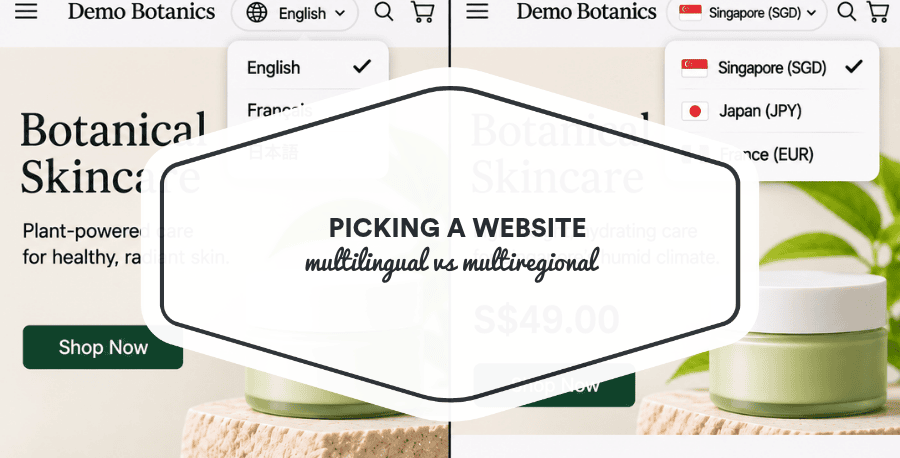
Multilingual vs Multiregional Website: Which Does Your Brand Actually Need?
Multilingual vs Multiregional Website: Which Does Your Brand Actually Need?
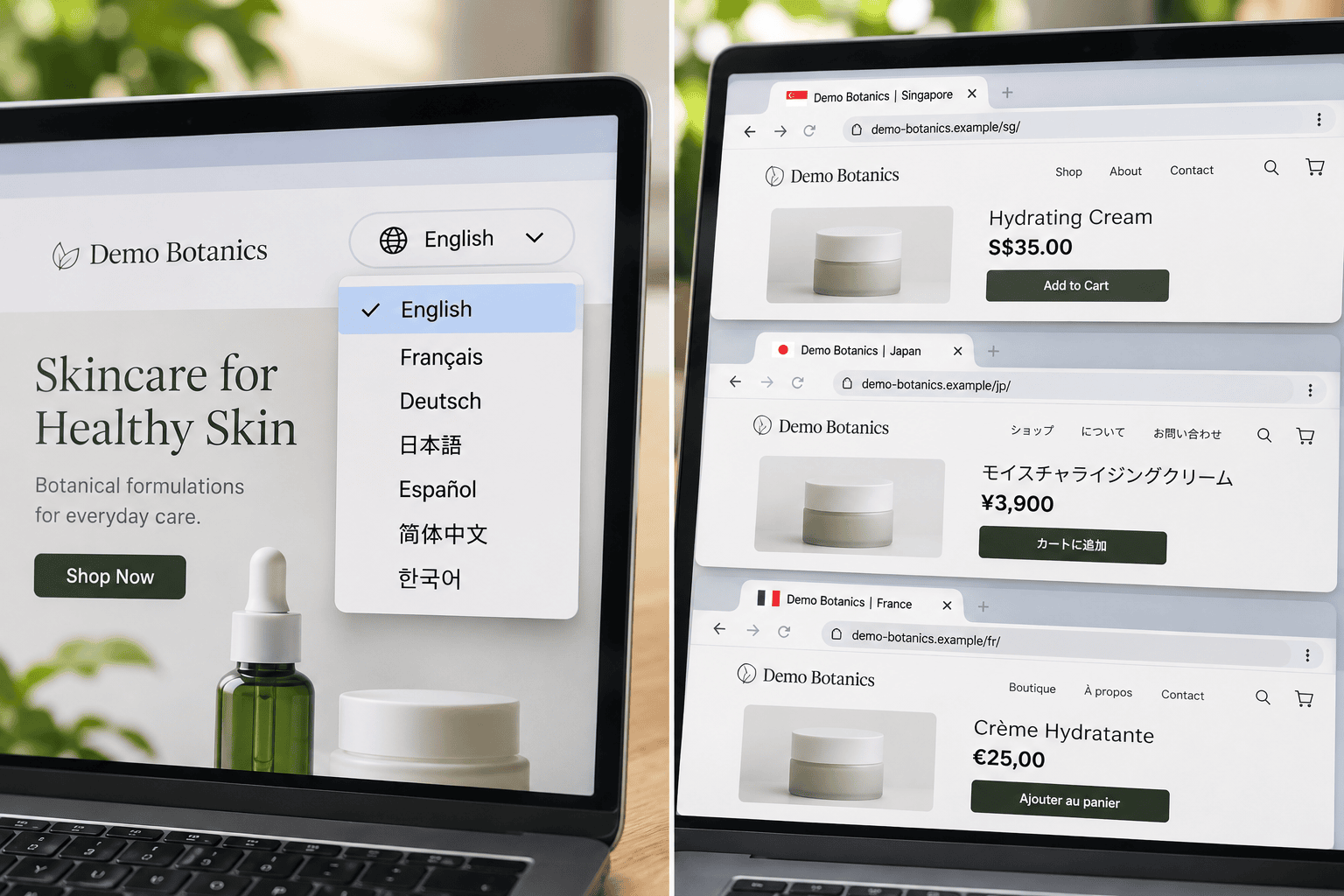
A multilingual website offers the same content in more than one language, while a multiregional website targets users in different countries, even if they share a language. A brand needs a multilingual site when its markets read different languages, a multiregional site when prices, products or regulations differ by country, and both when it serves English-speaking Singapore and the US alongside Japanese-speaking Japan.
The distinction comes from Google’s own documentation, and it decides what a brand has to build. Language targeting means translating and localizing content. Regional targeting means maintaining separate versions for separate countries, often in the same language, with different prices, contact details, legal pages and product ranges.
Many brands describe their plans as “making the site multilingual” when the real requirement is regional, or the reverse. This article covers that decision only; how to structure the URLs and implement the annotations once the decision is made sits in our international website development guide.
What Is the Difference Between a Multilingual and a Multiregional Website?
A multilingual website is defined by the languages it offers, and a multiregional website is defined by the countries it targets. According to Google Search Central (updated December 2025), a multilingual site offers content in more than one language, a multi-regional site explicitly targets users in different countries, and some sites are both.
Google’s examples make the split clear. A Canadian business with English and French versions is multilingual, because the audience is one country reading two languages. A manufacturer shipping to both Canada and the United States is multi-regional, because the audience is two countries that may read the same language.
| Factor | Multilingual | Multiregional |
|---|---|---|
| What varies | Language of the content | Country-specific offer, details and rules |
| Typical trigger | Audience reads a different language | Prices, currency, shipping, products or regulations differ by country |
| Main workload | Translation, localization and multilingual keyword research | Separate pricing, contact details, legal pages and market content |
| Hreflang value | Language only, e.g. “ja” | Language plus region, e.g. “en-SG” and “en-US” |
| Example | One site in English and Japanese for a single global offer | Separate English versions for Singapore and the US |
When Does a Brand Need a Multilingual Website?
A brand needs a multilingual website when a meaningful share of its target customers prefers to read and buy in a language other than the one the site currently uses. Japan is the clearest case for brands in Asia-Pacific, because a Japanese-language site is the baseline expectation for Japanese buyers.
Language preference has a measurable effect on purchasing. According to CSA Research (Can’t Read, Won’t Buy, 2020), 76% of online shoppers in a survey of 8,709 consumers across 29 countries prefer to buy products with information in their native language, and 40% will not buy from websites in other languages.
A multilingual site on its own is enough when the offer is the same everywhere. A software company with one global price in US dollars, one support team and one set of terms can serve Japanese and English readers with two language versions and no country split.
Does a Japanese version need to target Japan specifically?
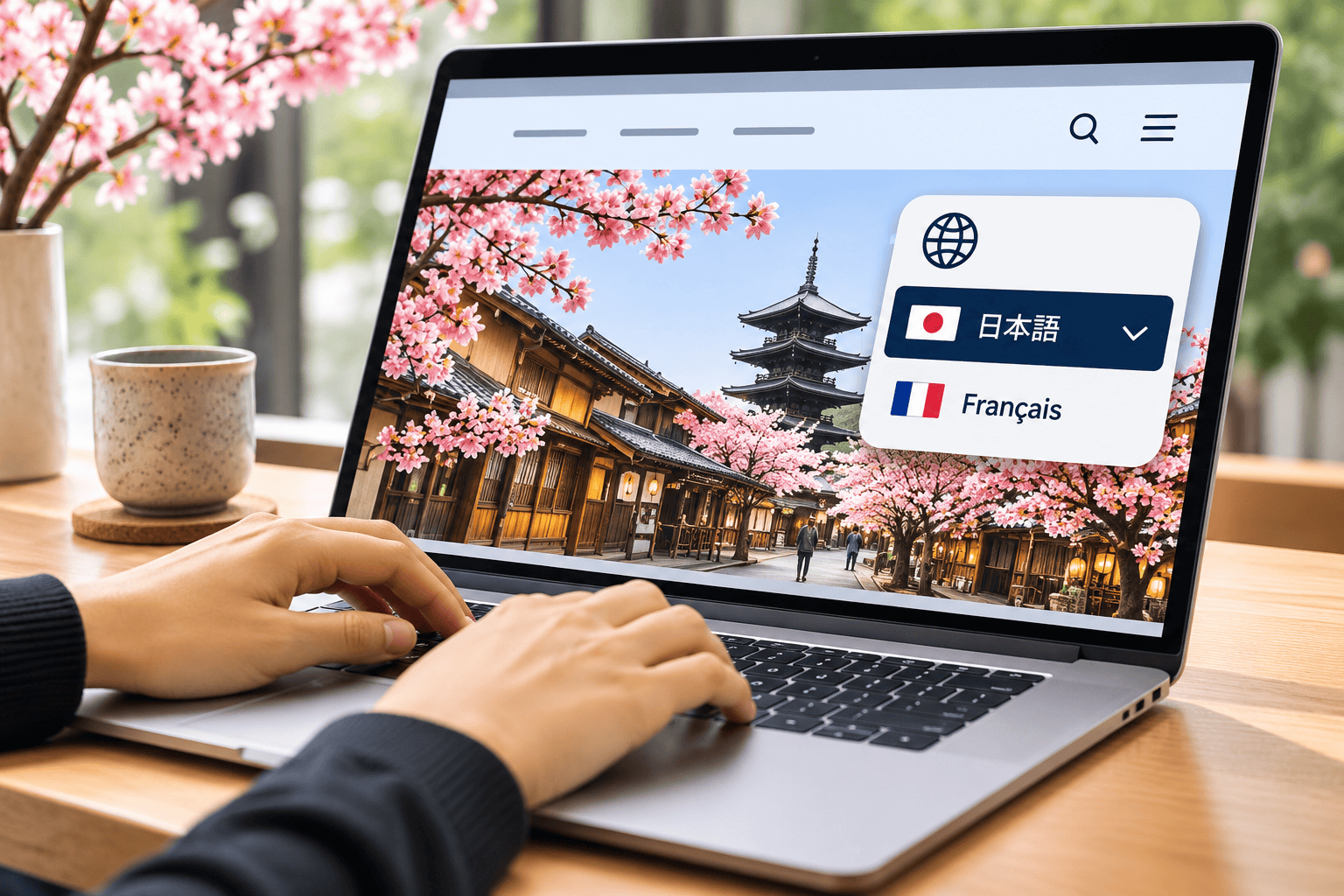
A Japanese-language version usually doesn’t need a separate Japan region code, because almost all Japanese-language searchers are in Japan. Targeting “ja” or “ja-JP” leads to the same audience in practice, so the language decision and the regional decision collapse into one.
The work that matters for Japan sits in the content rather than the targeting: register and keigo, Japanese keyword research, a company profile page, local payment options and a Japanese contact route. Our Tokyo team, which includes Japanese account managers, treats a Japan version as a localization project rather than a translation file.
When Does a Brand Need a Multiregional Website?
A brand needs a multiregional website when it sells to countries that share a language but differ in price, currency, product range, delivery or regulation. English-speaking markets such as Singapore and the US are the standard example.
English is the dominant home language in Singapore. According to the Department of Statistics Singapore (General Household Survey 2025), 58.1% of residents aged 5 and over speak English most frequently at home, up from 48.3% in 2020. A Singapore buyer and a US buyer can read the same page, but they need different prices in SGD and USD, different phone numbers and time zones, and different privacy notices under PDPA and US state laws.
A single English page can’t carry two sets of prices and legal terms cleanly, and Google can’t tell which country it serves. Separate en-SG and en-US versions resolve that, even when most of the copy is shared.
Is a multiregional site just duplicate content?
A multiregional site isn’t treated as a duplicate content problem when its country versions are annotated correctly and carry real local differences. Google’s documentation recommends separate URLs for each version, and hreflang tells Google which version belongs to which country.
The risk comes from versions that differ by nothing but the URL. If the Singapore and US pages share identical copy, prices and contact details, Google may choose one as canonical and show it in both markets. The local differences that justify separate versions are also the ones that keep them distinct.
When Does a Brand Need Both?
A brand needs both when at least one market reads a different language and at least two markets share a language but differ commercially. A Singapore-headquartered brand selling into Japan and the US is a typical case: English for Singapore and the US, split by region, and Japanese for Japan.
| Brand situation | Site type | Versions to build |
|---|---|---|
| Global SaaS with one USD price, entering Japan | Multilingual | English and Japanese |
| Singapore retailer expanding to the US | Multiregional | English for Singapore (en-SG) and English for the US (en-US) |
| Singapore brand selling in Singapore, the US and Japan | Both | en-SG, en-US and ja-JP |
| Japanese brand entering Singapore only | Multilingual, with a light regional layer | Japanese for Japan and English for Singapore with SGD pricing |
Ecommerce platforms now model both dimensions separately. According to Shopify Help Center, merchants choose which languages each market uses, and each published language gets its own URLs. WordPress multilingual plugins handle the same split through language and country settings.
How Should a Brand Decide Between Language and Region Targeting?

A brand should decide by listing what changes between markets: if only the language changes, target by language; if the offer, price or rules change, target by region. Most brands entering two or more Asia-Pacific and US markets end up needing a mix of the two.
- List each target market and its main reading language. Markets with different languages need language versions.
- List what differs commercially in each market. Currency, pricing, products, shipping, contact details and legal notices that differ point to regional versions.
- Group markets that share both language and offer. These can share one version, which keeps content and maintenance lower.
- Plan for the next market. A structure that handles one language split and one regional split now is easier to extend than a site retrofitted later.
In multi-market builds we scope, the most common gap is a brand that has budgeted for translation but not for regional versions of the English site. The US version then inherits Singapore pricing, phone numbers or privacy wording, which is a commercial and compliance issue rather than an SEO one. Our web design and development team scopes language and region together at the planning stage, before the sitemap and content plan are set.
If you’re planning a website for Singapore, Japan and the US and want the language and regional versions defined before design starts, our offices in all three markets can help. If your company is looking for a strategic marketing partner, the Creative For More team can help. Book a discovery call to explore how we can support your brand’s growth.
Read More
- International Website Development: The 2026 Guide for Multi-Market Brands
- A Guide to Cross-Border Brand Localization for Global Growth
- Adapting Business Strategies to Cultural Differences
- How to Start Selling Online in Japan: A Step-by-Step Guide for Global Brands
- How to Expand Into Singapore as a Foreign Brand

Geraldine Pang
Creative For More
Geraldine Pang is the founder of Creative For More, a cross-border digital marketing agency with offices in Singapore, Tokyo, and New York. She specializes in brand strategy, market entry, and cross-border marketing across Southeast Asia, Japan, and the United States.