

Subdomain vs Subdirectory vs ccTLD: Choosing a URL Structure for a Multi-Market Website
Subdomain vs Subdirectory vs ccTLD: Choosing a URL Structure for a Multi-Market Website
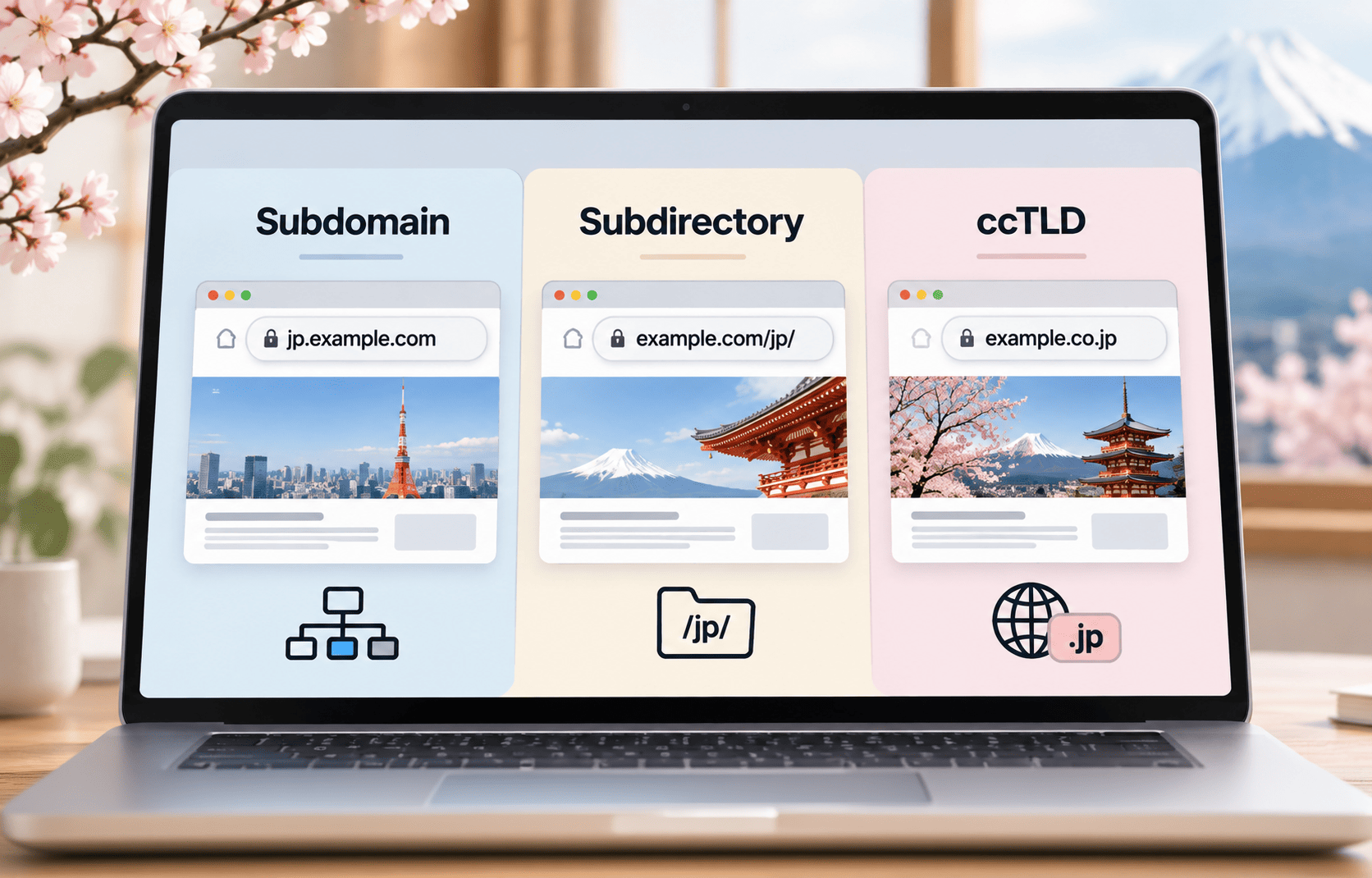
Subdomain vs subdirectory vs ccTLD is a choice between three ways of separating country or language versions of a website: separate country domains (example.jp), subdomains (jp.example.com) or subdirectories (example.com/jp/). Google supports all three. For most brands entering two to five markets, subdirectories on one generic domain are the lowest-maintenance option, while ccTLDs suit brands with a legal entity and dedicated team in each country.
The URL structure of an international website decides where content lives, how search engines read each market version, and how much work every new market adds. It’s one of the few website decisions that is expensive to reverse, because changing it later means a full site migration with redirects for every URL.
This guide compares the options against Google’s own documentation and explains which structure fits which kind of brand. It covers structure only. How the versions are then annotated with hreflang, and whether a brand should target languages or regions, are separate decisions covered in our international website development guide.
What Is the Difference Between a Subdomain, a Subdirectory and a ccTLD?
A ccTLD is a separate domain ending in a country code, a subdomain is a prefix added before the main domain, and a subdirectory is a folder after the main domain. All three can hold a full country or language version of a site.
Country-code top-level domains are assigned per country and listed in the root zone database maintained by IANA, which shows .sg as managed by SGNIC and .jp as managed by Japan Registry Services. Generic top-level domains such as .com have no country attached. Subdomains and subdirectories both sit on one registered domain, so they share its ownership, renewal and DNS settings.
| Structure | Singapore example | Japan example | US example |
|---|---|---|---|
| ccTLD | yourbrand.sg | yourbrand.jp | yourbrand.com |
| Subdomain on gTLD | sg.yourbrand.com | jp.yourbrand.com | us.yourbrand.com |
| Subdirectory on gTLD | yourbrand.com/sg/ | yourbrand.com/jp/ | yourbrand.com/us/ |
| URL parameter | yourbrand.com/?loc=sg | yourbrand.com/?loc=jp | yourbrand.com/?loc=us |
What Does Google Recommend for International URL Structure?
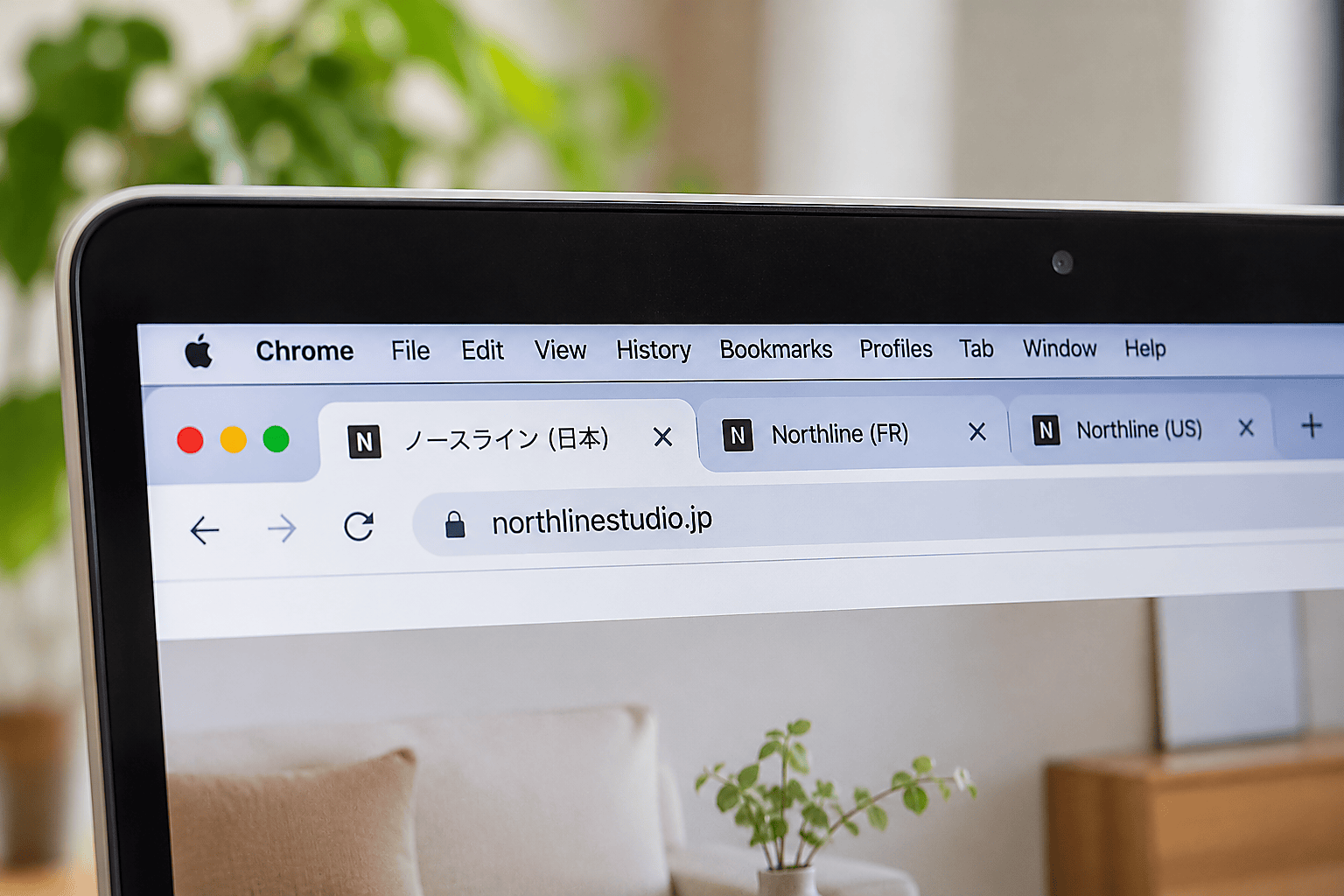
Google doesn’t recommend a single structure; it documents the pros and cons of each and asks only that every language or country version has its own URL. The one option Google advises against is URL parameters.
According to Google Search Central (updated December 2025), “Google recommends using different URLs for each language version of a page rather than using cookies or browser settings to adjust the content language on the page.” The same documentation states that Google doesn’t vary its crawler location to find regional variations, so each version has to be reachable at a distinct, crawlable address.
Google’s guidance summarises the trade-offs as follows. The table restates its documented pros and cons and adds the operational points we scope for on multi-market builds.
| Factor | ccTLD (yourbrand.jp) | Subdomain (jp.yourbrand.com) | Subdirectory (yourbrand.com/jp/) | URL parameter (?loc=jp) |
|---|---|---|---|---|
| Country signal | Strongest; the domain itself targets one country | Weak; “jp” could read as language or country | Weak; same ambiguity as subdomains | Weak and hard for users to read |
| Setup effort | High; separate registration per country | Low | Low | Low |
| Ongoing maintenance | High; separate domains, certificates and often separate sites | Medium; separate hosts on one domain | Low; one host and one site | Low technically, poor for segmentation |
| Server location | Can differ by country | Can differ by subdomain | Single server location | Single server location |
| Separating sites | Easy | Easy | Harder | Difficult |
| Registration rules | Often require local presence | None beyond the main domain | None beyond the main domain | None |
| Google’s position | Supported | Supported | Supported | Not recommended |
Are subdomains treated differently from subdirectories in Google Search?
Google has said it treats subdomains and subdirectories in much the same way, and that sites without a strong reason to split content should keep it in subdirectories. The practical difference lies in how the site is run, not in a ranking rule.
In public office-hours sessions, Google’s John Mueller has described the choice as one that “could go either way” and suggested grouping related content on one site where possible. A subdomain behaves more like a separate property in analytics, hosting and Search Console, which helps when a market is run by a separate team but adds overhead when it isn’t.
When Should a Brand Use a ccTLD?
A ccTLD fits a brand that has a registered business, a dedicated local team and a separate content plan in each country. It gives the clearest country signal to users and search engines, at the cost of running what amounts to several websites.
Many ccTLDs carry eligibility rules that rule them out for brands still testing a market. According to JPRS, any applicant for a general-use .jp domain needs a permanent postal address in Japan, and a co.jp domain is limited to companies with an official corporate registration in Japan. According to SGNIC, .sg registrants should appoint a local administrative contact with a Singpass or Corppass account.
Some country codes don’t carry a country signal at all. Google’s documentation states that it treats certain ccTLDs, including .tv, .me, .io and .co, as generic domains, so a brand on one of those can’t rely on the extension for geotargeting.
Do Japanese users expect a .jp domain?
A .jp or co.jp domain is a familiar trust marker for Japanese buyers, particularly in B2B, because it shows a registered presence in Japan. It isn’t a requirement for ranking, and many global brands serve Japan successfully from a /jp/ folder on a .com.
Our Tokyo team, which includes Japanese account managers, generally weighs this alongside the rest of the Japan site: a Japanese company profile page, a local address and phone number, and properly localized copy often carry more trust than the extension alone. A brand that already holds a co.jp domain can still redirect it to the /jp/ folder to protect the name.
When Is a Subdomain the Right Choice?
A subdomain suits a market version that needs separate hosting, a separate platform or a separate team, while still sitting under the main brand domain. It’s the middle option between full separation and a single site.
Typical cases include a Japan storefront on a different ecommerce platform from the global site, a region with data residency requirements that needs its own server, or a regional distributor that manages its own content. Each subdomain needs its own certificate coverage, analytics setup and Search Console property, so the overhead grows with each market added.
Why Do Most Multi-Market Brands Choose Subdirectories?
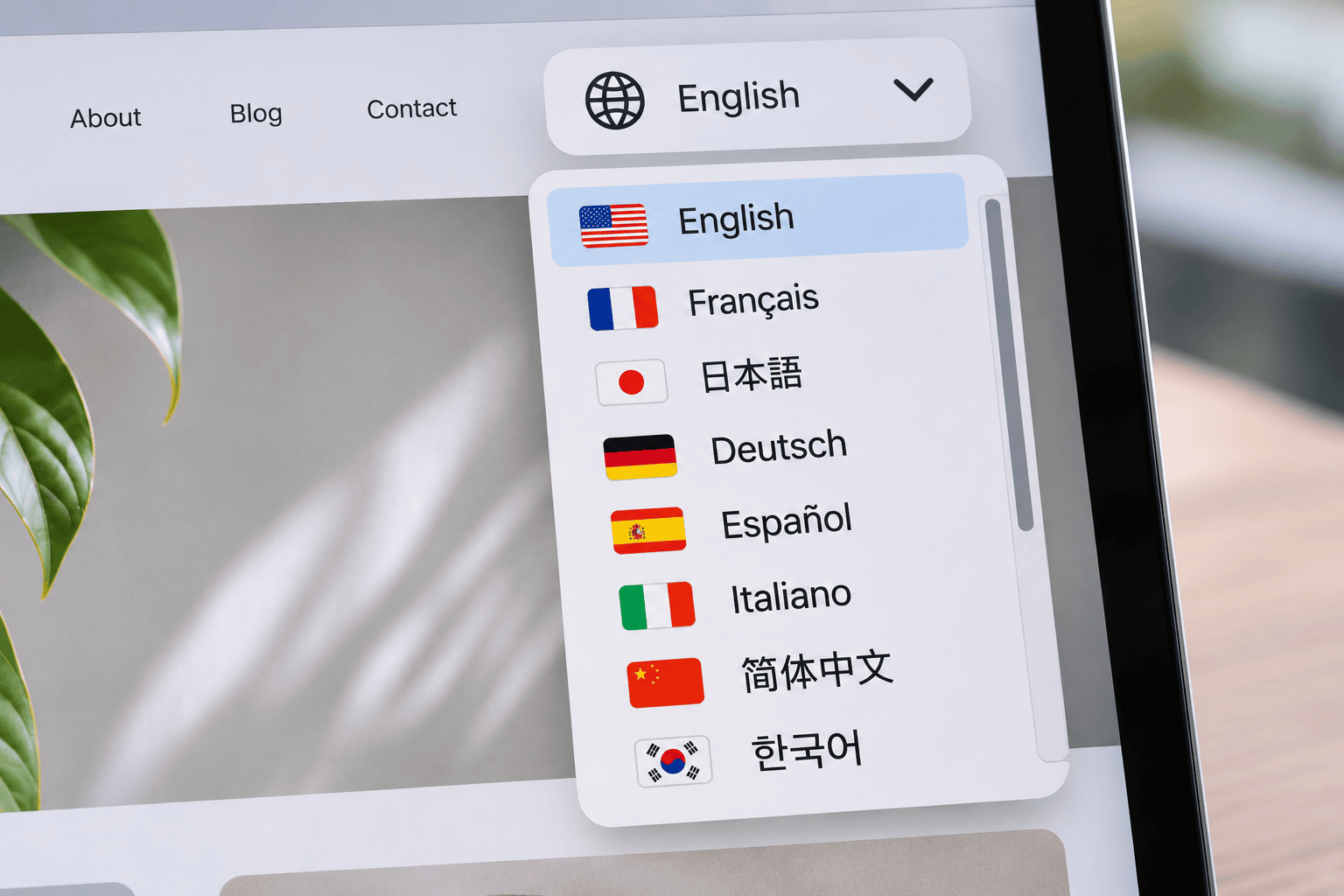
Most multi-market brands choose subdirectories because every market shares one domain, one platform and one content management system. A new market is a new folder rather than a new site, which keeps launch cost and maintenance low.
This is the structure we recommend on our web design and development builds for brands operating across Singapore, Japan and the US: yourbrand.com/sg/, /jp/ and /us/, each with its own services, content and search strategy. Multi-language WordPress and Shopify setups both support it natively or through established plugins and apps.
Subdirectories also keep links and brand mentions pointing at one domain. A press feature on the US section and a backlink to the Singapore section both build the same domain’s authority, which matters most for a brand that is still small in each individual market.
What are the downsides of subdirectories?
The main downsides of subdirectories are a weaker country signal in the URL and a single server location for every market. Both are manageable with hreflang annotations, local content signals and a content delivery network.
Google lists server location as one geotargeting signal but notes it isn’t definitive, because content delivery networks serve pages from locations near the user. Subdirectories also make it harder to hand one market to a separate agency or platform later, so brands expecting that should plan for it at the start.
Can You Still Set a Target Country in Google Search Console?
No, Google has retired Search Console’s country targeting setting. Country targeting now depends on the URL structure, hreflang and on-page signals rather than a manual setting.
According to Google Search Console Help, the International Targeting report has been deprecated, and the ability to target results to specific countries through Search Console “was determined to have little value for the ecosystem, and is no longer supported.” The same page confirms that Google continues to support and use hreflang tags. This change is one reason a gTLD with subdirectories now relies more on hreflang and local signals such as addresses, phone numbers, currency and local links.
Which URL Structure Should a Multi-Market Brand Choose?
A brand entering two to five markets with one central marketing team should use subdirectories on a .com. A brand with separate legal entities, separate teams and separate budgets in each country can justify ccTLDs, and subdomains fit the cases where one market needs its own platform or hosting.
| Brand situation | Recommended structure | Reason |
|---|---|---|
| Singapore brand testing Japan and the US | Subdirectories on .com | Fast to launch, one site to maintain, authority stays on one domain |
| Japanese company with a co.jp site expanding to Southeast Asia | Keep co.jp for Japan, add a .com with /sg/ and other folders | Protects existing Japanese rankings and trust while centralising new markets |
| Group with a legal entity and team in every country | ccTLDs | Clearest country signal and full local control |
| Brand whose Japan store runs on a different platform | Subdomain for that market | Separate hosting without a separate brand domain |
| Any brand considering URL parameters | Avoid | Google advises against parameters for country versions |
In multi-market builds we scope, the most common issue isn’t the initial choice but a mix of structures added over time, such as a .sg site, a jp. subdomain and a /us/ folder. Consolidating that kind of setup is a migration project, so it pays to pick one model before the second market launches.
If you’re planning a site for Singapore, Japan or the US and want the structure settled before design and content begin, our team builds multi-market WordPress and Shopify sites from offices in all three markets. If your company is looking for a strategic marketing partner, the Creative For More team can help. Book a discovery call to explore how we can support your brand’s growth.
Read More

Geraldine Pang
Creative For More
Geraldine Pang is the founder of Creative For More, a cross-border digital marketing agency with offices in Singapore, Tokyo, and New York. She specializes in brand strategy, market entry, and cross-border marketing across Southeast Asia, Japan, and the United States.