
Asia Market Entry Strategy: A Practical Go-To-Market Guide for U.S. Brands Expanding into Asia
Asia Market Entry Strategy: A Practical Go-To-Market Guide for U.S. Brands Expanding into Asia
Expanding from the U.S. into Asia isn’t just about entering a bigger market — it’s about entering very different markets with different buying behavior, platforms, and trust expectations. Many U.S. brands struggle in Asia not because their product isn’t strong, but because their go-to-market strategy is built for Western assumptions that don’t translate.
If you’re a U.S. company planning to enter Japan or other Asian markets, this guide walks through what actually works — from choosing the right entry market, to localisation that converts, to platform strategy and execution. This is the same framework Creative For More uses to help U.S. brands launch, localise, and scale across Asia without burning budget on the wrong channels or messaging.
What “Asia Market Entry” Really Means for U.S. Brands
Asia is not one market. It’s a collection of countries with different languages, platforms, purchasing habits, and expectations of brands.
A go-to-market strategy that works in the U.S. often fails in Asia because:
- Trust is built differently
- Social proof matters more than bold claims
- Platform usage varies by country
- Buying decisions take longer
U.S. brands that succeed in Asia don’t copy-paste their playbook. They adapt their strategy market by market — starting with the right entry point.
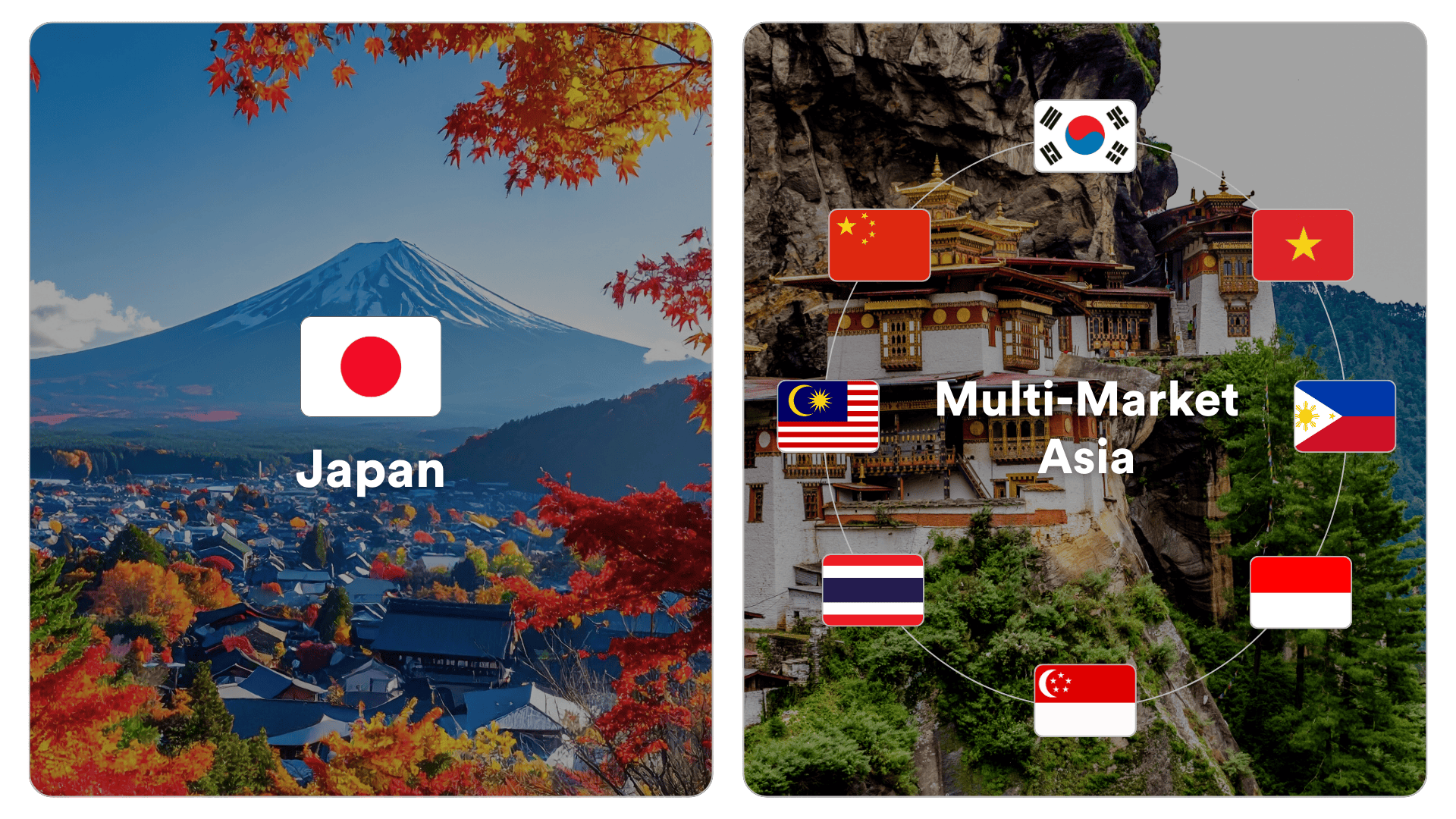
Choosing the Right Entry Market: Japan-First or Multi-Market Asia?
Why Asia Is Not a Single Expansion Decision
Unlike the U.S., Asia does not offer a single language, platform stack, or buyer mindset. Treating Asia as one rollout almost always leads to diluted results.
This is why market selection is a strategic decision, not a checklist.
Japan as a Strategic First Entry Market
Japan is often an ideal first Asia market for U.S. brands because:
- It has high purchasing power
- Consumers value quality, credibility, and long-term brands
- Success in Japan builds strong regional credibility
At the same time, Japan demands precise localisation. Direct translations and aggressive U.S.-style messaging typically underperform.
When a Multi-Market Asia Launch Makes Sense
Some brands benefit from launching across Southeast Asia or combining markets — but only when:
- The product category fits regional behavior
- Budgets allow for parallel localisation
- Platform strategies are clearly separated
Choosing the wrong entry sequence is one of the most expensive mistakes U.S. companies make.
A Go-To-Market Framework for Entering Asia from the U.S.

Defining Your Asia Positioning
What works in the U.S. often sounds exaggerated or unclear in Asia. Strong Asia market entry starts with:
- Clarifying your real value (not slogans)
- Reworking claims to match local expectations
- Positioning for trust before performance
This applies to brand messaging, landing pages, and paid campaigns.
Single-Market vs Staged Expansion
Many U.S. brands scale too fast before proving traction. A staged approach allows:
- Faster learning
- Cleaner data
- Better localisation over time
Asia rewards brands that move deliberately.
Setting Realistic Timelines and KPIs
Brand trust takes longer to build in Asia. Expect:
- Slower early conversion
- Higher importance of social proof
- Stronger long-term retention
Short-term ROAS thinking often leads brands to pull out too early.
Localization That Drives Conversions (Not Just Translations)
Why Translation Alone Fails in Asia
Literal translation misses:
- Cultural context
- Buying triggers
- Tone expectations
Localisation means rewriting for local buyer psychology, not swapping words.
What Needs to Be Localised

For U.S. brands entering Asia, this includes:
- Website and landing page copy
- Paid ad messaging
- Social and creator content
- Visual cues and layouts
In Japan especially, subtlety, clarity, and credibility outperform bold persuasion.
What Good Localization Looks Like in Practice
High-performing localisation:
- Sounds native, not “global”
- Explains value clearly
- Reduces perceived risk
This is where most U.S. brands either win trust — or lose it.
Platform Strategy for Asia Market Entry

Social and Messaging Platforms That Matter
Asia’s platform mix differs from the U.S.:
- LINE plays a major role in Japan
- Instagram and TikTok behave differently across markets
- YouTube drives trust, not just reach
Choosing platforms based on U.S. performance leads to wasted spend.
Search, Marketplaces, and Paid Media
Search behavior varies widely by country. Paid and organic must work together, especially during early market entry when brand awareness is low.
Why Platform Strategy Must Be Market-Specific
What works in Japan may fail in Singapore. What converts in Korea may stall in Thailand. Asia market entry requires separate channel logic per market.
Local Execution, Partnerships, and Distribution

Local partners can accelerate trust — or damage it.
U.S. brands entering Asia need to:
- Vet partners carefully
- Align expectations early
- Maintain brand control
Distribution, fulfilment, and customer experience directly affect brand perception, especially in markets like Japan.
Legal and Regulatory Factors That Affect Go-To-Market Strategy

Marketing in Asia is shaped by:
- Advertising regulations
- Data and privacy rules
- Platform-specific restrictions
Ignoring compliance can delay launches or shut campaigns down entirely. Strategy must account for this from day one.
How Long Asia Market Entry Takes (And What to Budget For)
Timelines U.S. Brands Should Expect
Most brands underestimate how long it takes to:
- Build awareness
- Establish trust
- Reach consistent conversion
Asia expansion is not instant, but it is sustainable when done right.
Where Budgets Are Often Misallocated
Common issues:
- Underinvesting in localisation
- Overspending on the wrong platforms
- Skipping strategy and jumping to execution
Smart budgeting prioritises learning and adaptation early.
How Creative For More Supports U.S. Brands Entering Asia

Creative For More helps U.S. brands enter Asia with:
- A strategy-first go-to-market approach
- Deep experience across Japan and Asia-Pacific
- Localisation that is written for conversion
- Platform strategies built for Asian markets
We operate across Singapore and Japan, supporting U.S. companies launching, localising, and scaling across Asia.
If you’re planning your Asia expansion, our Market Entry Service helps you avoid costly missteps and build traction faster. Book a Market Entry Consultation
Key Takeaways for U.S. Brands Expanding into Asia
- Asia requires market-specific strategy, not global templates
- Japan is often the strongest credibility-first entry point
- Localisation drives trust and conversion
- Platform strategy must be rebuilt for Asia
- Long-term success beats fast but shallow launches
If you’re serious about building a profitable Asia market entry strategy, whether you’re planning a Japan market entry first or a broader Asia go-to-market strategy, the fastest way to avoid costly missteps is to pressure-test your positioning, localisation, and channel plan before you spend on execution. At Creative For More, we help U.S. brands validate the right entry market, localise messaging for trust and conversion, and build a market-specific GTM roadmap that actually fits how buyers in Asia discover, evaluate, and purchase. Book a discovery call and we’ll review your expansion goals, identify the highest-impact opportunities, and map out a practical next step for launching into Asia with clarity and confidence.
Further Reading
Explore more guides for U.S. brands expanding into Asia:
- How to Localize Your Brand for Asian Audiences: A U.S. Founder’s Guide
- The Most Effective Social Media Platforms for Brand Marketing in Asia
- Top E-Commerce Channels in Southeast Asia for U.S. Brands
- How Western Brands Successfully Adapt Their Marketing for Asian Audiences
- Cultural Factors U.S. Brands Must Understand Before Marketing in Asia
- Influencer Marketing in Asia: The Complete Guide for U.S. Brands
- Common Mistakes U.S. Companies Make When Launching in Asia
- How to Build a Marketing Budget for Your Asia Expansion
- How to Choose a Brand Marketing Agency for Asia Expansion
- Asia vs. U.S. Marketing: Key Differences Every Startup Should Know
- What U.S. Founders Misunderstand About Southeast Asia
- The Rise of TikTok Shop in Southeast Asia: What U.S. Brands Should Prepare For
- How to Validate Product-Market Fit in Southeast Asia Before You Launch
- A Guide to Cross-Border Brand Localization for Global Growth
- How to Launch in Asia Without a Local Team

Geraldine Pang
Creative For More
Geraldine Pang is the founder of Creative For More, a cross-border digital marketing agency with offices in Singapore, Tokyo, and New York. She specializes in brand strategy, market entry, and cross-border marketing across Southeast Asia, Japan, and the United States.