

How Boutique Hotels Can Compete with Chains Through Brand Marketing
How Boutique Hotels Can Compete with Chains Through Brand Marketing
A boutique hotel cannot outspend a Marriott. It cannot match a Hilton’s loyalty program scale, a Hyatt’s global distribution, or an IHG’s booking engine investment. On every dimension where chains compete through scale, the boutique property loses before the comparison begins.
This is not a problem. It is the starting point of a different and often more commercially powerful competitive strategy.
Chains compete on consistency, familiarity, and the reliable removal of travel uncertainty. A guest who books a Marriott in Singapore knows what to expect before she arrives. That predictability has genuine value for a specific category of traveler. For a growing and commercially significant category of traveler, it has the opposite of value. The guest who actively seeks a boutique hotel is seeking the thing that chains structurally cannot offer: a specific character, a particular story, a sense of place that could not be replicated in any other city with the same brand flag. That guest is not comparing the boutique property against the Marriott on the same criteria. She is choosing the boutique property precisely because the Marriott cannot offer what she is looking for.
The boutique hotel’s marketing job is to find that guest, tell her exactly why this property is the thing she has been looking for, and give her enough of a story to share with her own network. This article covers how to do that, specifically through story-first brand marketing, the use of interior design as a visual marketing asset, and the Instagram and Pinterest strategies that allow boutique properties to punch measurably above their weight.
What Does Story-First Marketing Actually Mean for a Hotel?
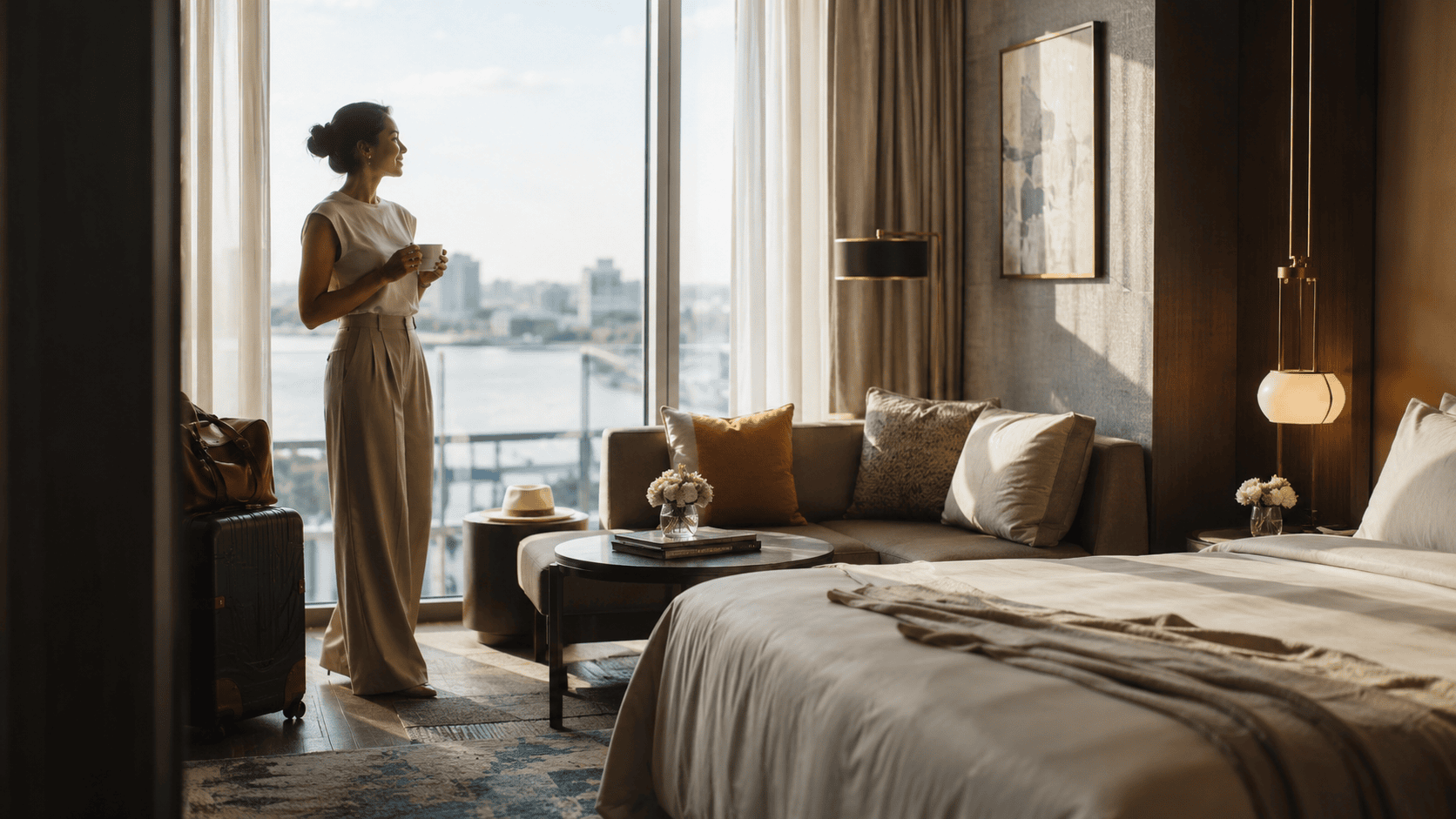
Story-first marketing means the brand’s narrative precedes and shapes every other marketing decision. The photography brief, the Instagram content calendar, the OTA listing copy, the influencer brief, and the email marketing sequence are all expressions of a single consistent story about who this property is, what it believes, and what kind of stay it creates for a specific kind of guest.
The story is not the list of amenities. Every hotel has amenities. The story is the specific character of this place: the building’s history, the owner’s vision, the neighbourhood’s personality, the design philosophy that shaped the interiors, the staff culture that determines how guests are made to feel from arrival to departure. These are not generic hospitality attributes. They are the specific and unduplicable aspects of a property that chains, by structural necessity, cannot match.
According to The Travel Foundry’s content marketing for hotels analysis, boutique hotels that lead with storytelling and authentic connection rather than price competition or feature lists create durable brand equity that drives valuation. The commercial case is not just emotional: story-driven positioning enables rate premiums by elevating guest perception beyond the commodity comparison that OTA search results otherwise force. A guest who books because she was moved by the property’s story is less price-sensitive than a guest who booked because the nightly rate was the lowest in the search results.
The boutique hotels that tell their stories best in 2025 and 2026 are those that commit to a specific and honest narrative rather than a generic aspiration to “luxury” or “unique experiences.” Every hotel claims uniqueness. The properties that prove it are those whose content makes a potential guest feel, before she arrives, that this particular place was made for her specifically. That specificity is the commercial differentiator that story-first marketing produces and that no chain can replicate because their brand standards require the same story to be told in every property in every city.
How Does Interior Design Become a Marketing Asset?
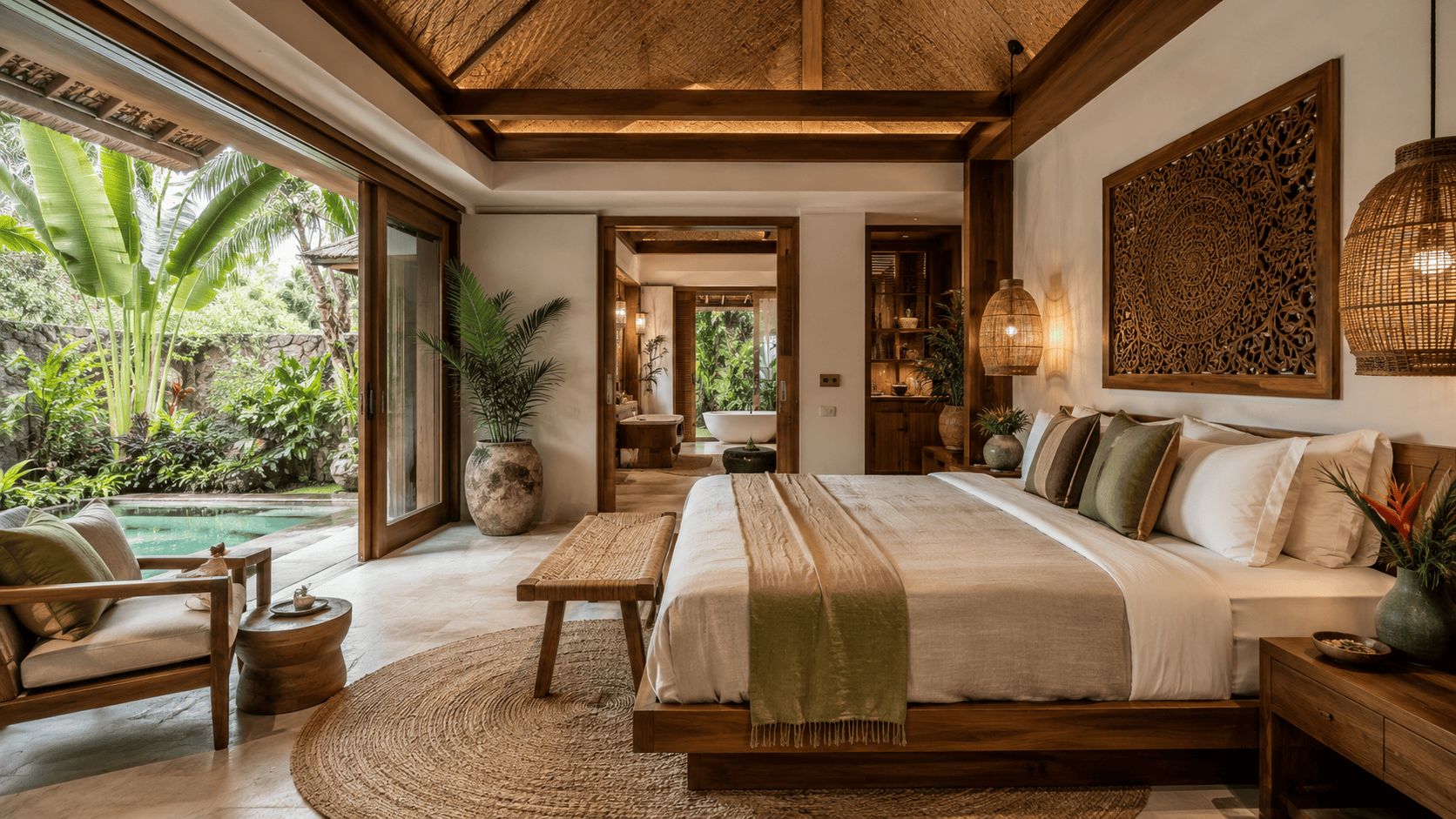
A boutique hotel’s interior design is not simply the physical environment in which guests sleep and eat. It is the most powerful visual marketing asset the property has, and it works continuously, on every platform, through every guest who photographs it and shares it with their networks.
The design-as-marketing principle operates through a specific mechanism: distinctive interiors create shareable moments that guests produce and distribute voluntarily, reaching audiences that the hotel’s own marketing budget could never afford to reach through paid channels. A guest who takes a photograph in front of a statement wall, frames a shot of an architecturally remarkable staircase, or captures the texture and light in a carefully designed room is creating a piece of marketing content on behalf of the hotel that carries her personal endorsement attached to it. According to The Travel Foundry, citing CrowdRiff’s 2024 UGC report, 92% of travelers trust user-generated content more than brand advertising. The guest photograph is not supplementary to the marketing. For boutique hotels, it is often the most commercially effective marketing content the property produces.
The design decisions that produce the most social media traction are those that create visually distinctive and emotionally resonant moments rather than generic luxury signals. Marble lobbies and chandeliers are expected at a certain price point and generate unremarkable content. An unexpected color palette, a furniture piece with a specific provenance story, a garden courtyard that contrasts with the urban environment outside, a room whose ceiling tells a story about the building’s original purpose, these create the visual surprise that generates the photograph, the caption, and the share that no paid campaign can manufacture.
The most commercially effective boutique hotel interiors are designed with the Instagram frame in mind, not as an afterthought but as a deliberate brief alongside the functional design requirements. This does not mean designing for social media superficially. It means ensuring that every public space in the property contains at least one moment of genuine visual distinctiveness that a guest with a phone can capture and that will look compelling in a square format. The property that understands its own most photographable moments and makes them accessible, well-lit, and consistently maintained is turning its physical asset into a perpetual content generation system.
How Do Boutique Hotels Build a Brand Story Worth Telling?
The brand story that works for a boutique hotel is built from the specific and honest material the property actually has, not from the generic hospitality language that appears in every hotel’s about page. The building’s history is story material. The founding couple who left corporate careers to restore a colonial shophouse in Joo Chiat is story material. The relationship with the neighbourhood, the local restaurant the hotel recommends exclusively because the owner has eaten there every week for five years, is story material. The design consultancy that sourced every piece of furniture from a single Japanese craftsman’s workshop is story material.
The test for genuine story material is specificity. “We believe in authentic, meaningful travel experiences” is not story material. Every hotel says a version of this. “This building was a 1920s Chinese clan association and the original plaster relief above the entrance was uncovered during renovation after being painted over for fifty years” is story material. One is an aspiration anyone can claim. The other is a specific fact about this specific place that cannot be replicated and that gives a potential guest something to imagine herself experiencing before she has booked.
The story should be told in the brand’s own voice, which for a boutique hotel is typically the owner’s voice or a voice close to it. The warmth, directness, and specific local knowledge that a property owner brings to the telling of their own hotel’s story is an asset that hired copywriters often fail to replicate. The hotel whose Instagram posts read like a message from someone who genuinely lives in and loves this building and this neighbourhood consistently outperforms the hotel whose Instagram posts read like agency copy. According to Gourmet Marketing’s boutique hotel competitive analysis, developing a clear voice and tone across the website, emails, and social media and leaning into what makes the property different, its design, history, location, or the people who work there, is the primary brand differentiation available to properties that cannot compete on scale.
How Do Boutique Hotels Win on Instagram?
Instagram remains the most commercially important social platform for boutique hotels in Singapore and the broader Southeast Asian market, and the properties that use it most effectively do not use it primarily as an advertising channel. They use it as a community platform where the hotel’s story is told continuously and where the guest who has already fallen in love with the property in her imagination arrives as a pre-converted booking intent rather than a cold prospect.
The content architecture that works for boutique hotels on Instagram runs on a consistent rotation of four content types, each serving a different role in the guest acquisition and retention journey.
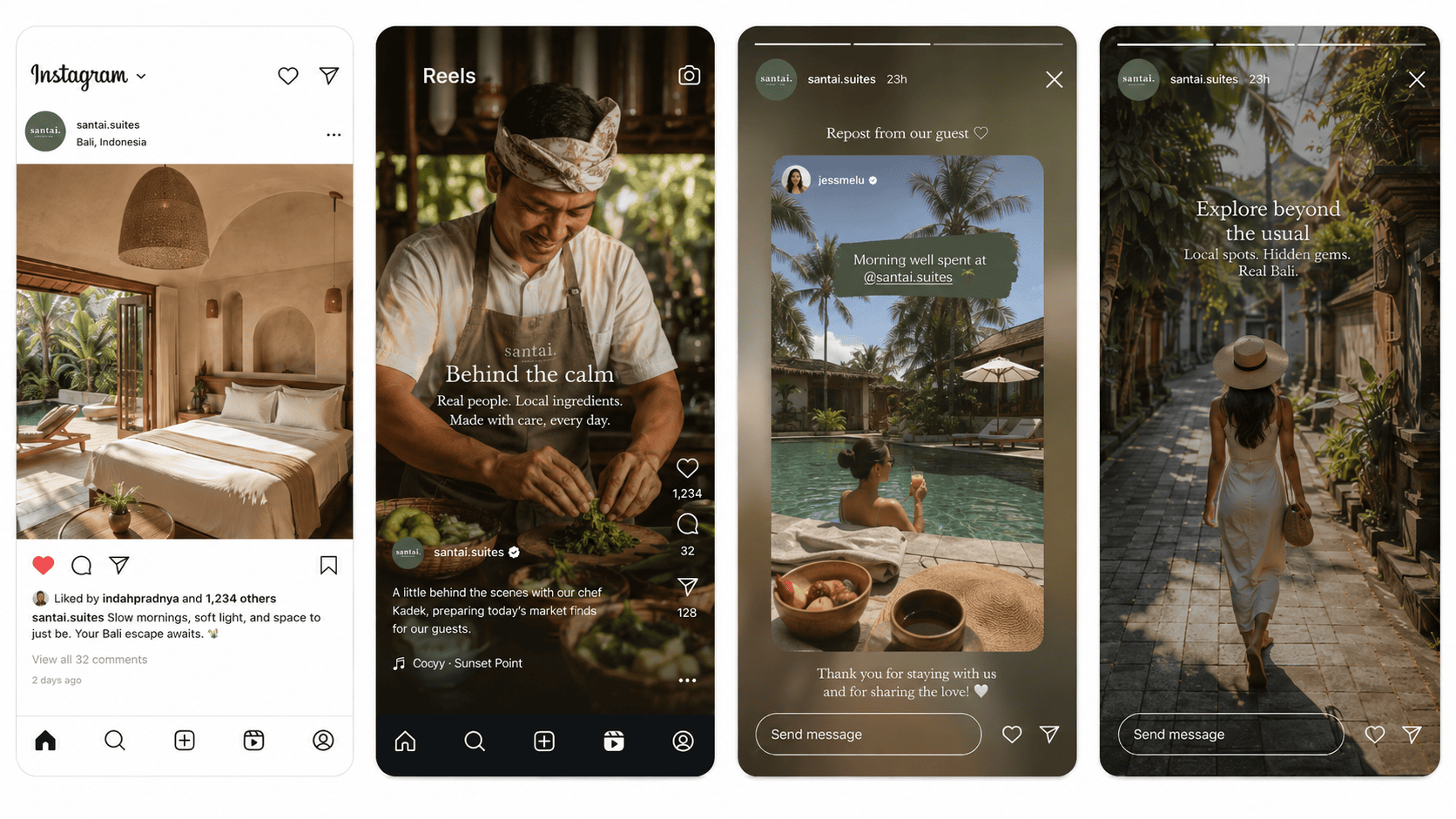
Interior and architectural photography serves as the visual anchoring of the property’s identity. This content does not need to be produced daily or weekly. It needs to be produced at a quality level that makes it scroll-stopping, and it needs to be refreshed seasonally or when the property introduces a new design element, arrangement, or addition. A single piece of genuinely exceptional interior photography, shot by a photographer who understands light and composition and who has spent enough time in the property to understand what is most visually distinctive about it, will outperform ten pieces of acceptable photography in both engagement and shareability.
Behind-the-scenes and people content is the content that turns a physical space into a community. The chef preparing an ingredient sourced from a local market, the housekeeper who has been with the hotel since its first day of operation and who knows the name of every returning guest, the owner walking through the renovation process, the local artist whose work hangs in the guest rooms explaining her piece. This content creates the sense that there are real, specific people behind this property who care about it in ways that chain hotel staff, however professional, are not positioned to express publicly.
Guest experience content, reshared with permission from actual guests, provides the social proof that brand-produced content cannot. According to The Travel Foundry, Loews Hotels built the “Travel for Real” campaign entirely from guest Instagram photographs, driving sharp engagement increases and authentic brand resonance that scripted campaign content could not have achieved. A boutique hotel that creates the conditions for guests to produce and share content, through thoughtful use of branded hashtags, through creating genuinely photographable moments in the property, and through consistently resharing guest content, builds a content library that compounds over time without proportional production investment.
Neighbourhood and destination content positions the hotel as a guide to the specific place it inhabits rather than just a transactional accommodation provider. A Joo Chiat boutique hotel that posts about the peranakan food culture of the neighbourhood, the specific morning coffee spot it recommends to every guest, and the walking route to the beach that most guests don’t know exists, is building a relationship with potential guests before they have a travel date in mind. When the travel date arrives, this property is the one that has already established itself as the authority on the experience they want.
Boutique hotels outperformed larger chains in guest satisfaction by 15% according to JD Power data cited in Redfork Marketing’s boutique hotel strategy analysis, reflecting a growing preference among travelers for unique and personalized experiences over standardized comfort. Instagram is the platform where that preference is formed before the booking is made. The boutique hotel whose Instagram presence makes a potential guest feel that staying there would be meaningfully different from staying anywhere else has done the most important marketing work before the OTA search even begins.
What Role Does Pinterest Play That Instagram Does Not?
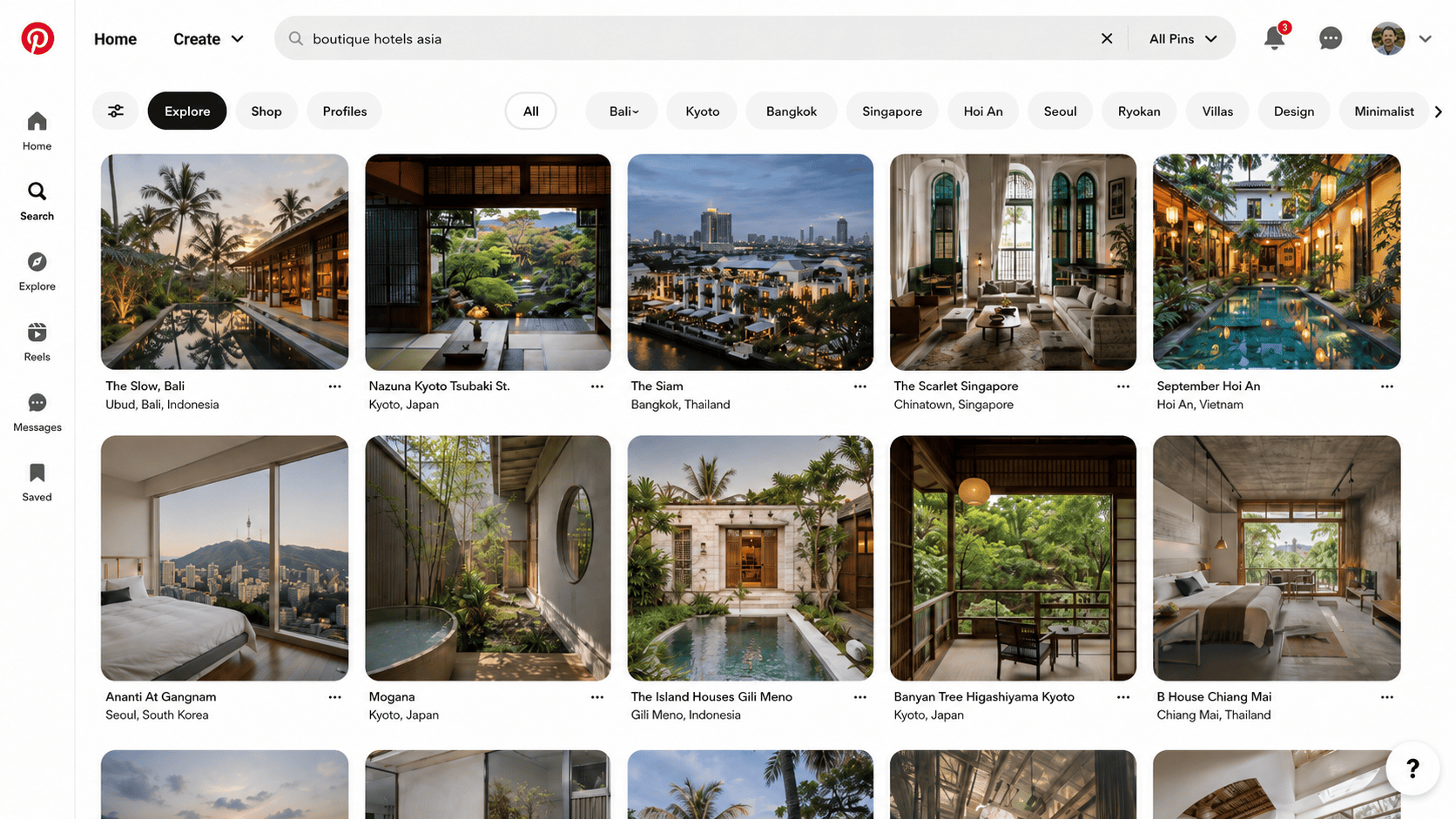
Pinterest operates on a fundamentally different discovery mechanism from Instagram and serves a different stage in the travel decision journey. Instagram reaches potential guests in the present: content appears in feeds and stories and is consumed in the moment. Pinterest reaches potential guests in the planning phase: content is saved to boards organized around future trips, aesthetic preferences, and travel aspirations that may be months away from becoming bookings.
A boutique hotel that has invested in Instagram but not in Pinterest is optimizing for the moment of casual discovery while missing the platform where the specific guest who actively plans her travel experience, researches accommodation aesthetics, and creates visual collections of where she wants to stay does her most commercially meaningful browsing. This guest is not the same as the impulse-driven social media scroller. She is the traveler who has already decided she wants to stay somewhere with specific design sensibilities and is actively searching for properties that match her vision. A boutique hotel whose distinctive interiors are discoverable on Pinterest is in the consideration set of this traveler months before she opens an OTA comparison page.
The Pinterest strategy for a boutique hotel is content-focused rather than campaign-focused. Pinboards organized around the property’s aesthetic, its neighbourhood, its design inspirations, and the travel experiences it enables serve as persistent discovery infrastructure. A pin of the property’s most distinctive room, correctly titled and described for Pinterest’s search algorithm, will continue generating discovery months and years after it was posted, unlike an Instagram post whose organic reach typically diminishes within 48 hours of publication. The investment-to-return profile of Pinterest content is notably different from Instagram: lower initial engagement, but longer shelf life and higher booking intent from the specific traveler it reaches.
The hotels that use Pinterest most effectively treat it as their visual brand portfolio rather than their social media feed. The content is curated for an aspirational aesthetic, the descriptions are written for search discoverability, and the boards are organized around the specific travel interests and lifestyle identities that the property’s target guest identifies with. A Singapore boutique hotel pinboard titled “Shophouse Living in Singapore” that curates the property’s interior design alongside neighbourhood photography, peranakan architecture references, and Singapore lifestyle imagery is not just showcasing a room rate. It is presenting a vision of an experience that attracts the guest who is searching for exactly that vision.
How Do Micro-Influencer Partnerships Work for Boutique Properties?
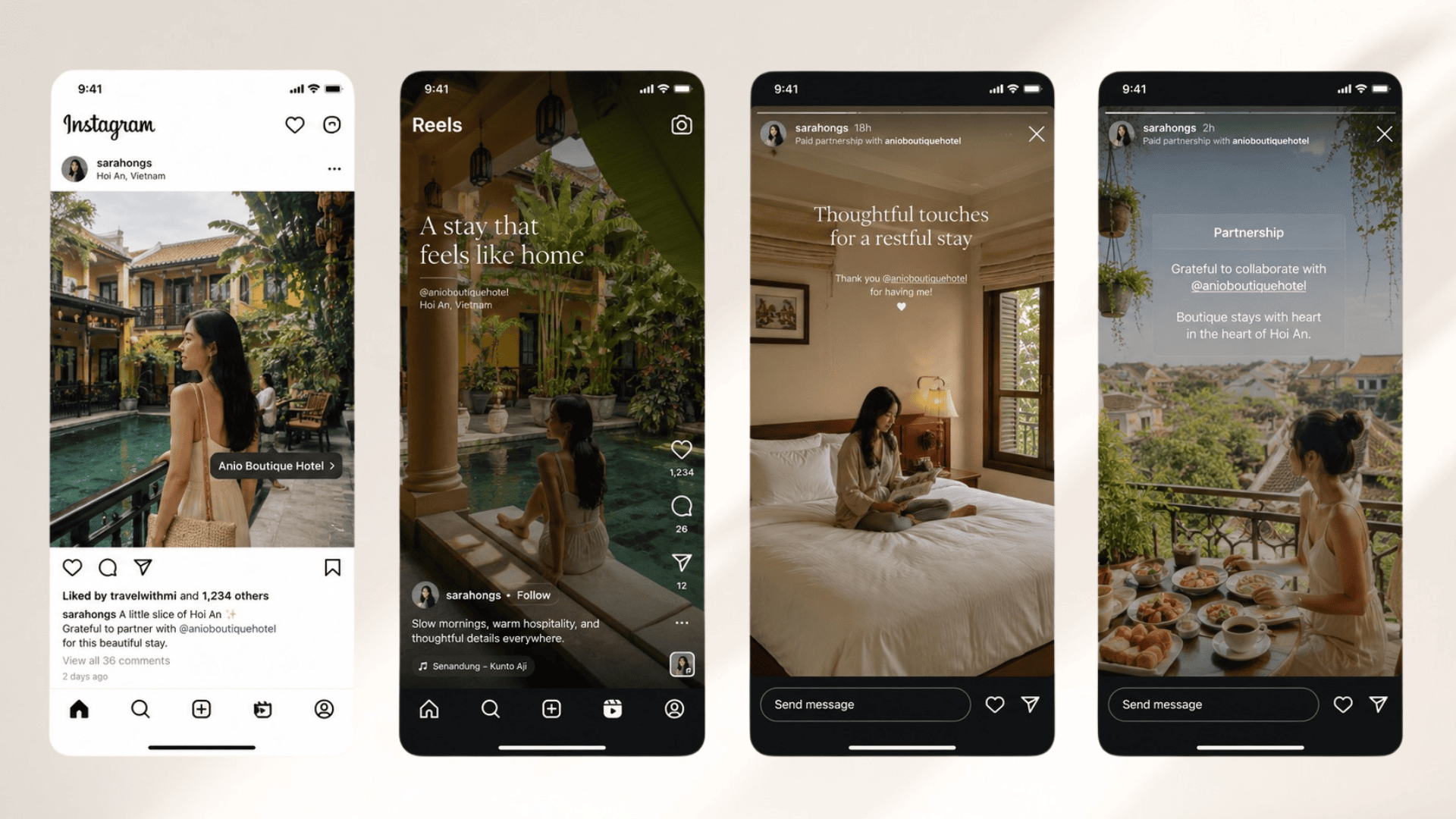
Boutique hotels are structurally well-suited to micro-influencer partnerships in a way that chains are not. A chain property hosting a major travel influencer produces content that looks similar to the same influencer’s content from a dozen other branded properties. A boutique hotel hosting a creator whose aesthetic and editorial sensibility genuinely matches the property’s own character produces content that looks organic rather than sponsored, which is the quality that distinguishes the content a potential guest trusts from the content she skips.
According to The Travel Foundry, micro-influencers with audiences between 10,000 and 100,000 followers often drive stronger engagement than celebrities for boutique hotels because their recommendations feel like trusted peer suggestions rather than paid endorsements. For a boutique hotel in Singapore, a travel creator with 40,000 engaged followers who documents aesthetically distinctive boutique stays across Asia is a more commercially valuable partner than a lifestyle macro-influencer with 500,000 followers whose audience is globally distributed and whose content covers fifty different categories.
The partnership structure that works for boutique properties is hosted rather than paid where possible, and focused on content quality rather than content volume. A creator who spends two nights at the property, develops a genuine understanding of its story and character, and produces four to six pieces of genuinely high-quality content that authentically represents the experience will outperform a paid partnership that produces fifteen pieces of rushed, formulaic content. The boutique hotel’s brand equity is too fragile and too specifically constructed to survive mediocre influencer content, because the entire brand premise rests on the claim that the experience is genuinely distinctive. Content that looks like every other influencer hotel post contradicts that premise.
What Metrics Tell a Boutique Hotel Whether Its Brand Marketing Is Working?
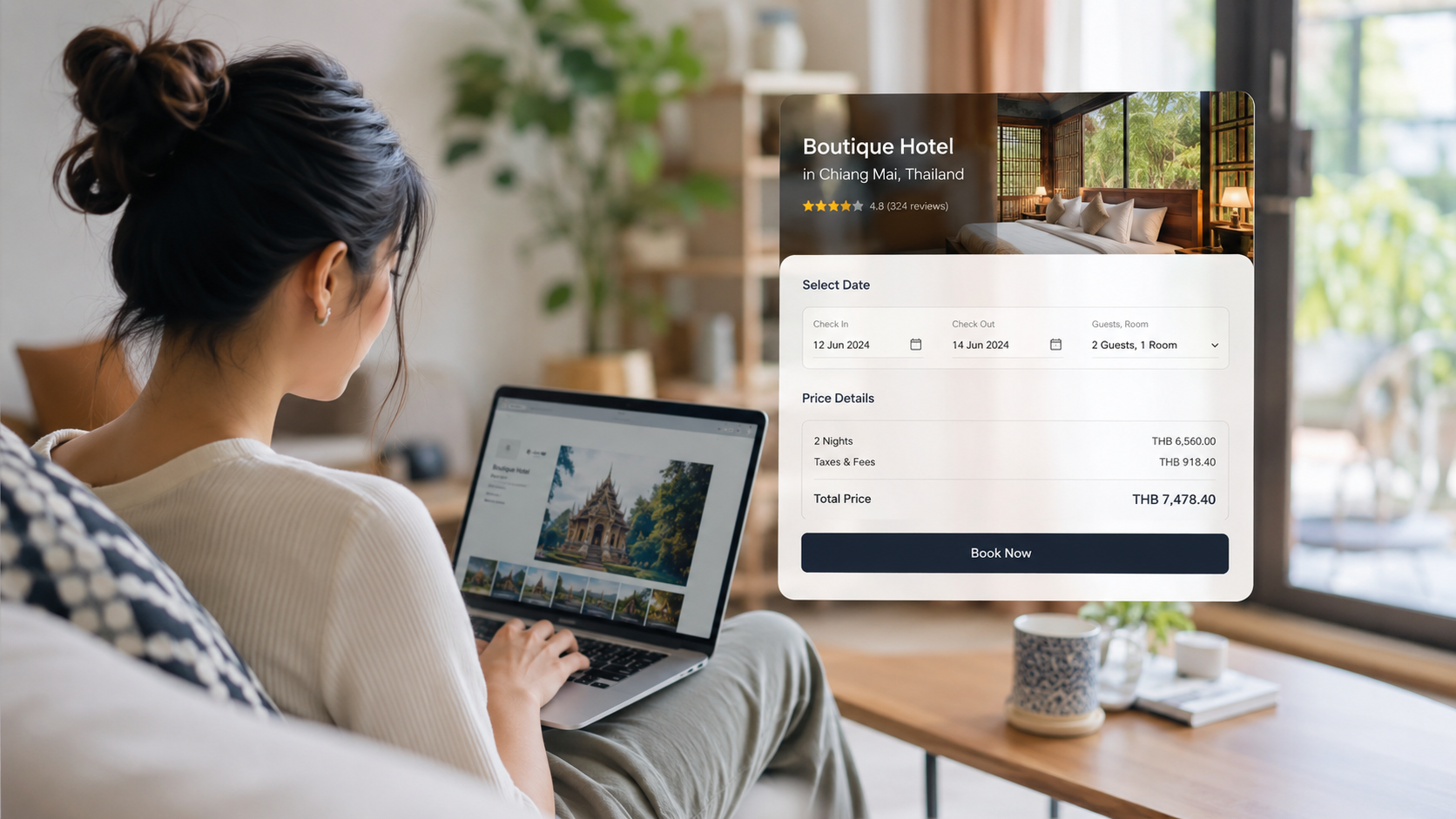
The metrics that tell a boutique hotel whether its brand marketing is working are not primarily social media engagement numbers. Engagement rates and follower counts are leading indicators at best. The metrics that matter commercially are the ones that connect brand visibility to booking behavior.
Direct website traffic from organic search and social media referrals measures whether brand content is generating genuine discovery intent. A boutique hotel whose Instagram growth is accompanied by increasing direct website traffic from social referrals is building discovery that converts to consideration. Growth that does not accompany any change in website traffic is building an audience that is not moving down the funnel.
Direct booking rate and the proportion of bookings arriving through the brand website versus OTAs measures whether the brand marketing is creating preference strong enough to override the OTA’s convenience advantage. A boutique hotel whose brand story is compelling enough to motivate a potential guest to visit the property’s own website rather than accepting the Booking.com booking they could complete in two clicks has achieved the commercial goal of brand marketing: creating preference that survives the path of least resistance.
Review content quality is the lagging indicator that measures whether the brand story the property is telling is being experienced by guests who arrive. A review that says “we chose this hotel specifically because of the design we saw on Instagram and it was exactly as beautiful in person” is the confirmation that the brand marketing promise and the product reality are aligned. That alignment, consistent over time, is the foundation of the brand equity that allows a boutique property to sustain a rate premium and a direct booking ratio that its chain competitors, with all their scale advantages, cannot match on the specific ground the boutique has chosen to compete on.

Creative For More’s hospitality marketing services work with boutique properties to build the brand positioning, social media presence, and influencer partnerships that turn distinctive physical assets into commercial brand advantages. Our social media marketing programs produce the content architecture and community management that turn a boutique hotel’s Instagram presence into a booking engine rather than a vanity channel, and our work on consumer-centric storytelling in branding applies directly to the challenge of turning a boutique property’s genuine character into a brand narrative that attracts, converts, and retains the specific guest the property was built for.
If your boutique hotel is looking for a strategic marketing partner to build a brand presence that competes on character rather than budget, the Creative For More team can help. Book a discovery call to explore how we can support your property’s growth.
Read More
- Hospitality Marketing in Singapore: From Positioning to Bookings
- Hotel Marketing in Asia: Channels, Benchmarks, and What Drives Direct Bookings
- How Boutique Hotels Can Compete with Chains Through Brand Marketing
- Wellness Resort Marketing: Positioning Strategies for Asian Markets
- Hospitality Social Media: What Works for Hotels and Resorts in Asia

Geraldine Pang
Creative For More
Geraldine Pang is the founder of Creative For More, a cross-border digital marketing agency with offices in Singapore, Tokyo, and New York. She specializes in brand strategy, market entry, and cross-border marketing across Southeast Asia, Japan, and the United States.