

How Aesthetic Clinics Can Market Ethically and Profitably in Singapore
How Aesthetic Clinics Can Market Ethically and Profitably in Singapore
Singapore’s Ministry of Health advertising regulations do not make aesthetic clinic marketing harder. They make it different, and the clinics that understand this distinction are consistently outperforming those that treat regulatory compliance as a constraint on their marketing options rather than the framework within which better marketing is built.
The MOH regulations prohibit before-and-after photos in advertising, guarantees of results, superlatives, promotional offers, and testimonials, according to Alnico’s Singapore aesthetic clinic marketing playbook. What they create, by eliminating those tools from every clinic’s arsenal simultaneously, is a market where the competitive battle must be fought on the grounds of trust, education, and authority. Every clinic in Singapore is operating under the same constraint. The clinics that win are those that have recognized the constraint as a positioning opportunity and built their marketing around what the regulations allow and reward, rather than spending energy looking for workarounds in what they prohibit.
This article covers the specific mechanics of ethical and profitable aesthetic clinic marketing in Singapore: the regulatory framework, before-and-after handling, realistic expectation-setting in creative, and the educational content approach that generates leads more reliably than aggressive results-focused advertising.
What Does Singapore’s Regulatory Framework Actually Prohibit?


Understanding exactly what is prohibited prevents the most common and most damaging compliance failure mode: a marketing team operating on a general understanding of “no before-and-afters” while inadvertently producing content that violates adjacent regulations the team was less aware of.
Singapore’s aesthetic clinic advertising is governed primarily by the Healthcare Services Act (HCSA) and its associated Healthcare Services (Advertisement) Regulations, which are administered by the Ministry of Health. The regulations apply to all licensed private hospitals and clinics, including aesthetic and medical aesthetic clinics, and cover all advertising channels including digital, social media, and print. According to Pulse Digital’s guide to Singapore healthcare advertising, aesthetic clinic advertising must build trust by showcasing verified qualifications, professional approach, and factual information, with the regulations explicitly restricting content that could be misleading, exaggerated, or that could encourage unnecessary consumption of medical services.
The specific prohibitions that most directly affect digital marketing for Singapore aesthetic clinics are:
Before-and-after photographs in advertising.
For aesthetic treatments, plastic surgery, or dental work, showing before-and-after photos in public advertising is not allowed under HCSA regulations, according to Pulse Digital’s analysis. This applies across all digital channels including website advertising sections, social media posts designed to attract new patients, and paid advertising platforms. The distinction that some clinics misunderstand is the difference between advertising content and clinical information: before-and-after imagery used in a clinical consultation context, to explain what a procedure involves and what realistic outcomes look like for a patient already in the consultation, occupies a different regulatory space from the same imagery used in advertising content designed to attract new patients.
Guarantees of results and superlatives.
Describing a treatment as delivering guaranteed outcomes, or using language like “best,” “safest,” “most effective,” or “fastest” in advertising constitutes misleading advertising under Singapore’s regulatory framework. According to MediaOne’s PHMC digital marketing guidelines, a Singapore aesthetic clinic that ran a campaign promoting filler treatment as “completely safe and delivering permanent results” was flagged for misleading language, faced fines, and was required to halt all marketing activities until compliance was restored. The financial and reputational cost of a compliance failure significantly exceeds the compliance review investment that prevents it.
Promotional mechanics.
Discount codes, promotional offers, group buying deals, and pricing incentives that could encourage the unnecessary consumption of medical services are prohibited. This prohibition affects the growth hacking and flash-sale mechanics that non-medical businesses use routinely. It does not prevent a clinic from communicating its pricing clearly and factually, or from offering package pricing that is a transparent representation of its service structure rather than a promotional incentive designed to encourage trial.
Testimonials and patient endorsements.
Patient testimonials that attribute outcomes to the clinic’s treatments in advertising content are prohibited under Singapore’s medical advertising regulations. This removes one of the most powerful trust-building tools in consumer marketing. The educational content approach described later in this article is specifically designed to fill this trust-building function through mechanisms that are fully compliant.
Outdoor and broadcast advertising.
Aesthetic clinics cannot advertise on television, billboards, light boxes, LED displays, or banners in Singapore, according to Heroes of Digital’s PHMC guidelines analysis. The permitted advertising channels are digital, including clinic websites, Google Search Ads, social media, and approved online health portals. This channel restriction concentrates the competitive battle for patient attention in digital platforms where content quality and search optimization determine visibility.
Why Does the Regulatory Framework Create a Marketing Opportunity?
Every aesthetic clinic in Singapore operates under identical regulatory constraints. The clinic that treats those constraints as a ceiling operates below competitors who treat them as a floor. When before-and-afters, testimonials, and promotional offers are eliminated from the competitive toolkit simultaneously, the clinics that win the trust competition are those that have built the most credible, most substantive, and most consistently educational presence in the channels the regulations permit.
The Singapore aesthetic consumer is, according to Alnico’s playbook, highly educated, time-poor, and a meticulous researcher. She is not looking for cheap deals. She is looking for efficacy and safety. She arrives at a clinic’s digital presence already aware of her concern, whether pigmentation, facial volume loss, acne scarring, or skin aging, but overwhelmed by the range of treatments available and uncertain which approach is appropriate for her specific situation. This patient profile is ideal for educational content marketing: the clinic that consistently produces the most useful, most honest, and most substantively informative content about the treatment options relevant to her concern earns the authority that converts her research into a consultation booking.
The case that demonstrates this dynamic directly comes from a Singapore aesthetic clinic documented in Mapletree Media’s PHMC advertising guide. The clinic wanted to advertise its laser treatments but could not use before-and-after photography. Instead it created educational blog posts and Q&A videos explaining how the laser works, what concerns it addresses, what to expect during and after treatment, and how to evaluate whether it is the right option for a specific skin type and concern. The campaign attracted more engagement than a results-focused advertising approach would have produced, while remaining fully compliant. The educational content worked not in spite of the absence of before-and-afters, but because the educational content answered the question the potential patient was actually asking rather than showing her an outcome she could not verify would apply to her.
How Do You Handle Before-and-After Content Ethically?
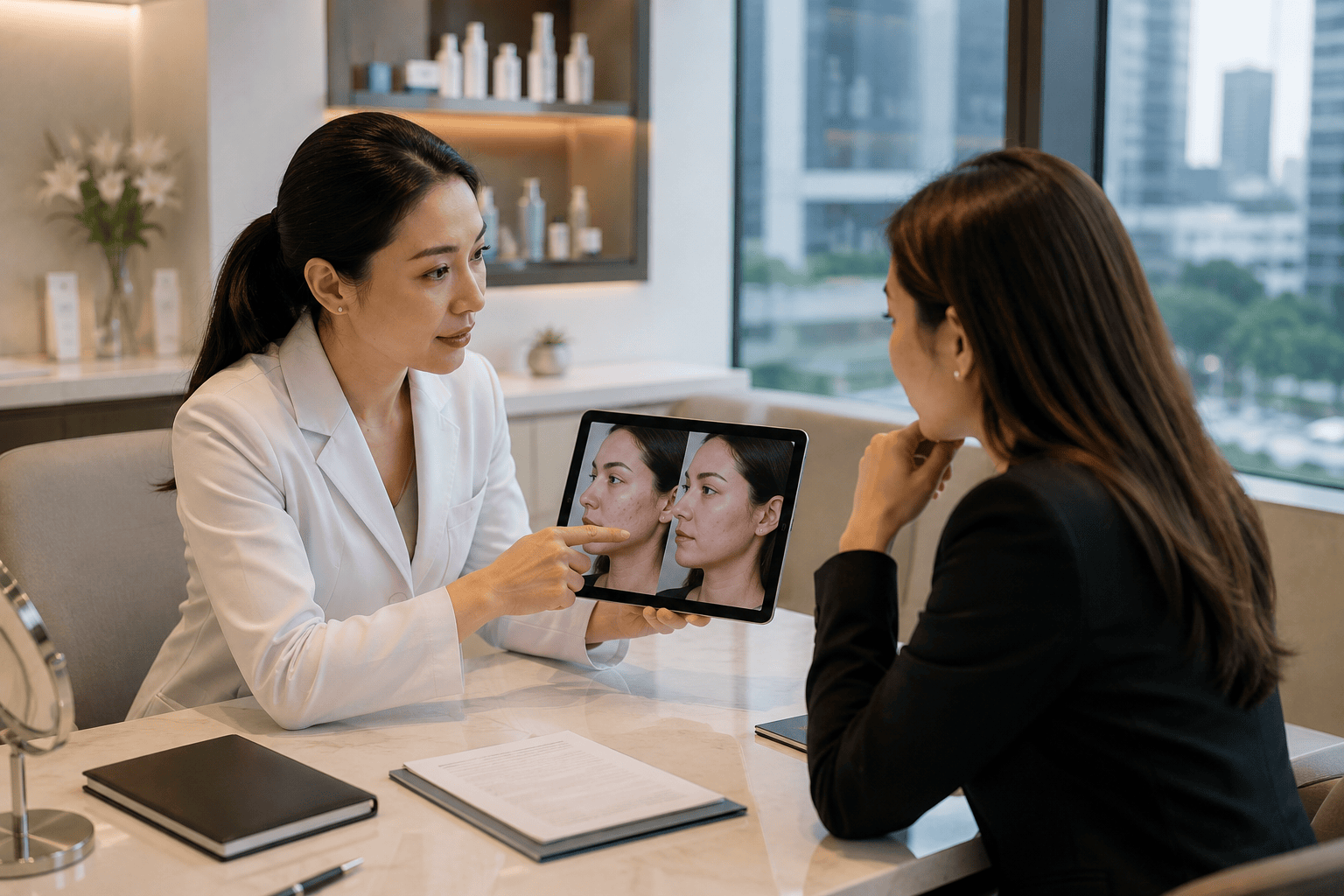
The before-and-after prohibition in Singapore aesthetic clinic advertising is the restriction that most clinic marketing teams find most frustrating, because before-and-after imagery is the most intuitive proof mechanism for aesthetic outcomes. Understanding the distinction between what is prohibited and what is not, and what compliant alternatives achieve similar trust-building function, is the practical skill that resolves the frustration productively.
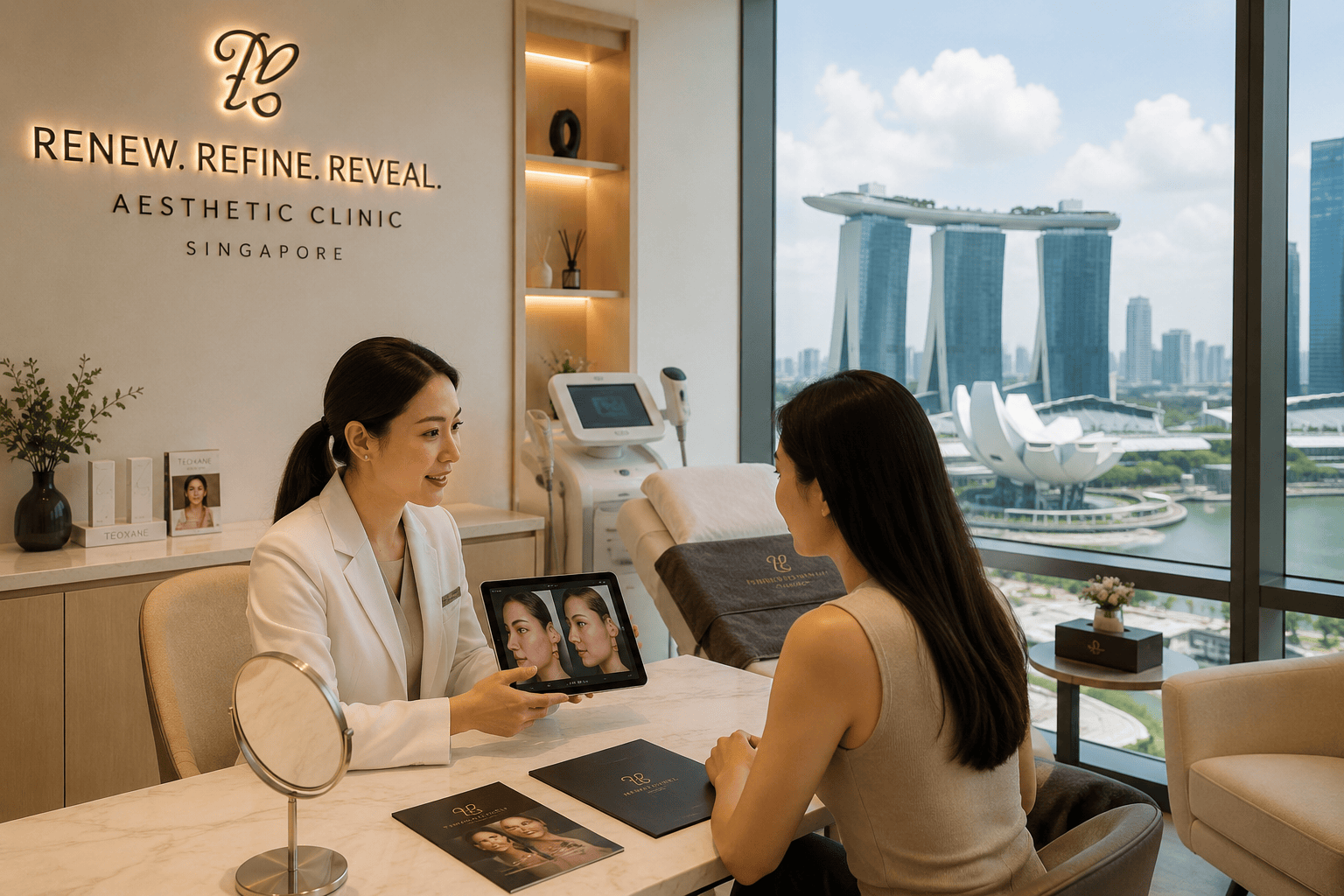
What is prohibited is before-and-after imagery used in advertising: content designed to attract new patients by showing treatment outcomes. What is not prohibited is clinical documentation used in consultation: the same imagery presented to a patient who is already in a consultation, to explain realistic expectations for a specific treatment on skin with characteristics similar to theirs. The clinical consultation use of imagery is part of informed consent and clinical explanation, not advertising. A clinic that has comprehensive clinical documentation for its most commonly performed treatments is better equipped to set realistic expectations in consultation than one that has not, which directly affects patient satisfaction and word-of-mouth regardless of the advertising channel.
The compliant alternatives to before-and-after advertising that produce the strongest trust-building results for Singapore aesthetic clinics are: treatment mechanism visualization, which shows how a procedure works at the tissue level rather than showing patient outcomes and communicates both the clinical sophistication of the approach and the realistic nature of what it achieves; clinically accurate expectation-setting content, which describes in plain language what a patient can realistically expect from a treatment including the typical timeline for visible results, the number of sessions typically required, and the range of outcomes that depend on individual patient factors; and educational content that empowers the prospective patient to evaluate whether a treatment is appropriate for her before she books a consultation, which earns the trust of the highly researching patient and produces consultation bookings from patients who arrive with realistic expectations already calibrated.
The expectation gap is the most expensive problem in Singapore aesthetic clinic marketing, and it is entirely avoidable. A patient who arrives at a consultation having consumed advertising that implied dramatic results, and leaves having received a realistic clinical explanation of what is actually achievable, is more likely to feel disappointed even before treatment begins than a patient whose entire research journey was built around accurate expectation-setting. The clinic that sets realistic expectations in all its marketing content, even when that content is less visually dramatic than competitor advertising, consistently produces higher patient satisfaction scores and stronger word-of-mouth than the clinic that over-promises at the acquisition stage.
What Creative Approach Sets Realistic Expectations Without Regulatory Risk?
The creative approach that sets realistic expectations within Singapore’s regulatory framework requires replacing outcome-focused imagery with process-focused and education-focused content. The strategic reframe is from “look at what this treatment did” to “understand what this treatment does and whether it is right for you.”
Doctor-led content is the most powerful compliant creative format for Singapore aesthetic clinics. A video in which the clinic’s doctor explains a treatment, in their own professional voice, covering the mechanism, the appropriate patient profile, the realistic timeline for results, and the reasons a patient might not be a suitable candidate, accomplishes more trust-building per view than almost any other content format. The doctor’s professional credential is the trust signal that testimonials and before-and-afters were providing through different means. A doctor who speaks frankly about the limitations of a treatment, the factors that affect outcome variability, and the situations in which they would not recommend it, is demonstrating the professional integrity that Singapore’s meticulous aesthetic consumer is specifically looking for.
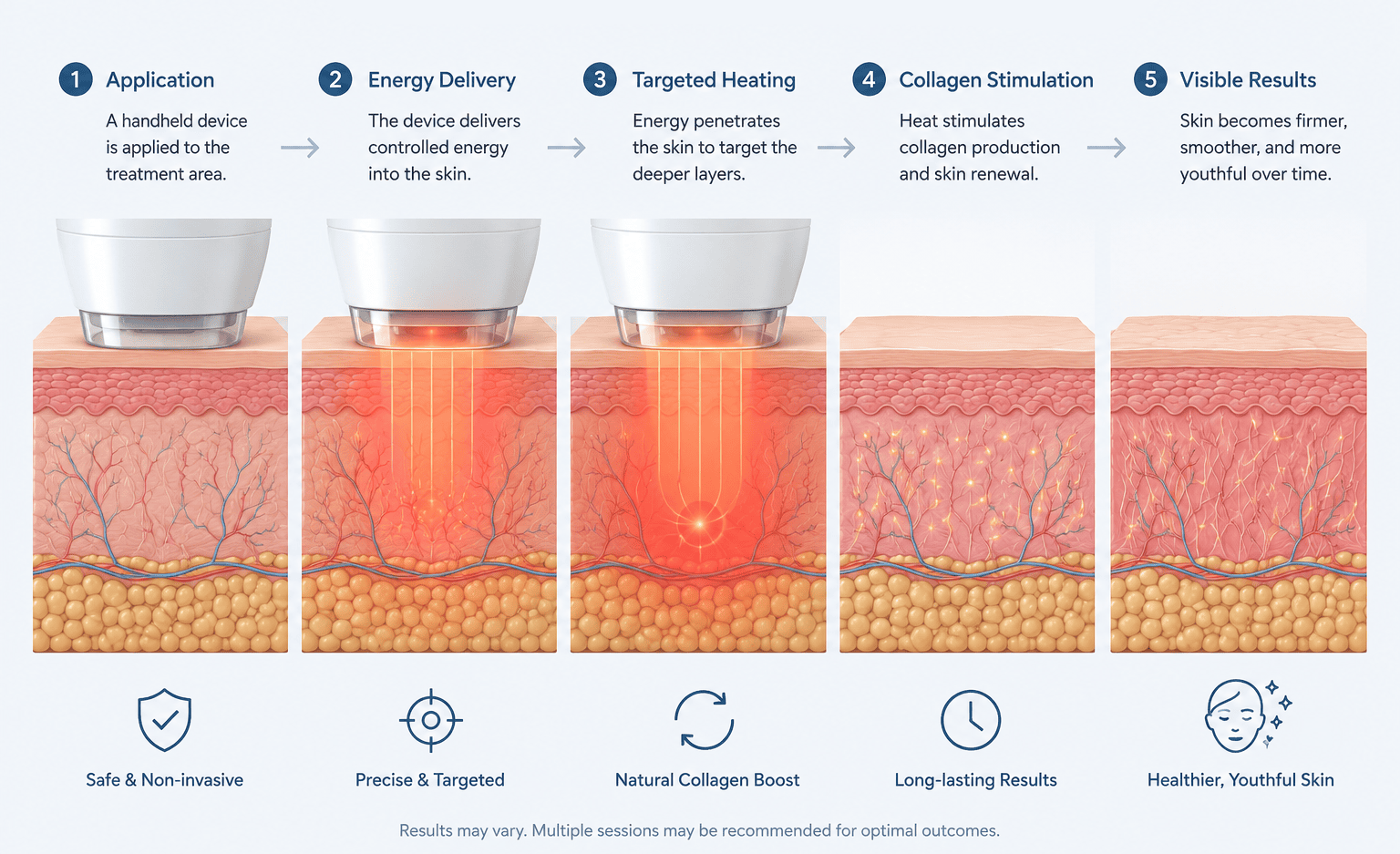
The treatment mechanism animation or illustration is the compliant visual format that replaces before-and-after photography in explaining how a procedure works. A high-quality animation showing how radiofrequency energy stimulates collagen remodeling in the dermis communicates clinical sophistication, explains the biological rationale for the treatment’s effect, and sets realistic expectations about the timeline and nature of results without showing patient outcomes that the regulations prohibit. This content format requires investment in production quality to achieve the credibility signal it is intended to deliver, but it is reusable across multiple channels, evergreen in its relevance, and differentiating in a competitive environment where most clinic content is either non-compliant or aesthetically underdeveloped.
Skin concern segmentation is the creative strategy that makes compliant content more effective at driving consultation bookings than generic clinic advertising. Segmenting campaigns by skin concern, pigmentation, anti-ageing, acne, skin laxity, allows the clinic to match ad copy and landing page content precisely to the user’s specific search query and concern. A prospective patient searching “how to treat melasma Singapore” is expressing a specific concern in a specific context. A clinic whose content specifically addresses melasma, explains the treatment options and their relative evidence quality, and invites the reader to book a consultation to assess which option is appropriate for their skin, is answering that specific question in a way that a generic clinic brand ad is not.
How Does Educational Content Generate Leads for Aesthetic Clinics?
Educational content generates leads for Singapore aesthetic clinics through a mechanism that is more commercially durable than paid advertising: it positions the clinic as the authoritative source on the treatments and concerns the prospective patient is researching, earns their trust before any commercial interaction, and produces consultation bookings from patients who have already calibrated their expectations against the clinic’s educational content.
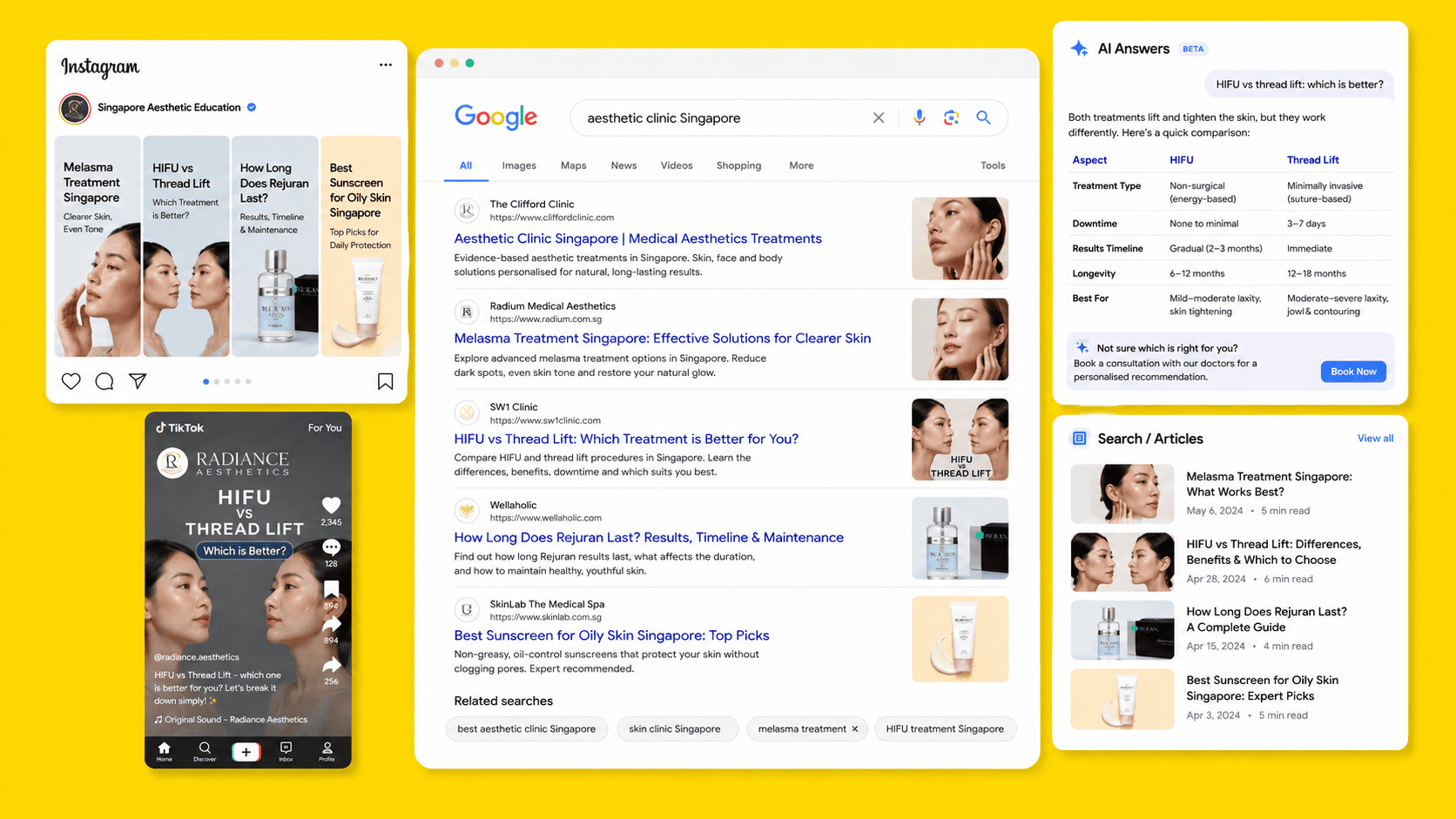
The lead generation mechanism works through search intent capture. A prospective patient who is beginning to consider treatment for her concern does not search “aesthetic clinic Singapore” as a starting point. She searches for her specific concern: “melasma treatment Singapore,” “HIFU vs thread lift,” “how long does Rejuran last,” or “best sunscreen for oily skin Singapore.” Each of these search queries represents a patient at a specific stage of her research journey, looking for specific information from a source she can trust. The clinic whose educational content appears in search results for these queries is establishing its expertise and building the patient’s trust before the patient has even identified the clinic as a potential treatment provider.
The content architecture that most reliably captures this search intent covers the three stages of the aesthetic patient’s decision journey. At the awareness stage, the patient is educating herself about her concern: what causes it, what treatment options exist, how to evaluate them. Content that addresses this stage without promoting specific treatments or making outcome claims is fully compliant and builds the authority that precedes treatment consideration. At the consideration stage, the patient is comparing treatment options: understanding the difference between Pico and Qs-switched lasers for pigmentation, or between HIFU and Ultherapy for skin lifting, or between filler and Sculptra for volume restoration. Detailed, accurate, and clinically substantiated comparison content serves this patient’s research need while positioning the clinic as the most knowledgeable and transparent source she has encountered. At the decision stage, the patient is selecting a clinic: looking for evidence that this specific clinic’s doctors have the expertise, judgment, and patient communication approach that makes it safe to trust them with a medical aesthetic procedure. Doctor profile content, professional background narratives, and Q&A content that shows how the clinic approaches clinical decision-making serve this stage.
Creative For More’s work with SkinLab demonstrates the educational content approach in the medical skincare category: the challenge was making medical skincare feel human rather than clinical, building the emotional trust that converts consumer interest into brand loyalty alongside the clinical credibility that justifies the treatment investment. The content strategy that achieved this combined doctor-led educational content with a brand voice that acknowledged the patient’s emotional experience alongside the clinical process, producing a marketing presence that felt both authoritative and approachable. Our Insync Medical case study documents a similar approach in the medical aesthetics context: building brand presence and patient trust through content that demonstrates clinical expertise without violating the regulatory framework that governs what the clinic can and cannot say about its treatments.
What Digital Channels Work for Singapore Aesthetic Clinics Within the Regulatory Framework?
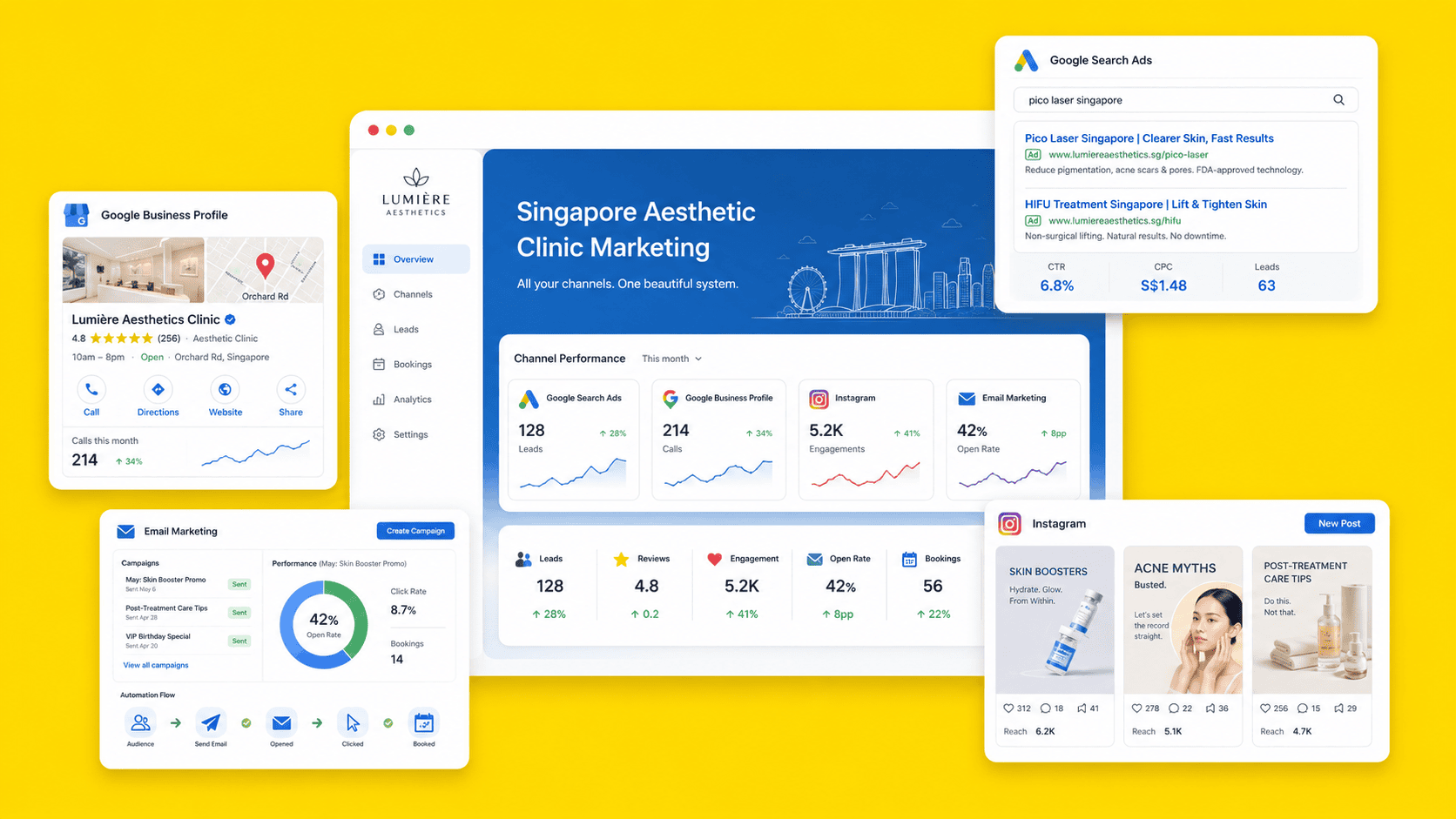
The permitted advertising channels for Singapore aesthetic clinics concentrate the competitive battle in digital platforms where content quality, search optimization, and community trust determine the outcome.
Google Search Ads are the highest-intent acquisition channel for Singapore aesthetic clinics and the one where regulatory compliance requires the most careful copy management. Search ads must be written in factual, non-superlative language with consultation-focused rather than results-focused calls to action. Campaign structure should segment by skin concern rather than treatment, allowing the copy and landing page to address the specific concern the patient expressed in their search query. The paid ads must drive to landing pages that continue the factual, educational tone of the ad rather than pivoting to promotional or testimonial content that the ad regulatory guidelines prohibit.
Google Business Profile is the local discovery channel that most Singapore aesthetic clinics underinvest in despite its high-intent, zero-cost visibility. A fully optimized Google Business Profile with current treatment information, professional photographs of the clinic space and team, actively managed patient reviews, and regular Q&A responses from the doctor maintains the clinic’s visibility in local search results and on Google Maps without requiring advertising spend. The patient reviews that accumulate on Google Business Profile operate differently from the testimonials prohibited in advertising: they are independently posted by patients exercising their own judgment about their experience, rather than being solicited and published by the clinic as advertising content. Actively encouraging satisfied patients to post their own honest review to Google Business Profile is compliant and commercially valuable.
Instagram and educational social media content are where Singapore aesthetic clinics build the ongoing community presence that keeps the clinic visible to patients who are not yet actively searching for treatment but who are receptive to educational content about the concerns they are managing. The influencer collaboration model that is compliant in Singapore’s aesthetic category focuses on educational rather than promotional content: a credible beauty or wellness influencer documents her consultation process, asks the doctor about the treatment rationale, and shares her experience of the consultation rather than promoting an outcome. This approach builds authenticity and consultation traffic without violating the testimonial or before-and-after prohibitions.
Email marketing to existing patients is the retention and re-engagement channel that most Singapore aesthetic clinics do not invest in systematically. A patient who has completed a treatment course has demonstrated willingness to invest in aesthetic care and is the most likely candidate for complementary or maintenance treatments. An educational email sequence that provides post-treatment care information, introduces complementary treatment options with factual clinical context, and invites existing patients to consultation for maintenance assessments, generates revenue from the existing patient base at significantly lower cost than acquiring new patients through advertising.
Creative For More’s medical and aesthetics digital marketing services are built specifically around Singapore’s HCSA and MOH regulatory framework, producing the educational content, search optimization, and social media presence that generates consultation bookings for aesthetic clinics without the compliance risk that undisciplined aesthetic marketing consistently produces. Our social media marketing programs cover the doctor-led content, influencer partnership management, and educational content calendar that builds a clinic’s authority presence within the channels that Singapore’s regulatory framework permits. Our approach to SEO content strategy captures the search intent of the meticulous researcher that Singapore’s aesthetic patient represents, producing consultation bookings from patients who have already built trust with the clinic through its content before they ever walk through the door.
If your aesthetic clinic in Singapore wants a marketing partner who understands both the regulatory framework and the content strategy that generates profitable consultation bookings within it, the Creative For More team can help. Book a discovery call to explore how we can support your clinic’s growth.
Read More About Medical & Aesthetics
- How Aesthetic Clinics Can Market Ethically and Profitably in Singapore
- What Marketing Channels Work Best For Medical and Aesthetic Clinics in Singapore
- How Do You Measure the ROI of Digital Marketing for a Medical Practice?
- How Much Should a Medical Clinic Spend on Digital Marketing in Singapore?
- The Biggest Digital Marketing Mistakes Aesthetic Clinics Make (and How to Fix Them)
- What Is the SMC Advertising Code and What Does It Mean for Clinic Marketing?
- How to Build a Digital Marketing Strategy for a Medical Practice From Scratch
- What Is Medical Marketing and Why Do Clinics in Singapore Get It Wrong?
- How to Market a Medical Clinic in Singapore Without Violating MOH Guidelines

Geraldine Pang
Creative For More
Geraldine Pang is the founder of Creative For More, a cross-border digital marketing agency with offices in Singapore, Tokyo, and New York. She specializes in brand strategy, market entry, and cross-border marketing across Southeast Asia, Japan, and the United States.